



When cyclists talk about upgrading a bike, the conversation usually focuses on frames, wheelsets, drivetrains, or suspension systems. However, one highly important part is often overlooked — the bicycle spindle.
Although compact in size, the spindle plays a critical role in transferring pedaling power efficiently from the rider to the drivetrain. Whether for daily commuting, mountain biking, or competitive road cycling, spindle performance directly affects riding efficiency, stability, and long-term durability.
As a professional manufacturer in precision bicycle parts, HuiBo Railway continues to provide high-quality spindle solutions designed for reliable performance and smooth riding experiences.
What Is a Bicycle Spindle?
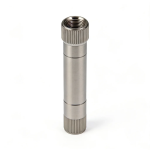
A spindle is the central shaft used in an integrated bicycle crank system. It connects the left and right crank arms and acts as the main structure responsible for transferring pedaling force into rotational drivetrain movement.
Every time a rider pedals, force travels through the crank arms into the spindle, which then delivers that energy to the chainring and drivetrain system. Without a properly designed spindle, power transfer efficiency can decrease significantly.
In simple terms, the spindle acts as the “core transmission bridge” between the rider and the bicycle’s propulsion system.
Why Spindle Design Is Important
Many cyclists underestimate how much spindle design influences overall bike performance. In reality, spindle engineering affects several important riding characteristics, including:
- Power transfer efficiency
- Pedaling smoothness
- Drivetrain stiffness
- Riding stability
- Overall bike weight
- Long-term durability
A precision-engineered spindle minimizes energy loss during pedaling, allowing more rider power to reach the drivetrain effectively.
HuiBo Railway focuses on advanced spindle manufacturing processes that improve structural stability while reducing unnecessary weight, helping cyclists achieve a more responsive riding experience.
Common Types of Bicycle Spindles
Different riding styles and bicycle systems require different spindle structures. Below are some of the most widely used spindle designs in the cycling industry.
1. Square Taper Spindles
Square taper spindles are one of the earliest and most traditional spindle designs.
They feature a square-shaped interface where the crank arms attach directly to the spindle. This structure is known for:
- Simple installation
- Reliable connection
- Cost-effective maintenance
- Long-term durability
Even today, square taper systems remain popular for commuter bikes and entry-level bicycles.
2. Octalink Spindles
Developed by Shimano, Octalink spindles use an eight-spline interface rather than a square connection.
This design offers:
- Improved crank arm stability
- Better power transfer
- Increased stiffness
- Reduced interface wear
Octalink systems became popular among performance-oriented cyclists seeking stronger crank connections.
3. ISIS Drive Spindles
ISIS Drive spindles also use a splined interface system similar to Octalink but with broader industry compatibility.
Their design advantages include:
- Wider crank arm support
- Enhanced pedaling stiffness
- Better load distribution
- Improved torque transfer
ISIS systems are commonly used in mountain bikes and high-performance cycling setups.
4. Hollowtech II Spindles
Modern high-end bicycles frequently use Hollowtech II spindle systems.
These spindles feature a hollow internal structure, reducing overall weight without sacrificing strength.
Key advantages include:
- Lightweight construction
- Excellent rigidity
- High pedaling efficiency
- Smooth rotational performance
For competitive cyclists, reducing rotational weight can significantly improve acceleration and climbing efficiency.
5. Integrated Spindles
Integrated spindle systems combine the spindle directly with the crank arm assembly.
This modern design improves:
- Structural stiffness
- Weight optimization
- Installation efficiency
- Power transfer performance
Integrated spindle systems are now widely used in advanced road bikes and performance mountain bikes.
How Spindle Quality Affects Riding Performance
The quality of the spindle has a direct impact on how efficiently a bicycle performs during riding.
A high-quality spindle can provide:
Better Power Transfer
Less energy is lost during pedaling, helping riders maintain speed with less effort.
Improved Structural Stability
A rigid spindle improves bike responsiveness and handling precision.
Reduced Mechanical Wear
Precision manufacturing reduces stress on crank arms and bottom bracket systems.
Enhanced Riding Comfort
Smoother rotation creates a more comfortable and stable pedaling experience.
HuiBo Railway manufactures spindles using advanced processing technology and high-strength materials to ensure excellent balance between lightweight performance and durability.
Lightweight Spindles and Competitive Cycling
In professional cycling, even small weight reductions can create noticeable performance advantages.
A lightweight spindle contributes to:
- Faster acceleration
- Better climbing performance
- Reduced rider fatigue
- More agile handling
This is why high-end spindle systems increasingly use hollow or integrated structures combined with precision machining technologies.
HuiBo Railway continues to optimize spindle weight while maintaining structural strength, helping cyclists achieve higher performance without compromising reliability.
Maintenance Tips for Bicycle Spindles
Proper spindle maintenance is essential for maintaining smooth drivetrain performance and extending component lifespan.
Here are several practical maintenance recommendations.
Regular Cleaning
Dust, mud, and road debris can accumulate around the spindle and crank area over time.
Cleaning helps:
- Reduce friction
- Prevent corrosion
- Maintain smooth rotation
- Extend service life
Proper Lubrication
Applying suitable grease or lubricant to spindle interfaces helps reduce wear and prevents rust formation, especially in humid or rainy environments.
Routine Inspection
Cyclists should periodically inspect the spindle for:
- Unusual noise
- Excessive play
- Surface damage
- Bearing resistance
Early detection helps prevent larger drivetrain problems.
Professional Servicing
For high-performance bicycles or intensive riding conditions, professional servicing can help maintain optimal drivetrain performance and ensure spindle alignment accuracy.
Why More Cyclists Choose HuiBo Railway Spindles
As cycling technology evolves, riders increasingly demand spindle systems that combine:
- High precision
- Lightweight design
- Excellent stiffness
- Long-term durability
- Smooth rotational efficiency
HuiBo Railway continues investing in advanced spindle engineering and precision manufacturing to provide reliable solutions for both recreational and professional cyclists.
Their spindle products are designed to support stable performance across a wide range of riding conditions, from urban commuting to competitive racing.
Final Thoughts
While often overlooked, the bicycle spindle is one of the most important parts of the entire drivetrain system. It directly influences pedaling efficiency, bike responsiveness, and long-term riding reliability.
Understanding different spindle types and selecting high-quality spindle systems can significantly improve cycling performance and overall riding experience.
With advanced manufacturing expertise and a commitment to quality, HuiBo Railway provides spindle solutions that help cyclists ride smoother, faster, and more efficiently.
https://www.hbrailwayfastening.com/the-role-of-spindles-in-crank-system-performance.html