



In manufacturing environments, production often depends on a series of connected processes rather than a single operation. The Brass Hot Die Forging Machine serves as one part of a complete workflow designed to transform raw brass materials into functional products. Understanding this process sequence helps explain how different stages contribute to final part quality.
The workflow commonly starts with material preparation. Brass bars are supplied in standard sizes and then cut into shorter sections called billets. These billets must match the required volume for the intended component. Material quantity matters because insufficient metal can leave cavities unfilled, while excess material can increase waste during trimming.
Following preparation, the billets move into a heating stage. Heating creates conditions where brass becomes more flexible for forming. Temperature settings vary according to alloy composition and part design. Heating systems may include induction heaters or furnace equipment that distribute thermal energy across the material.
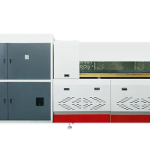
After reaching the desired condition, the material enters the Brass Hot Die Forging Machine. The machine contains upper and lower dies that create the target shape. During operation, force pushes the heated brass into the cavity. Material movement during this stage depends on pressure distribution, die geometry, and metal temperature.
The forming operation may occur through multiple stages. Some products use pre-forming procedures before final shaping. Intermediate steps can guide metal flow and reduce stress concentration during deformation. Complex parts with curves or internal structures often benefit from staged forming arrangements.
Once forging is completed, flash material located around the edges may be removed. Trimming equipment separates excess metal from the component body. The trimmed material can sometimes return to recycling systems where it becomes usable material again.
Surface processing can follow the forging stage. Some products require polishing or machining to achieve specified dimensions and appearance characteristics. Threads, holes, and precision features may be added during secondary operations.
Quality inspection is another important stage connected to the Brass Hot Die Forging Machine production line. Dimensional measurement tools evaluate shape consistency while visual inspection identifies surface defects. In certain applications, manufacturers may perform hardness testing or pressure-related evaluations depending on product usage conditions.
Automation continues to influence manufacturing facilities. Robotic transfer systems and computerized controls can support production stability and reduce repetitive handling activities. Production managers also monitor machine parameters to maintain operational continuity.
The Brass Hot Die Forging Machine therefore functions as part of a larger manufacturing system rather than an isolated piece of equipment. Every stage, from material preparation to inspection, contributes to the overall production outcome.