
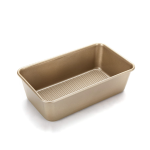


A loaf pan might seem like a simple baking tool, but it plays a crucial role in shaping and cooking your bread or cake evenly. The material, size, and coating of a pan influence heat distribution, crust formation, and the internal texture of your baked goods. Choosing the wrong pan can result in uneven cooking, sunken centers, or sticky surfaces.
Metal pans, such as aluminum and carbon steel, are popular because they conduct heat efficiently and maintain their shape. Aluminum spreads heat evenly, making it ideal for cakes and quick breads, while carbon steel heats up faster and creates a firmer crust for yeast breads. Non-stick coated steel pans simplify release and cleanup, though the coating can wear over time. Stainless steel is visually appealing and rust-resistant but does not conduct heat as uniformly. Compared to glass or silicone, metal loaf pans generally produce more predictable results.
Size is another important factor. Standard loaf pans measure around 8.5 x 4.5 inches. Larger pans create flatter loaves, while smaller pans yield taller, denser bread. Switching pan sizes without adjusting baking time often causes overbaking or underbaking. Proper care is also key: non-stick surfaces should be cleaned gently, and uncoated metals must be dried thoroughly to prevent rust.
Ultimately, the best loaf pan depends on your baking habits, the type of bread or cake you make, and your preference for cleanup and durability. A well-chosen pan ensures even baking, easier release, and consistent results every time, helping home bakers achieve loaves that look and taste as intended. Using the right loaf pan can turn a simple recipe into a reliably successful bake, loaf after loaf.