





In diamond core drilling, the drill bit often receives most of the attention. Drilling contractors compare bit matrices, diamond grades, penetration rates, and core recovery results. However, experienced geologists and drilling supervisors understand that overall drilling performance depends on more than the bit alone.
One component that is frequently overlooked, yet plays a critical role in maintaining drilling efficiency and borehole quality, is the impregnated reaming shell.
Whether the project involves mineral exploration, geotechnical investigation, water well drilling, or geological survey work, the correct selection and maintenance of reaming shells can directly influence borehole gauge, drilling fluid circulation, tool life, and overall drilling costs.
What Is an Impregnated Reaming Shell?
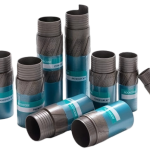
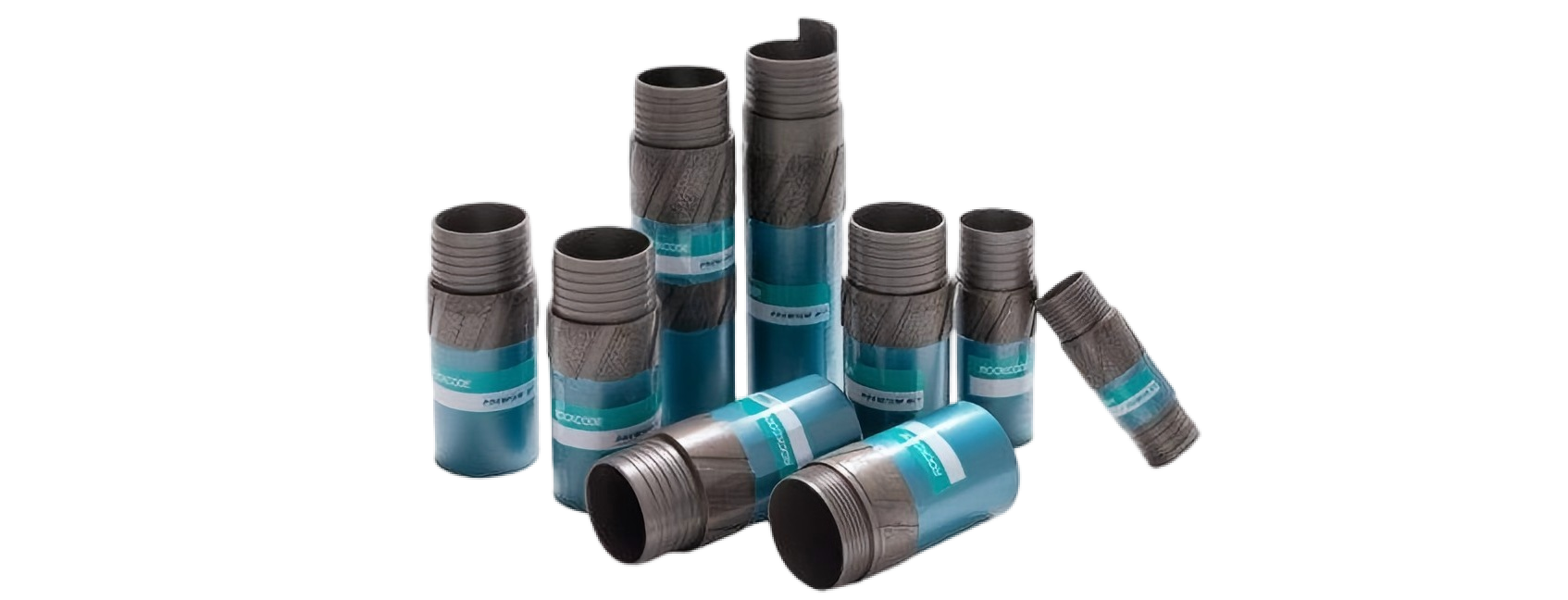
Physically, a reaming shell is a heavy-duty metal sleeve threaded at both ends, serving as the vital coupling between the core barrel and the diamond bit. However, its mechanical function goes far beyond a simple connector.
The outer surface of the shell features a specific outside diameter (OD) that is engineered to be slightly larger than that of the coring bit. In an impregnated reaming shell, this outer matrix layer is blended with high-grade synthetic diamonds distributed uniformly throughout a metallic binder, or configured with high-density diamond-set strips.
As the drilling string rotates, the reaming shell performs three primary functions:
-
Hole Gauge Maintenance: It scrapes and grinds the borehole wall to ensure the hole diameter remains true, compensating for any natural wear on the outside diameter of the core bit.
-
Core Barrel Stabilization: By acting as a localized stabilizer, it minimizes the lateral movement and vibration of the core barrel, which directly improves core recovery rates.
-
Fluid Clearance Maximization: It enlarges the passageway slightly, ensuring adequate clearance for the return of drilling fluids and cuttings to the surface.[1]
Why Hole Gauge Matters in Geological Drilling
When a borehole narrows due to formation swelling, wall sloughing, or bit wear, the consequences are immediate. Restricted annular space chokes the return flow of drilling fluid, leading to poor cuttings evacuation and increased pumping pressure. A constricted hole also makes tripping the core barrel more difficult, raising the risk of stuck pipe and mechanical damage to the bit.
The reaming shell addresses this by continuously trimming the borehole to the correct diameter. Because its set diameter is larger than the bit, it creates the necessary clearance for fluid circulation and provides a smooth path for barrel movement. In deep-hole programs or directional coring, this function becomes even more critical. Without consistent gauge control, deviation increases, core orientation data becomes unreliable, and the overall structural interpretation of the subsurface suffers.
How the Impregnated Design Extends Service Life
Compared with surface-set alternatives, an impregnated reaming shell offers a fundamentally different wear mechanism. The diamonds are distributed throughout the matrix rather than placed only on the surface. As the matrix wears away in service, fresh diamond crystals are progressively exposed. This self-sharpening behavior allows the shell to maintain cutting efficiency over a longer interval, particularly in abrasive formations such as quartzite, granite, or silicified limestone.
Field experience across multiple drilling programs indicates that a quality impregnated reaming shell can last three to four times longer than the core bit it follows. This longevity reduces the frequency of trips to change out worn tools, which directly translates into lower rig time and reduced labor exposure at the drill site. The Kansas Geological Survey, in its published drilling safety and operational plans, routinely specifies the use of gauge reaming shells in wireline coring programs to maintain consistent borehole conditions throughout the hole depth. [2]
Stabilization and Wear Reduction
Beyond gauge maintenance, the reaming shell acts as a stabilizer for the bottom-hole assembly. In broken or fractured ground, the drill string is subject to lateral vibration and whirling forces. The shell, with its slightly larger diameter and rigid construction, provides a contact point against the borehole wall that dampens these vibrations. This stabilization protects not only the bit but also the core barrel, inner tube, and rod string from premature fatigue.
The Ocean Drilling Program, in its technical documentation for deep-sea coring operations, recorded the use of reaming shells in conjunction with impregnated diamond bits to manage borehole stability under challenging marine conditions. The data summary sheets from Leg 114 explicitly note the pairing of specific bit types with matching reaming shells to ensure consistent tool behavior and reliable core recovery.[3]
Sizing and Operational Practice
Standard practice calls for the reaming shell to be sized 0.3 to 0.5 millimeters over the bit diameter for most formations. In softer, more erodible ground, the oversize may be increased to 0.5 to 0.7 millimeters to accommodate faster wall degradation. In hard, competent rock, the differential is often kept below 0.3 millimeters to minimize unnecessary cutting resistance.
Drillers should monitor shell wear with field gauges. Once the outside diameter wears below the minimum permissible set diameter, the shell must be retired. Continuing to run an undersized shell risks creating an undersized bore, which will cause the next bit to ream excessively on its gauge and shorten its life. Regular gauge checks are a small investment that prevents larger losses in bit performance and hole quality.
The Manufacturing Standard Behind Reliable Performance
Not all reaming shells perform equally. The difference lies in the quality of the diamond grit, the hardness and erosion resistance of the matrix, and the precision of the threading and concentricity. A shell that runs off-center or carries a poorly bonded matrix will vibrate, wear unevenly, and fail to protect the hole.
At ROCKCODE, we shells are produced in standard DCDMA sizes including BWL, NWL, HWL, and PWL, with lengths of 6 inches, 10 inches, and 18 inches available to match formation conditions. We use high-quality synthetic diamonds in a carbide-reinforced matrix, and we machine our threads to tight tolerances to ensure seamless coupling with industry-standard barrels and bits.
Whether you are managing a deep mineral exploration program or supplying tools to international drilling markets, the reaming shell deserves attention as a precision instrument rather than a disposable commodity. If you are evaluating suppliers for your next project, we welcome the opportunity to discuss how ROCKCODE's manufacturing capabilities can align with your operational requirements.
→ For more information about ROCKCODE’s Products, please visit: https://www.rockcodebit.com/drill-bits-products
→ Email us at: info@rockcodebit.com
→ Information in this article is for general reference only. For specific drilling projects and drilling bits, please consult qualified professionals. Thank you.
Source:
1.https://www.google.com.sg/books/edition/Foundation_Engineering_Handbook/vDboBwAAQBAJ?hl=en&gbpv=1&dq=impregnated+reaming+shell&pg=PA55&printsec=frontcover
2.https://www.kgs.ku.edu/Publications/OFR/2023/OFR2023-22.pdf
3.https://www-odp.tamu.edu/publications/tnotes/digital/tnote_23.pdf
https://www.rockcodebit.com/a-deep-dive-into-impregnated-reaming-shell-engineering.html