





In modern agricultural processing, food manufacturing, and chemical laboratories, throughput and accuracy are often in direct conflict. Traditional wet chemistry methods—such as Kjeldahl digestion for protein or Soxhlet extraction for fat—are undeniably accurate but create massive analytical bottlenecks. They require hours of preparation, hazardous reagents, and highly trained personnel. As sample volumes scale up, laboratories face a critical challenge: how to maintain strict quality control across diverse sample matrixes without causing a operational logjam.
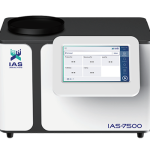
The solution lies in near-infrared (NIR) spectroscopy. Specifically, the deployment of a high-performance IAS-7500 Laboratorial NIR Analyzer allows QA/QC managers to transition from slow, destructive testing to rapid, non-destructive, multi-indicator screening. Developed to meet the rigorous demands of modern testing facilities, IAS has engineered an analytical powerhouse that balances operational simplicity with deep technical precision.

Simple Operation: Streamlining Multi-Indicator Analysis in 1 Minute
For laboratories handling fluctuating batch volumes with lean operational teams, processing efficiency is paramount. A high-throughput lab cannot afford complex calibration steps or tedious sample preparation routines for every single incoming batch.
The IAS-7500 rapid multi-indicator analysis system completely reengineers this workflow. The operational protocol is remarkably straightforward: operators simply pour the raw sample into the dedicated sampling accessory and initiate the scanning sequence with a single click. Within exactly one minute, the analyzer computes and displays multi-indicator quantitative data simultaneously.
Whether monitoring moisture, protein, oil, ash, or acid value, the instrument processes the data instantly. This rapid-fire 60-second NIR analysis turn-around ensures that even facilities facing high sample volumes and limited personnel can maintain strict, batch-by-batch real-time quality control without delaying supply chain logistics.
Multi-Form Sample Analysis with Just One IAS-7500
A common limitation of entry-level spectroscopic equipment is optical rigidity—machines are often optimized for either uniform powders or transparent liquids, forcing labs to purchase multiple instruments for different product lines. The IAS-7500 multi-form sample analysis capabilities eliminate this capital expenditure bottleneck.
Engineered with an adaptable optical interface, the IAS-7500 multi-form NIR analyzer handles three distinct material states seamlessly:
● Granular Samples: Uncrushed grains, seeds, pellets, and whole feed stocks can be analyzed directly, eliminating the moisture loss and structural degradation associated with sample grinding.
● Powdered Samples: Finely milled flours, chemical powders, and processed ingredients are captured with optimized packing density via specialized accessories.
● Liquid Samples: Oils, syrups, and liquid suspensions are analyzed using specialized transflectance or transmission accessories, ensuring accurate optical path lengths.
By consolidating these workflows into a single benchtop unit, IAS provides an exceptionally versatile platform that maximizes laboratory space and drastically reduces the total cost of ownership (TCO) for multi-category processing plants.
Outstanding Accuracy: Empowering Informed Laboratory Decisions
Speed and versatility are meaningless without structural data integrity. In spectroscopic analysis, the greatest enemy of accuracy is sample heterogeneity. A single kernel of corn or a small clump of powder may not represent the chemical composition of the entire batch. If a standard spectrometer only scans a narrow spot (e.g., a 2-3mm window), the resulting spectral data will be skewed by local variances.
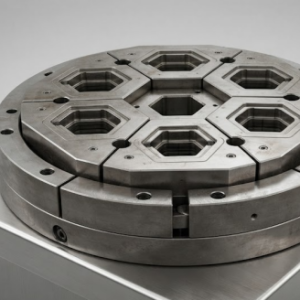
To overcome this, the IAS-7500 high-accuracy laboratorial NIR system features an advanced, large-area scanning mode. Rather than capturing a static, single-point data set, the instrument utilizes a rotating or moving sampling stage that exposes a significantly larger surface area to the near-infrared light path.
This large-area scanning NIR analyzer design dramatically enhances sampling representativeness. By collecting and averaging spectral data across a broad spatial footprint, the system delivers incredibly clean, high-signal-to-noise ratio (SNR) spectra. These high-quality spectra feed into the pre-calibrated chemometric models, generating highly precise, repeatable quantitative data that laboratory managers can confidently use to make high-stakes operational and regulatory decisions.
Robust Chemometrics and Seamless Industrial Integration
Beyond its advanced hardware components, the true intelligence of the IAS-7500 Laboratorial NIR Analyzer lies in its software ecosystem. The instrument integrates seamlessly with IAS proprietary chemometric software, which supports advanced regression algorithms (such as PLS and ANN) for robust calibration model development.
The system's digital architecture is built for modern industrial environments. It supports seamless data exporting to LIMS (Laboratory Information Management Systems), enabling automated data logging, trend analysis, and remote quality audits. Whether you are managing an agricultural trading outpost, a dynamic animal feed factory, or a rigorous food processing facility, this instrument provides the quantitative clarity needed to optimize formulation costs, guarantee product consistency, and maximize profitability.
Conclusion
Upgrading to the IAS-7500 Laboratorial NIR Analyzer is a definitive strategic move for any processing facility seeking to eliminate analytical bottlenecks. By unifying simple one-minute operation, multi-form material adaptability, and large-area scanning precision into a single rugged benchtop unit, IAS delivers a lab-grade solution that transforms raw spectral data into actionable commercial value. Protect your product quality, reduce reliance on slow wet-chemistry protocols, and accelerate your testing throughput with the ultimate standard in near-infrared analysis.
https://www.ias-glb.com/industry-news/one-analyzer-multiple-sample-forms-the-power.shtml