



As photovoltaic (PV) manufacturing continues to evolve, production requirements are becoming increasingly demanding. The adoption of ultra-thin wafers, multi-busbar (MBB) technology, half-cell modules, and high-power solar panels has significantly increased the need for precision during module assembly.
Among all backend manufacturing processes, battery string layup plays a critical role in determining final module quality, production efficiency, and long-term reliability. Even minor positioning errors or excessive mechanical stress during handling can introduce micro-cracks that are difficult to detect during production but may negatively impact module performance over time.
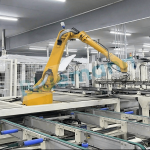
For this reason, many solar manufacturers are upgrading from conventional handling systems to highly automated lay up machines designed specifically for high-speed and high-precision matrix assembly.
The Challenge of Handling Fragile Solar Cell Strings
Modern solar cells are becoming thinner and more efficient, but they are also more sensitive to mechanical stress.
During the layup process, battery strings must be accurately transferred, aligned, and positioned before lamination. Traditional manual or semi-automatic methods often struggle to maintain the consistency required for today's advanced cell technologies.
Common challenges include:
- Micro-crack generation during handling
- Positioning deviations between strings
- Inconsistent spacing within the matrix
- Reduced production efficiency
- Increased labor dependency
- Difficulties processing half-cell and MBB modules
As production volumes continue to rise, manufacturers increasingly require automated solutions capable of combining speed, accuracy, and gentle handling.
Why Machine Structure Matters
One of the most important but often overlooked aspects of a lay up machine is its structural design.
High-speed production requires rapid gantry movement across multiple axes. During acceleration and deceleration, large dynamic loads are generated, which can affect positioning accuracy if the machine structure lacks sufficient rigidity.
To address this issue, many advanced systems utilize a heavy-duty truss-frame architecture.
Compared with traditional cantilever designs, a truss structure provides:
- Higher structural rigidity
- Better vibration resistance
- Improved load distribution
- Greater positioning stability
- Enhanced long-term accuracy
This allows servo-driven motion systems to operate at higher speeds without sacrificing placement precision.
For manufacturers focused on yield improvement and production consistency, structural stability is a key factor in equipment performance.
Intelligent Handling and Precision Positioning
Modern lay up machines are no longer simple material handling devices. They function as integrated automation platforms that combine multiple technologies into a single process.
Vacuum-Based String Handling
Battery strings are extremely fragile after soldering.
Advanced vacuum gripping systems distribute suction force evenly across the entire string, minimizing localized stress and reducing the risk of cracking during transfer.
This non-destructive handling method is especially important for thin-cell applications.
Optical Alignment Systems
Machine vision technology has become a standard feature in high-performance lay up equipment.
Industrial cameras continuously monitor battery string positions and detect:
- Rotational deviations
- Alignment errors
- Ribbon displacement
- Placement offsets
The system can automatically compensate for these deviations before final placement, ensuring high repeatability and precise matrix formation.
Automated Matrix Typesetting
Accurate spacing between strings directly affects module appearance and electrical performance.
Automated typesetting functions enable manufacturers to maintain consistent inter-string distances according to predefined product recipes.
This helps maximize active module area while maintaining production quality standards.
Adapting to Half-Cell and Advanced Module Designs
The rapid adoption of half-cell technology has introduced new manufacturing challenges.
Unlike traditional full-cell modules, half-cell designs often require more complex string configurations and alternating layouts.
Historically, manufacturers relied on separate processing stations to perform string cutting, rotation, and rearrangement. While effective, these additional stations increase factory footprint and introduce more handling steps.
New-generation lay up machines are increasingly integrating these functions into a single platform.
Capabilities may include:
- Automatic A/B string processing
- Online string cutting
- String rotation and orientation adjustment
- Direct matrix assembly
By reducing the number of transfer operations, manufacturers can improve throughput while lowering the risk of damage to sensitive solder joints.
Supporting Smart Factory Operations
As Industry 4.0 adoption accelerates, equipment connectivity has become an important requirement for solar manufacturers.
Modern lay up machines are designed to integrate with Manufacturing Execution Systems (MES) and factory automation platforms.
Key benefits include:
Faster Product Changeovers
Operators can quickly switch between different module specifications, including:
- Full-cell modules
- Half-cell modules
- Multi-busbar products
- Customized module designs
Real-Time Production Monitoring
Integrated control systems provide visibility into:
- Production throughput
- Equipment status
- Alarm history
- Process efficiency
Predictive Maintenance Support
Continuous monitoring of motion components, vacuum systems, and pneumatic elements allows maintenance teams to identify potential issues before they affect production.
This contributes to higher Overall Equipment Effectiveness (OEE) and reduced downtime.
Why Manufacturers Are Investing in Advanced Lay Up Technology
As solar module competition intensifies, manufacturers must continuously improve both efficiency and quality.
An advanced automated lay up machine helps achieve several critical objectives:
✔ Reduce micro-crack risks
✔ Improve placement accuracy
✔ Increase production speed
✔ Lower labor requirements
✔ Support advanced cell technologies
✔ Enhance overall production consistency
For high-volume solar factories, these improvements can have a direct impact on profitability and long-term competitiveness.
Conclusion
The role of lay up machines in photovoltaic manufacturing has expanded significantly over the past decade. What was once a relatively simple handling process has become a highly specialized automation operation requiring precise motion control, intelligent vision systems, and advanced material handling technologies.
By combining rigid truss structures, vacuum-assisted string handling, optical alignment systems, and integrated A/B string processing, modern lay up machines help manufacturers meet the growing demands of high-efficiency solar module production.
As solar cell technologies continue to advance, automated layup solutions will remain a critical component in achieving higher throughput, improved quality control, and more reliable module performance across the photovoltaic industry.