
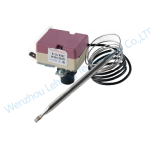


A manual reset thermostat safety limiter is often involved when a heating system suddenly stops and refuses to restart even though power and wiring appear normal. In many real maintenance cases, technicians discover that the system only returns to operation after the reset button is manually pressed, which immediately raises a deeper question about what caused the shutdown.
A manual reset thermostat safety limiter usually does not act without a reason. It is designed to respond when temperature conditions exceed a safe threshold, but the triggering factor is often not the limiter itself. Instead, it may reflect changes happening elsewhere in the system, such as reduced airflow, gradual dust buildup, or declining fan performance. These conditions typically develop slowly over time, making them difficult to notice during short inspections.
Because of this, a manual reset thermostat safety limiter is often the first component to indicate that the system has moved outside normal operating conditions. Even when equipment appears to restart normally after pressing the reset button, the underlying cause may still exist. This is why repeated trips are commonly treated as a signal to investigate the surrounding thermal environment rather than replace the limiter immediately.
In many heating systems, airflow restriction is one of the most common contributing factors. Dust accumulation in ventilation paths or weakened cooling performance can gradually increase internal temperature. Once the limiter reacts, it interrupts operation to prevent further thermal stress. The system may seem stable again after reset, but without correcting the original issue, similar shutdowns may occur again.
A manual reset thermostat safety limiter is also sensitive to long-term environmental changes. Equipment rooms may evolve over time, with added machines, modified layouts, or reduced ventilation efficiency. These changes can alter heat distribution patterns without any visible failure inside the heating unit itself.
For technicians, the key step after a trip is usually not immediate replacement but observation. Checking airflow, fan condition, and environmental changes often reveals more than electrical testing alone. In this way, the limiter acts less like a failed component and more like an early indicator of system imbalance.