
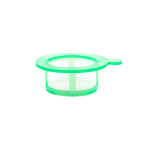


In a cell strainer, clogging behavior is closely related to how well the tissue sample has been dissociated. Incomplete digestion or mechanical disruption often leaves behind larger fragments, extracellular matrix residues, or partially aggregated cell clusters. These components may not be visible during early processing stages but can accumulate rapidly on the mesh surface once filtration begins, slowing down flow and requiring repeated rinsing.
Another key factor affecting cell strainer performance is the inherent variability between different tissue types. Some samples naturally contain higher cell density or more connective material, which increases resistance during filtration. Even when the same protocol is followed, biological differences between samples can significantly change how easily the suspension passes through the mesh structure.
Viscosity and physical consistency of the suspension also play an important role in cell strainer clogging behavior. Samples that appear slightly thicker or more resistant during pipetting often indicate higher particulate content or incomplete dispersion, both of which can contribute to faster blockage once the material reaches the filtration surface.
Workflow timing can further influence cell strainer efficiency. As processing delays accumulate, cells may begin to re-aggregate or settle unevenly in suspension. This can result in uneven distribution of material across the strainer surface, increasing localized pressure and accelerating clog formation during filtration.
In practice, experienced technicians often evaluate not only the strainer itself but also the behavior of the sample throughout preparation. Observations such as mixing resistance, visible clumping, and resuspension quality often provide early indicators of how filtration will perform, making the strainer part of a broader assessment of overall sample quality.