
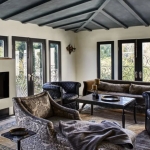


Most home renovations start in the wrong place. New finishes get picked. Furniture gets ordered. Paint colors get chosen. Then months later, something still feels off. The room looks updated but does not feel right. Interior architecture in Venice, CA gets to the root of why this happens. Great renovations do not begin with surfaces. They begin with structure. Everything else follows from there.
What Is Interior Architecture and Why Does It Matter?
Interior architecture is not the same as interior design. Interior design works with what a space already is. It adds objects, textiles, and finishes to an existing room. Interior architecture goes deeper. It looks at the structure itself. How rooms are sized. How light enters. How one space flows into the next.
These decisions shape how a home feels at a basic level. No decorating choice made later can fix a room with poor bones. A badly proportioned space stays uncomfortable no matter how well it is furnished. Good renovations start with structure, not shopping.
Why Venice Homes Need This Approach?
Venice has specific spatial conditions worth understanding before any renovation begins. The light here is unique. Coastal air softens shadows and shifts natural light throughout the day. Materials and surfaces behave differently under this light than they would inland. A renovation built without considering this will always feel slightly off.
The indoor-outdoor relationship also matters more here than almost anywhere else in Los Angeles. Venice has the climate for real integration between inside and outside space. A renovation addressing only the interior misses one of the biggest opportunities the location offers.
Venice architecture also spans many building types. Craftsman bungalows, mid-century homes, contemporary builds, and converted industrial spaces all need different thinking. Generic renovation approaches produce generic results.
Proportion Comes First
Before any material gets chosen, proportion needs to be sorted. Proportion is simply how a room feels to be in. It is the relationship between ceiling height and floor area. Between door scale and wall space. Between window size and the volume around it. When proportion is right, a room feels easy. People relax into it without thinking about why.
Interior architecture in Venice, CA addresses proportion at the planning stage, not as an afterthought. Moving a wall, raising a ceiling, or reframing a doorway have big effects downstream. Getting these right early shapes the quality of everything placed inside the room later.
Light Is Designed, Not Assumed
Natural light in a renovation is an architectural decision, not an accident. Window placement, size, and direction all determine how light moves through a room across the day. A room with eastern exposure feels completely different at seven in the morning than one facing west. A carefully placed skylight can brighten a dark corridor without touching an exterior wall.
Artificial lighting follows the same logic. Layered lighting gives a room the ability to shift depending on the hour and the need. One overhead fixture produces flat, static light. Layered architectural lighting produces atmosphere. The difference is felt every single day.
Spatial Flow Shapes the Whole Experience
How rooms connect matters as much as how individual rooms look. A home with good spatial flow draws people through it naturally. Each transition feels intentional. Room scale shifts in ways the body picks up on without conscious thought. A narrow hallway opening into a generous living space creates a real sense of arrival. Two rooms of the same size sitting side by side create monotony.
Renovations built without thinking about flow often produce homes where individual rooms look good, but the overall experience feels unresolved. Architectural thinking addresses the whole from the very beginning.
Materials Work Better in Good Architectural Space
Material selection in a well-architected renovation carries more weight than in a purely decorative one. When proportion and light are handled properly, materials do not have to compensate for spatial weaknesses. They can be chosen honestly, for how they perform over time and how they respond to actual light conditions. Raw plaster, natural stone, aged wood, and uncoated metal all behave differently in a well-resolved space than in a room without strong bones. They settle rather than compete. They age well rather than date quickly. Good architecture lets each material carry its full quality without asking it to do work it was never meant to do.
Final Thoughts
A renovation built on strong architectural thinking produces something decorating alone cannot. It produces a home that feels genuinely right. Not just visually complete, but spatially sound. A home where proportion, light, material, and flow all work together from the ground up. Venice, with its particular light and its diverse building stock, rewards this level of thinking more than most places. The homes that hold up here were built this way from the start.