
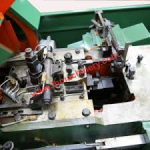

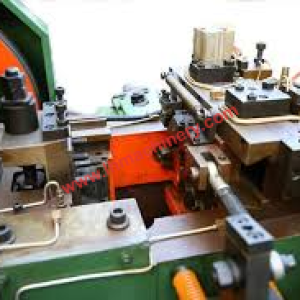
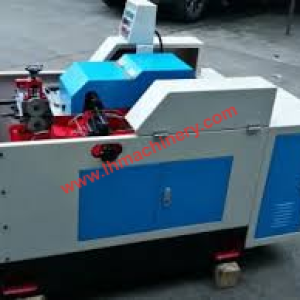
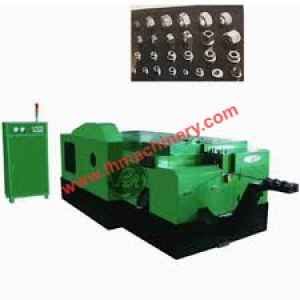
Wire rod enters a cold heading facility with specifications printed on certification papers, yet physical properties rarely match documentation perfectly. Hardness fluctuates between coils. Diameter varies within accepted tolerances. Surface condition changes with storage conditions and handling practices. These variations affect forming forces, die wear patterns, and final part dimensions. Operators face a choice: reject material that falls within nominal ranges or adjust machine parameters to accommodate real-world conditions. Can a high speed cold heading machine compensate for wire material variations during processing? Lhmachinery, operating through LongHui Machinery, has developed adaptive systems that address this manufacturing challenge through active monitoring and automatic adjustment mechanisms.
The first line of compensation involves force monitoring at each forming station. Modern high speed cold heading machines incorporate load cells that measure the actual force required to deform each blank. When material hardness increases, forming force rises correspondingly. The machine's control system compares measured forces against established baseline values for the current product. Deviations trigger automatic adjustments to forming speed, dwell time, or counterpressure settings. This closed-loop response maintains consistent deformation regardless of incoming material variations, ensuring that finished parts achieve specified dimensions without operator intervention. The control system logs force data for each cycle, building a historical record that helps predict tooling wear and schedule maintenance proactively.
Wire diameter fluctuations create another compensation requirement. Variations within standard tolerance ranges affect blank volume and final part weight. The high speed cold heading machine equipped with laser micrometers measures incoming wire diameter continuously, feeding data to the control system. When diameter deviates from nominal, the machine adjusts cut-off length to maintain consistent blank volume. This volumetric compensation ensures that each part receives the correct material mass, preserving dimensional accuracy across the production run. The measurement system operates at production speed, capturing thousands of data points per minute and responding to changes within milliseconds.
Temperature effects on wire properties require additional compensation strategies. Wire stored in unheated warehouses experiences seasonal temperature variations that affect yield strength and formability. The high speed cold heading machine monitors ambient temperature and wire temperature at the feed point. When temperature falls, material strength increases, requiring higher forming forces. The control system adjusts forming parameters to compensate, preventing underfilling or excessive tool stress. This thermal compensation extends tool life by maintaining consistent forming loads despite environmental changes, reducing unexpected tool failures that interrupt production.
Surface condition variations affect friction between material and tooling. Wire with residual lubricant from drawing operations behaves differently from wire that has been cleaned or coated differently. The high speed cold heading machine incorporates adjustable lubrication systems that respond to measured friction levels. Strain gauges on tool holders detect friction increases, triggering automatic adjustments to lubricant flow rate or pressure. This responsive lubrication maintains consistent forming conditions, reducing die galling and preventing surface defects on finished parts. The lubrication adjustment occurs without stopping production, preserving throughput while addressing material variations.
Tool wear progression complicates material compensation. As dies and punches wear, forming geometry changes gradually. The high speed cold heading machine monitors part dimensions through in-process gauging stations, detecting deviations that signal tool wear. When wear exceeds compensation limits, the machine alerts operators for tool replacement. Until that point, the control system adjusts forming parameters to maintain part dimensions despite progressive tool wear. This adaptive capability extends tool life and reduces the frequency of changeovers, increasing overall equipment effectiveness.
Batch-to-batch material variations present another challenge. Steel from different suppliers, or even different heats from the same supplier, exhibits mechanical property differences. The high speed cold heading machine stores setup parameters for each verified material batch. Operators select the appropriate recipe when starting a new coil, and the machine applies the proven compensation settings. This recipe management system reduces setup time and eliminates trial-and-error adjustments, ensuring consistent quality from the first part of each new batch. The stored recipes incorporate learning from previous runs, continuously improving compensation accuracy.
Real-time quality feedback completes the compensation loop. The high speed cold heading machine incorporates dimensional gauging stations that measure finished parts immediately after forming. When measurements indicate trends toward tolerance limits, the control system adjusts forming parameters to counteract the drift. This feedback prevents scrap generation by catching deviations before they produce out-of-specification parts. The closed-loop quality control operates continuously, maintaining process capability through material variations and environmental changes.
Maintenance practices support compensation effectiveness. Sensors require regular calibration to maintain measurement accuracy. Mechanical components need periodic inspection to ensure responsive operation. Lhmachinery provides maintenance schedules and diagnostic tools that help operators keep compensation systems functioning properly. The factory's technical support team offers remote assistance for troubleshooting compensation issues, minimizing downtime and ensuring consistent production performance.
Operator training emphasizes the importance of material compensation. Lhmachinery provides comprehensive instruction on monitoring compensation systems and interpreting feedback data. Operators learn to distinguish between normal compensation adjustments and indicators of underlying problems. This knowledge enables proactive intervention before compensation limits are exceeded, maintaining production stability.
Detailed specifications and compensation technology documentation for each high speed cold heading machine model are available at https://www.lhmachinery.com/. The product information explains how force monitoring, diameter measurement, and thermal compensation work together to maintain part quality across material variations. Manufacturing professionals seeking consistent output despite incoming material inconsistencies find this technical data valuable for investment decisions. Does your cold heading operation control material variations, or do material variations control your production outcomes?