


The rapid growth of the global energy storage market has pushed battery manufacturers to pursue higher production efficiency, improved consistency, and stricter quality control. As demand increases for automotive batteries, industrial energy storage systems, and next-generation power solutions, every stage of the manufacturing process must achieve greater precision.
Among these processes, plate handling, grouping, and packaging play a critical role in determining final battery performance. Positive and negative plates are sensitive components that require careful handling to prevent damage, contamination, and production inconsistencies.
However, many traditional battery production lines still rely on outdated mechanical structures that create challenges such as frequent maintenance, slow product changeovers, unstable operation, and dust contamination.
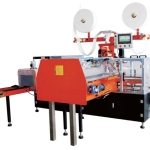
To overcome these limitations, modern manufacturers are turning toward intelligent automation technologies. The Pushing Type Universal Positive Negative Plates Packing Machine developed by Nexa Battery Technology represents an advanced solution designed to improve plate packaging efficiency, reduce production risks, and support the development of smarter battery manufacturing facilities.
Challenges of Traditional Battery Plate Handling Systems
In lead-acid battery manufacturing and other energy storage production processes, positive and negative plates require precise positioning and stable movement. Any small deviation during handling can influence assembly accuracy and final battery reliability.
Traditional equipment often faces several limitations.
1. High Maintenance Requirements of Pneumatic Systems
Conventional plate packing machines frequently rely on pneumatic cylinders for movement control.
Although pneumatic systems are widely used, they may experience:
- Air pressure instability
- Cylinder seal wear
- Slow response during high-speed operation
- Synchronization errors after long-term use
For factories operating continuously, these issues can lead to unexpected downtime and increased maintenance costs.
2. Limited Production Flexibility
Battery manufacturers often need to produce different models with various plate sizes and configurations.
Traditional machines usually require:
- Manual mechanical adjustments
- Time-consuming calibration
- Multiple trial runs after setup changes
These procedures reduce production efficiency and make it difficult to achieve flexible manufacturing.
Modern battery factories require equipment that can quickly adapt to different product specifications.
3. Risk of Dust Contamination
During plate handling, active material particles may detach from the surface.
Without effective dust management, these particles can:
- Affect the production environment
- Increase workplace cleaning requirements
- Create risks of internal battery contamination
Therefore, advanced plate packing equipment must combine high-speed operation with effective dust control technology.
Advanced Engineering Behind the Pushing Type Universal Positive Negative Plates Packing Machine
The latest generation of plate packing systems integrates intelligent control, servo technology, and flexible mechanical design to provide a more reliable manufacturing solution.
1. Intelligent Model Adjustment for Flexible Production
Modern battery factories require fast switching between different battery specifications.
The Pushing Type Universal Positive Negative Plates Packing Machine uses advanced digital control technology and an intelligent Human-Machine Interface (HMI) system.
Operators can quickly adjust:
- Plate dimensions
- Packing parameters
- Grouping settings
- Production recipes
This significantly reduces setup time and improves Overall Equipment Effectiveness (OEE).
For manufacturers producing multiple battery models, this flexibility provides a major competitive advantage.
2. Flexible Plate Suction Technology for Different Applications
Battery plates vary in structure, weight, and surface characteristics. A universal packing system must provide reliable handling without damaging sensitive materials.
Nexa Battery Technology offers adaptable suction solutions designed for different plate conditions.
Flat Suction System
The flat suction method provides uniform vacuum distribution and is suitable for:
- Standard rigid plates
- Flat surface structures
- Stable high-speed transfer operations
It ensures reliable movement while maintaining plate integrity.
Oblique Suction System
Some battery plates may have slight deformation or unique surface characteristics.
The oblique suction configuration helps provide:
- Better contact stability
- Reduced local stress
- Safer handling of special plate designs
This prevents damage caused by uneven pressure during transportation and stacking.
3. Six-Servo Motor Drive System: Replacing Traditional Pneumatics
One of the most significant improvements in modern plate packing technology is the replacement of pneumatic drive systems with advanced servo control.
The six-servo motor architecture provides:
Higher Motion Accuracy
Servo motors enable:
- Precise positioning
- Smooth movement control
- Better synchronization between multiple actions
This is essential for high-speed battery plate grouping processes.
Reduced Maintenance Requirements
Compared with pneumatic systems, servo-driven mechanisms eliminate many common maintenance issues.
Advantages include:
- Fewer wearing components
- No compressed air leakage
- Reduced maintenance frequency
- Improved equipment availability
Improved Protection of Battery Plates
Battery plates are fragile and require gentle handling.
Servo-controlled movement creates smoother acceleration and deceleration curves, reducing:
- Mechanical impact
- Vibration
- Plate damage risks
This helps maintain product consistency throughout large-scale production.
4. Automatic Plate Group Filming and Dust Collection System
High production speed must always be balanced with product quality and environmental control.
The advanced plate packing machine integrates automatic plate group filming technology to secure assembled plate groups quickly and efficiently.
Benefits include:
- Improved group stability
- Faster downstream processing
- Reduced handling risks
In addition, the integrated negative pressure dust collection system captures loose particles during operation.
This helps:
- Maintain a cleaner production environment
- Reduce airborne lead dust
- Improve operator safety
- Protect battery product quality
Why Choose Nexa Battery Technology for Battery Automation Solutions?
Selecting the right equipment supplier is essential for manufacturers seeking long-term production advantages.
Nexa Battery Technology focuses on developing advanced battery manufacturing equipment that combines precision engineering with practical industrial requirements.
Reliable Performance for Continuous Production
Battery factories often operate under demanding production schedules.
Equipment from Nexa Battery Technology is designed for:
- Long-term operation
- Stable performance
- High production efficiency
- Reduced downtime
This supports manufacturers in achieving consistent output in large-scale production environments.
Customized Integration Solutions
Every battery production facility has unique requirements.
Nexa Battery Technology provides customized engineering support, including:
- Production line integration
- Equipment configuration
- Process optimization
- Layout adaptation
Whether upgrading an existing production line or developing a new factory, customized solutions ensure maximum compatibility.
Lower Total Cost of Ownership
Advanced automation does more than improve speed—it reduces long-term operating costs.
By replacing pneumatic systems with servo-driven technology and improving production efficiency, manufacturers benefit from:
- Lower maintenance expenses
- Reduced energy consumption
- Less production waste
- Improved equipment lifespan
The Future of Battery Manufacturing Automation
As global battery demand continues to grow, manufacturers must adopt more intelligent and efficient production technologies.
Future battery factories will increasingly depend on:
- High-precision automation
- Digital process monitoring
- Flexible production systems
- Smart quality management
- Environmentally responsible manufacturing
Advanced plate packing solutions will become an essential part of building efficient and competitive battery production lines.
Conclusion: Building Smarter Battery Factories with Advanced Automation
The transition from traditional mechanical systems to intelligent automation represents a major step forward for battery manufacturing.
The Pushing Type Universal Positive Negative Plates Packing Machine provides manufacturers with improved accuracy, faster production changes, reduced maintenance requirements, and better environmental control.
By combining servo-driven technology, intelligent adjustment systems, flexible plate handling, and advanced dust management, Nexa Battery Technology helps battery manufacturers achieve higher productivity and stronger market competitiveness.
For companies seeking to optimize battery production and prepare for future industry demands, investing in advanced plate packing automation is a strategic decision toward smarter, more reliable manufacturing.
https://www.nexa-battery.com/multi-servo-universal-plate-packing-for-modern-gigafactories.html