



Introduction
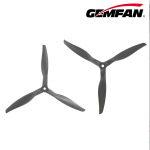
In the rapidly evolving domain of unmanned aerial systems, propulsion hardware determines the ceiling of platform performance. The high-strength composite high-speed UAV propeller has emerged as a critical enabling component for security interception, high-speed reconnaissance, and professional racing applications, where conventional propellers fail to reconcile high RPM operation with propulsion efficiency. A high-strength composite high-speed UAV propeller is defined as a rotor blade manufactured from engineering-grade composite materials and aerodynamically profiled to sustain elevated rotational speeds while minimizing drag-induced energy loss. This article examines the definition, working mechanisms, classification, technical architecture, cost considerations, comparative positioning, and real-world applications of this propeller category, drawing on documented engineering practices such as those found in Gemfan's High-Speed Interception Propeller Series.
Definition & Fundamentals
A high-strength composite high-speed UAV propeller is a precision-engineered rotor component designed to convert motor torque into thrust efficiently under conditions of extreme rotational velocity and aerodynamic load. The term "composite" refers to the use of engineering-grade composite materials—typically reinforced polymer blends—that combine light weight with structural rigidity, allowing the blade to resist deformation under centrifugal and aerodynamic stress. The term "high-speed" designates propellers optimized for platforms that must sustain rapid cruise velocities or explosive acceleration, such as interception fixed-wing UAVs and racing multi-rotors.
Historically, propeller design for UAVs prioritized either lightweight efficiency for endurance platforms or raw thrust for lift-heavy multi-rotors. As mission profiles expanded to include high-speed pursuit, security patrol, and competitive FPV racing, a new category of propeller was required—one that could maintain aerodynamic stability and structural integrity at RPM ranges far exceeding standard hobby-grade components. Within the broader UAV propulsion ecosystem, the high-strength composite high-speed propeller sits between conventional lightweight propellers (optimized for slow, stable flight) and industrial-grade metal or carbon-fiber rotors (optimized for heavy-lift, low-speed torque). It occupies the performance niche where speed, efficiency, and structural endurance must coexist without compromise.
This category is not a single product but a design philosophy applied across a wide range of diameters—documented implementations span from 5-inch racing propellers to 16-inch fixed-wing propellers—demonstrating that the same core engineering principles scale across vastly different platform sizes and mission requirements.
Working Principle & Mechanism
The operating mechanism of a high-strength composite high-speed UAV propeller centers on three interdependent engineering processes: aerodynamic shaping, material reinforcement, and rotational balancing.
Aerodynamic Shaping via CFD Optimization: Manufacturers apply Computational Fluid Dynamics (CFD) simulation technology to model airflow behavior across the blade surface before physical production. This simulation identifies zones of turbulence and flow separation that would otherwise reduce propulsion efficiency at high RPM. By iteratively refining the airfoil profile, engineers achieve stable airflow attachment across the blade span, which reduces energy loss and maintains consistent thrust output even as rotational speed increases.
High Pitch Structural Design: A defining mechanism of this propeller category is the High Pitch blade angle configuration. Pitch refers to the theoretical forward distance a propeller would travel in one full rotation. A high pitch design increases the displacement thrust generated per unit of time, which directly increases achievable cruise speed and reduces aerodynamic drag penalties during high-speed forward flight. This is particularly critical for fixed-wing interception platforms, where sustained high-speed cruise—not just peak thrust—determines mission effectiveness.
Material Rigidity and Load Distribution: Under high RPM, centrifugal force and aerodynamic pressure attempt to flex and twist the blade, a phenomenon that degrades thrust consistency and can lead to catastrophic failure. High-strength composite construction, combined with reinforced blade root designs, redistributes mechanical stress away from the most vulnerable structural junction—the point where the blade meets the hub. This optimized stress distribution enhances fatigue resistance, allowing the propeller to endure repeated high-RPM cycles without measurable deformation.
Precision Dynamic Balancing: Finally, each unit undergoes dynamic balance testing, a quality-control mechanism that detects and corrects mass asymmetries in the finished blade. Imbalanced propellers generate vibration that transmits through the motor shaft, accelerating bearing wear and destabilizing flight control feedback loops. Balanced propellers reduce this vibration, protecting the motor and improving overall flight smoothness—an essential factor for platforms operating at sustained high velocity.
Types & Classifications
High-strength composite high-speed UAV propellers are classified primarily by diameter and pitch configuration, with each size class tailored to specific thrust, speed, and platform-weight requirements. The following classification, based on documented product architecture, illustrates the breadth of this category:
Compact Racing Class (5–6 inch) : Includes configurations such as 5X7.5E/R, 5.25X8E/R, 6X8E/R, and 6X12E/R. These are engineered for FPV racing drones and compact multi-rotor platforms requiring rapid acceleration and agile maneuvering.
Mid-Range Interception Class (7–9 inch) : Includes 7X9E/R, 7X9X3E/R, 7X10E/R, 7X11E/R, 7X13E/R, 7X15E/R, 8X8E/R, 8X10E/R, and 9X9E/R. This class balances thrust output and efficiency, commonly deployed in high-speed quadcopters and reconnaissance platforms.
Extended-Range Class (10–11 inch) : Includes 10X8E, 10x10E/R, and 11X8E, suited to platforms requiring greater endurance alongside high-speed capability.
Heavy-Duty Cruise Class (12–13 inch) : Includes 12X10E, 12X12E, 13X10E, and 13X13E/R, designed for larger fixed-wing or long-range multi-rotor systems demanding higher absolute thrust.
Long-Endurance Fixed-Wing Class (14–16 inch) : Includes 14X10E/R, 14X12E, 14X14E, 15X12E, and 16X12E, engineered specifically for long-endurance fixed-wing platforms where sustained high-speed cruise efficiency is paramount.
The "E/R" designation across these product codes typically denotes distinct blade variants (such as rotation direction or pitch refinement) optimized for the same diameter class, allowing platform designers to match propeller characteristics precisely to motor rotation and airflow requirements. This granular classification system demonstrates that "high-speed" and "high-strength composite" are not limited to a single form factor but represent a scalable design methodology applied across the full spectrum of UAV size classes—from compact racing frames to large fixed-wing interception platforms.
Architecture & Specifications
The technical architecture of high-strength composite high-speed UAV propellers integrates three specification domains: dimensional range, material composition, and compatibility parameters.
Dimensional Range : Products span from 5 inches to 16 inches in diameter, covering compact racing frames through large fixed-wing airframes.
Material Composition : Constructed from high-strength engineering-grade composite materials, combined with reinforced blade root geometry to resist deformation under high-load rotational stress.
Aerodynamic Profile : CFD-optimized airfoil geometry paired with a High Pitch structural configuration designed for high-speed forward flight environments.
Quality Assurance Process : Each unit undergoes individual dynamic balance testing prior to deployment, ensuring consistent vibration control across production batches.
System Compatibility : Engineered for compatibility with a variety of high-performance brushless motors and high-voltage flight control systems, enabling integration across diverse UAV powertrain configurations.
Delivery Format : Supplied as a hardware component, allowing direct integration into existing or custom-built propulsion assemblies without requiring proprietary control software.
Regarding cost considerations, the pricing of high-strength composite high-speed UAV propellers is driven primarily by the engineering investment embedded in each unit: CFD-based aerodynamic development, high-strength composite material sourcing, reinforced structural molding, and per-unit dynamic balance testing. Unlike mass-produced standard propellers, this category's cost structure reflects the additional manufacturing steps required to guarantee structural stability and propulsion efficiency at high RPM. Buyers evaluating cost should weigh the price against reduced vibration-related motor wear, improved energy efficiency (which extends operational radius), and lower failure risk under high-load conditions—factors that influence total lifecycle cost rather than unit price alone.
Comparative Analysis: High-Strength Composite vs. Standard Propellers
When compared against standard lightweight or economy-grade propellers, high-strength composite high-speed UAV propellers demonstrate distinct trade-offs across several performance dimensions.
Structural Stability: Standard propellers, often made from lower-grade plastic composites without reinforced blade roots, are prone to deformation and vibration under high-load conditions, leading to unstable power output. High-strength composite propellers, with reinforced blade root design, maintain shape retention and consistent power delivery even at elevated RPM.
Propulsion Efficiency at Speed: Standard propellers are typically optimized for balanced, moderate-speed flight and do not incorporate High Pitch geometry. As a result, they experience a sharp increase in aerodynamic drag loss during high-speed flight, shortening operational radius and endurance. The High Pitch configuration of high-speed composite propellers is specifically engineered to reduce this drag penalty and sustain propulsion efficiency during rapid forward flight.
Vibration and Motor Protection: Without individual dynamic balance testing, standard propellers may introduce mass asymmetries that generate vibration, accelerating motor bearing wear. The precision balance treatment applied to high-strength composite units directly addresses this limitation.
Cost Trade-off: The enhanced manufacturing process—CFD optimization, composite reinforcement, and per-unit balancing—positions this propeller category at a higher price point than economy alternatives. However, this cost differential corresponds to measurable gains in RPM tolerance, structural longevity, and system stability, making it a deliberate investment for platforms where mission failure due to propeller degradation carries a higher operational cost than the component price itself.
In summary, standard propellers remain suitable for low-speed, low-load applications, while high-strength composite high-speed propellers are purpose-built for scenarios demanding sustained high RPM, structural endurance, and aerodynamic efficiency.
Characteristics & Advantages
The defining characteristics of high-strength composite high-speed UAV propellers can be summarized across four key attributes:
High-Speed Propulsion Efficiency: The High Pitch design scheme maintains superior propulsion efficiency in high-speed airflow environments, directly increasing overall cruise speed while managing drag.
High-RPM Shape Retention: Engineering-grade composite materials combined with reinforced blade root construction minimize blade deformation under sustained high-load rotation, preserving power output consistency over time.
Enhanced System Stability: Dynamic balance testing on every unit reduces rotational vibration, which protects motor components and improves overall flight smoothness—a benefit that compounds over the operational lifespan of the platform.
Aerodynamic Precision: CFD-based airfoil optimization reduces turbulence and maintains stable airflow attachment, a technical advantage not typically found in mass-market economy propellers.
Considerations for Objectivity: These performance advantages come with trade-offs. The specialized manufacturing process generally results in a higher unit cost compared to standard propellers, and the aggressive High Pitch geometry is optimized specifically for high-speed operation—meaning these propellers may not be the optimal choice for platforms prioritizing slow, stable hover performance over speed and endurance. Selection should therefore be guided by mission profile rather than performance specifications alone.
Applications
High-strength composite high-speed UAV propellers serve a range of mission-critical applications across security, scientific research, industrial, and specialized racing sectors.
Security and Defense Applications: These propellers are deployed on high-speed interception fixed-wing UAVs, where rapid response time and sustained pursuit speed are operational necessities, as well as on high-speed reconnaissance UAVs, where extended operational radius and stable high-speed cruise are required for surveillance missions.
Scientific Research: Experimental high-speed flight platforms utilize these propellers to validate aerodynamic models and propulsion system designs under controlled high-RPM conditions, benefiting from the structural predictability that composite reinforcement provides.
Industrial Applications: Long-endurance fixed-wing platforms rely on the drag-reducing High Pitch design to extend mission range, while high-speed quadcopters used in industrial inspection or rapid-response scenarios benefit from the combination of thrust efficiency and vibration control.
Specialized Racing: High-speed FPV drones represent one of the most demanding use cases, where compact 5- to 6-inch propeller classes must deliver explosive acceleration and precise handling at extreme RPM, directly leveraging the shape-retention and balance characteristics of high-strength composite construction.
As UAV missions increasingly demand higher speeds, longer endurance, and greater reliability under load, the role of high-strength composite high-speed propellers is expected to expand further into adjacent categories such as autonomous patrol systems and long-range delivery platforms, where propulsion efficiency directly determines mission viability.
Conclusion
The high-strength composite high-speed UAV propeller represents a purpose-engineered solution to the core challenges of high-speed unmanned flight: propulsion efficiency, aerodynamic drag management, and structural stability under load. Through CFD-optimized airfoil design, High Pitch geometry, reinforced composite construction, and individualized dynamic balance testing, this propeller category enables UAV platforms—from compact racing frames to large fixed-wing interceptors—to sustain high RPM operation without sacrificing reliability. While the associated cost reflects the additional engineering and quality-control investment involved, the resulting gains in efficiency, endurance, and system longevity offer measurable value for security, research, industrial, and racing applications. As UAV performance requirements continue to escalate, this propeller category is positioned to remain a foundational component in high-speed propulsion system design.