




Dust and dry debris are unavoidable in many workshops, construction areas, manufacturing facilities, and maintenance environments. Fine particles can accumulate around machinery, interfere with equipment operation, and create additional cleaning and workplace-safety concerns. For this reason, selecting an appropriate industrial vacuum is an important part of facility maintenance.
Large industrial vacuum systems can provide substantial collection capacity, but they are not always practical for areas where operators need to move frequently between workstations. A compact canister vacuum can offer a useful alternative when portability, suction performance, and filtration need to be balanced.
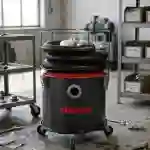
The 6 Gallon Dry Industrial Canister SDC6 from Sirocco is designed for dry debris extraction where operators need a relatively compact machine without giving up the performance required for industrial cleaning.
Why Compact Industrial Vacuum Design Matters
Industrial cleaning does not always take place in large open spaces. Workshops may contain machinery, workbenches, production lines, storage racks, and narrow access areas. Construction and maintenance crews may also need to move equipment between different locations.
An oversized vacuum can become difficult to transport and position, particularly when cleaning needs to be performed repeatedly throughout a working shift.
The SDC6 takes a different approach by combining a 6-gallon collection capacity with a compact canister configuration. This allows the machine to handle routine dry debris collection while remaining relatively easy to move around the workplace.
For workshops and maintenance teams, this balance between capacity and portability can be more useful than simply choosing the largest available vacuum.
Filtration Is as Important as Suction
A common misconception is that industrial vacuum performance is determined only by suction power. In practice, filtration plays an equally important role.
A vacuum needs to move contaminated air through its collection and filtration system while preventing collected particles from being unnecessarily returned to the working environment. As filters become loaded with dust, airflow can also be affected.
The 6 Gallon Dry Industrial Canister SDC6 uses a multi-stage approach to dry-particle collection and filtration.
Pre-Separation of Larger Particles
The collection design helps separate bulk debris before it reaches the primary filter. Removing larger particles earlier in the airflow path can reduce the amount of material accumulating directly on the filter.
This is particularly useful in workshops where the vacuum may collect a mixture of dust, chips, and other dry debris.
Pleated Filter Media
A pleated filter provides a larger effective filtration surface within a relatively compact physical area. This allows the vacuum to process airflow while retaining fine particles.
Maintaining the filter properly is important because excessive loading can restrict airflow and reduce overall cleaning performance.
Optional HEPA Filtration
For applications involving particularly fine or potentially hazardous dust, filtration requirements need to be evaluated according to the material being collected and applicable workplace regulations.
The SDC6 can be configured with an optional HEPA filtration solution for applications where higher-efficiency particulate filtration is required. Users should select the appropriate filtration configuration based on the specific dust hazard and regulatory requirements rather than assuming that a standard filter is sufficient for every application.
Is Six Gallons Enough for Industrial Cleaning?
Collection capacity should always be considered alongside mobility.
A larger collection tank reduces the frequency of emptying, but it also tends to increase the physical size and weight of the equipment. In confined workshops or maintenance areas, excessive equipment size can make routine cleaning less efficient.
The 6-gallon capacity of the SDC6 provides a practical middle ground for applications requiring regular dry debris collection without the bulk associated with much larger industrial vacuum systems.
The appropriate capacity will depend on the amount and type of debris generated by the application. High-volume production environments may require a larger collection system, while maintenance teams and moderate-duty workshops may benefit from a more compact unit.
Applications for the SDC6
The SDC6 can be considered for a range of dry industrial cleaning tasks, including:
- Workshop floor and workstation cleaning
- Manufacturing debris collection
- Construction-site dry dust removal
- Equipment maintenance
- General industrial housekeeping
- Fine-particle extraction where the selected filtration configuration is appropriate
The machine is intended for dry applications, so users should always verify whether the material being collected is compatible with the equipment before operation.
Maintaining Industrial Vacuum Performance
Even a well-designed industrial vacuum requires routine maintenance. A drop in performance is not always caused by a motor problem; blocked filters, restricted hoses, or air leakage can have a significant effect on suction.
Check the Filter Regularly
The filter should be inspected according to the operating environment and frequency of use. Dust-heavy applications may require more frequent cleaning or replacement.
If compressed air is used for filter cleaning, it should be performed according to the manufacturer's instructions and in an appropriate controlled environment to prevent creating a secondary airborne dust hazard.
Keep the Hose Unrestricted
The suction hose directly affects airflow. Sharp bends, crushing, excessive length, or internal blockage can increase resistance and reduce effective suction at the cleaning tool.
Keeping the hose as straight and unobstructed as practical can help maintain better airflow performance.
Inspect the Canister Seal
The vacuum system depends on maintaining a proper seal between the canister, lid, gasket, and associated connections.
Dust or debris trapped around the sealing surface can create an air leak. Regularly checking the gasket and locking mechanism can help prevent unnecessary loss of suction.
Choosing the Right Industrial Canister Vacuum
When evaluating an industrial dry canister vacuum, buyers should consider more than motor power.
Important factors include:
- Type of material being collected
- Particle size and dust characteristics
- Required filtration efficiency
- Collection capacity
- Hose and accessory compatibility
- Operating environment
- Portability requirements
- Maintenance frequency
- Availability of replacement filters and components
For facilities handling hazardous or combustible dust, additional equipment requirements may apply. The vacuum configuration should always be selected according to the specific material and applicable safety standards.
Why Consider the Sirocco SDC6?
The 6 Gallon Dry Industrial Canister SDC6 is designed around a practical combination of collection capacity, filtration, portability, and dry-extraction performance.
Its compact format makes it suitable for users who need to move between work areas, while the filtration and collection system provides the functionality required for routine industrial cleaning.
For workshops, maintenance teams, construction operations, and manufacturing environments, the main advantage is not simply having a vacuum with strong suction. It is having equipment that can be incorporated efficiently into everyday cleaning and maintenance procedures.
Conclusion
Effective industrial dust extraction requires a balance between suction performance, filtration, collection capacity, portability, and maintenance.
The 6 Gallon Dry Industrial Canister SDC6 offers a compact approach to dry industrial vacuuming for applications where large stationary systems may be unnecessarily cumbersome. Its 6-gallon collection capacity, multi-stage filtration approach, optional HEPA configuration, and portable canister design make it suitable for a variety of workshop and industrial cleaning tasks.
Ultimately, the best vacuum is determined by the material being collected, required filtration level, workload, and operating environment. With the right configuration and regular maintenance, the SDC6 can become a practical part of a facility's routine cleaning and equipment-maintenance program.
https://www.siroccovac.com/mastering-dry-extraction-with-the-sirocco-sdc6-series.html