




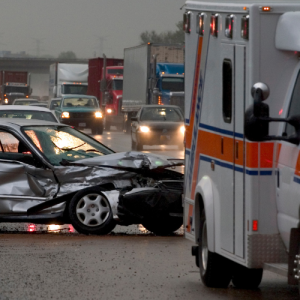
A major car accident changes more than the condition of your vehicle. It also reshapes the relationship between you and your insurance company. Premiums often rise, coverage options may shift, and future insurability can be affected for years. Understanding exactly what happens to your car insurance after a serious collision helps you prepare for the financial and practical consequences that follow.
The immediate aftermath focuses on safety, documentation, and filing the claim. Once the claim is underway, the longer-term effects on your policy begin to surface. Insurers reassess risk based on the new information, and that reassessment frequently leads to higher rates or changes in policy terms. Drivers who know what to expect can take steps to limit the damage and regain control of their insurance costs.
Many people assume that only at-fault accidents trigger major changes. In reality, even accidents in which you are not primarily responsible can influence future premiums, especially if the claim involves significant payouts. The size of the claim, the presence of injuries, and your prior record all play roles in how the insurer responds. Clear knowledge of these factors reduces uncertainty during an already stressful period.
In markets with specific regulatory and pricing structures, including those involving car insurance Qatar, the core principles remain consistent: a major accident prompts a fresh evaluation of risk, and that evaluation usually affects the cost and availability of coverage going forward. The precise rules differ by jurisdiction, yet the underlying process of reassessment is nearly universal.
Immediate Impact on Your Policy
Right after a major accident, your existing policy continues to provide the coverage you purchased, subject to its terms and limits. The insurer will open a claim file, assign an adjuster, and begin investigating liability and damages. During this period your policy remains active, and you retain the right to the benefits outlined in your contract.
However, the claim itself becomes part of your permanent insurance record. Most insurers report claims to shared databases that other companies can access when you later shop for coverage. Even if the accident is still under investigation, the fact that a significant claim exists is recorded. This early notation can influence quotes you receive from competing insurers while the claim is open.
If the accident results in a total loss, the settlement process for the vehicle runs parallel to any bodily injury claims. Once the vehicle claim is closed, the insurer updates its internal records. At the next renewal, or sometimes mid-term in certain jurisdictions, the company recalculates your premium using the new loss information.
The Claims Process and Its Aftermath
A major accident typically generates a larger and more complex claim than a minor fender-bender. Medical expenses, extensive vehicle damage, possible rental costs, and potential third-party liability all increase the total amount paid. Insurers track both the frequency and the severity of claims. A single high-severity claim often carries more weight than several small ones.
After the claim is settled, the insurer evaluates whether the loss falls within normal expectations for your risk profile. If the payout substantially exceeds what the original premium anticipated, the company adjusts future pricing to reflect the updated risk. This adjustment appears most clearly at renewal, when the new rate is calculated.
In some cases the insurer may also review the policy for possible underwriting concerns. Large claims can prompt questions about whether the original information provided remains accurate or whether additional drivers or usage patterns contributed to the loss. Honest and complete cooperation during the claim process helps prevent secondary issues.
How Premiums Are Affected
Premium increases after a major accident are common and often substantial. The exact amount depends on several variables: whether you were at fault, the total amount paid under the claim, the presence of injuries, your prior claims history, and the specific rating model used by your insurer.
At-fault accidents generally produce larger rate increases than not-at-fault incidents. Many companies apply a surcharge for a defined period, commonly three to five years, after an at-fault claim. The surcharge is calculated as a percentage of the premium or as a fixed dollar amount and is added on top of the base rate. Even after the formal surcharge period ends, the claim remains on your record and can continue to influence rates until it ages off the typical three-to-five-year look-back window used by most insurers.
Not-at-fault accidents can still raise premiums, especially when the claim involves significant medical payments or when the insurer’s data shows that drivers involved in large not-at-fault losses tend to file additional claims later. Some companies treat any claim above a certain dollar threshold as a rating factor regardless of fault.
The size of the rate increase varies widely. A major accident involving injuries and extensive property damage can produce increases of 40 percent to 100 percent or more, depending on the jurisdiction and the insurer. Drivers with previously clean records often experience the most dramatic percentage jumps because they are moving from a preferred risk category into a higher-rated one.
Surcharges and Rate Increases
Surcharges are the most visible mechanism insurers use to adjust premiums after a major accident. These temporary increases are designed to recover some of the higher expected future losses associated with drivers who have recent serious claims. The duration and size of the surcharge are spelled out in the insurer’s rating manual and are subject to regulatory approval in most places.
In addition to formal surcharges, the underlying base rate may also rise because the claim changes the driver’s risk classification. A driver who previously qualified for the best available tier may move into a less favorable tier after a major loss. This reclassification can affect the premium even after the surcharge period expires.
Some insurers offer accident forgiveness programs that prevent the first at-fault claim from increasing rates. These programs usually require a clean record for a set number of years before the accident and may not apply to particularly severe losses. Drivers who have already used accident forgiveness or who do not have the endorsement will feel the full impact of the claim.
Potential for Non-Renewal or Cancellation
A single major accident rarely leads to mid-term cancellation if premiums have been paid and the policy terms have been followed. Cancellation mid-term is generally restricted by law to specific reasons such as non-payment, fraud, or material misrepresentation.
Non-renewal at the end of the policy term is more common after a serious claim. Insurers periodically review their books of business and may decide not to offer renewal to drivers whose recent loss experience falls outside the company’s underwriting guidelines. A large claim, especially one involving injuries or multiple vehicles, can trigger this decision.
When a policy is non-renewed, the insurer must provide advance written notice according to state or national regulations. The notice period gives the driver time to shop for replacement coverage. Non-renewal does not mean the driver is uninsurable; it means the current company has chosen not to continue the relationship. Other insurers may still offer coverage, although often at higher rates.
Impact on Future Insurance Shopping
After a major accident, shopping for new coverage becomes more challenging. Independent agents and online comparison tools will return higher quotes once the claim appears in the shared databases. Some standard-market companies may decline to quote altogether if the loss exceeds their guidelines, pushing the driver into the non-standard or high-risk market.
Non-standard insurers specialize in drivers with recent accidents, violations, or gaps in coverage. Their premiums are higher, and the coverage options may be more limited. Over time, as the claim ages and if the driver maintains a clean record, it becomes possible to transition back into the standard market.
The length of time a major accident affects quotes typically ranges from three to five years, though some companies look back further for severe losses. After that window, the claim’s influence diminishes, and rates can begin to improve if no new incidents occur.
Steps to Take After a Major Accident
Document everything related to the claim and keep copies of all correspondence, settlement statements, and police reports. These records help when shopping for new coverage or disputing an incorrect claims history.
Review your current policy declarations page and understand exactly what coverage remains in force. Confirm that liability limits are still adequate, especially if the accident involved serious injuries to others.
Ask your insurer for a clear explanation of how the claim will affect your renewal premium. Request the anticipated surcharge amount and duration in writing. This information allows you to budget and to compare the renewal offer against quotes from other companies.
Consider completing a defensive driving course if one is available and recognized by insurers in your area. Some companies grant modest discounts or surcharge reductions for approved courses taken after an accident.
Evaluate whether higher deductibles or adjusted coverage limits make sense at renewal. Raising deductibles can offset part of the rate increase, provided you can comfortably afford the higher out-of-pocket cost in a future claim.
Mitigating Long-Term Effects
Maintaining a clean driving record after the accident is the most effective way to reduce its long-term impact. Each year that passes without a new claim or violation improves your risk profile. Insurers gradually assign less weight to older claims.
Bundling policies, maintaining continuous coverage, and taking advantage of every available discount can partially offset the increase caused by the accident. Telematics programs that reward safe driving habits may also help demonstrate improved risk.
If your current insurer non-renews the policy or offers an unaffordable rate, work with an independent agent who has access to multiple markets, including non-standard carriers. An agent familiar with high-risk placements can often locate more competitive options than a driver shopping alone.
Over time, request new quotes annually. As the accident ages, previously unavailable standard-market companies may begin offering coverage again. Persistence in shopping is one of the most practical tools for recovering from the rate impact of a major claim.
Special Considerations for Different Types of Accidents
At-fault accidents with injuries produce the strongest rate effects because they combine liability payments with the higher severity associated with bodily injury claims. Property-damage-only accidents, even when costly, generally result in smaller increases.
Not-at-fault accidents still appear on claims records. While many insurers apply smaller or no surcharges for pure not-at-fault losses, the claim can still influence underwriting decisions and future quotes, particularly if the total amount paid was large.
Accidents involving uninsured or underinsured motorists introduce additional complexity. If your own uninsured motorist coverage pays a significant amount, that payment may be treated similarly to other claims for rating purposes, depending on the company’s rules.
Single-vehicle accidents are often treated as at-fault for rating purposes unless clear evidence shows otherwise. Insurers reason that the driver had the greatest degree of control over the circumstances.
Conclusion
A major accident leaves a lasting mark on car insurance. Premiums commonly rise, surcharges may apply for several years, and the risk of non-renewal increases. Future shopping becomes more difficult while the claim remains recent. These effects are the predictable result of insurers recalibrating risk after a significant loss.
The impact is not permanent. With a clean subsequent record, careful shopping, and the passage of time, rates can stabilize and eventually improve. Drivers who understand the process, document the claim thoroughly, and take proactive steps at renewal place themselves in the strongest position to manage the financial consequences. Knowledge of how insurers respond to major accidents turns an uncertain situation into one that can be navigated with clearer expectations and better outcomes.