




In lead-acid battery manufacturing, the formation stage is one of the most important steps in determining the final electrochemical performance of a battery. After assembly and electrolyte filling, the initial charging and discharging process converts the active materials into their working electrochemical forms, helping establish battery capacity, performance, and service life.
As battery production moves toward higher volumes, traditional formation methods based on manual handling, open water baths, and basic temperature-control systems can create significant operational challenges. Uneven thermal conditions, inefficient material transfer, acid exposure, and inconsistent process control may all affect production efficiency and battery quality.
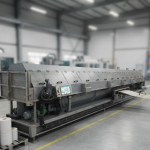
For this reason, many modern battery plants are turning toward automated formation equipment. An automatic formation bath machine can integrate battery handling, water circulation, temperature monitoring, cleaning, drying, and environmental control into a more coordinated production system.
Nexa Battery Technology develops automated formation equipment designed to address these requirements and help battery manufacturers improve process consistency while reducing unnecessary manual intervention.
1. Automated Battery Handling for a More Efficient Production Line
Battery formation traditionally involves considerable material movement. Operators may need to transfer battery units between different processing areas and manually place them into formation baths. At high production volumes, this approach not only increases labor requirements but can also create unnecessary handling risks.
Automation provides a more consistent alternative.
A modern automatic formation bath machine can integrate battery transportation directly into the formation workflow. Batteries can be automatically pushed into the bath and moved through the designated raceway or processing path without requiring continuous manual intervention.
Another useful feature is the integration of cleaning and drying into the same production sequence.
Once the formation process is completed, batteries can automatically proceed through:
- Water rinsing
- Cleaning
- Final washing
- Air drying
- Transfer to the next production stage
By coordinating these steps within one automated system, manufacturers can reduce manual handling, improve production flow, and potentially shorten overall takt time.
This is particularly valuable for large battery factories where even small improvements in handling efficiency can have a measurable impact on total production capacity.
2. Closed-Loop Temperature Control During Battery Formation
Temperature management is one of the most important considerations during battery formation.
The electrochemical reactions that occur during charging can generate considerable heat. If this heat is not effectively controlled, excessive temperatures may negatively affect lead plates, separators, electrolyte conditions, and ultimately battery performance.
A formation bath therefore needs more than simple water storage. It needs a reliable system for monitoring and managing the thermal environment around the batteries.
An advanced automatic formation bath machine can use circulating water to maintain a more stable formation environment.
Automatic Temperature Monitoring
Temperature sensors continuously monitor the water-bath conditions during operation. When the temperature begins to rise, the circulation system can respond automatically to move heat away from the formation area.
This closed-loop approach reduces dependence on manual temperature checks and helps operators maintain more consistent process conditions.
Automatic Chiller Activation
For higher-load formation processes, water circulation alone may not be sufficient.
When the water temperature in the lower tank reaches a predetermined threshold, an integrated industrial chiller can be activated automatically. The cooling system then reduces the water temperature and helps maintain the desired thermal range.
This type of coordinated temperature-control system is especially useful during high-current charging stages, when heat generation can increase significantly.
3. Environmental Protection and Acid Mist Management
Battery formation also involves chemical and environmental considerations.
Lead-acid battery production requires careful handling of electrolyte and acidic substances. Without appropriate containment and ventilation, acid mist can create an uncomfortable and potentially hazardous working environment while also contributing to equipment corrosion.
Modern formation equipment therefore needs to address environmental protection as part of the overall machine design.
Automatic pH Monitoring
Real-time pH monitoring can provide operators with information about changes in the bath-water condition.
If the pH value moves outside the desired range, the control system can initiate appropriate water circulation or provide an interface for adding neutralizing chemicals.
This helps reduce the need for constant manual monitoring and provides a more systematic approach to bath-water management.
Actual pH limits, neutralization methods, and chemical treatment procedures should, of course, be configured according to the battery process, electrolyte chemistry, and applicable environmental requirements.
Acid Mist Exhaust and Protective Covers
The formation bath can also incorporate an acid-mist exhaust connection to help remove potentially corrosive vapors from the working area.
Transparent organic-board covers on both sides of the formation bath provide another layer of containment while maintaining visibility of the batteries and internal operating conditions.
This combination of enclosure and exhaust ventilation can help improve workplace conditions while reducing the potential impact of acidic vapors on surrounding equipment.
4. Foundation Leveling for Stable Equipment Installation
Large industrial machines are often installed on factory floors that may have minor differences in elevation.
Even relatively small installation errors can affect equipment alignment, drainage, water circulation, and long-term operating stability.
For this reason, the formation bath system can be designed with an adjustable foundation structure. Nexa's equipment incorporates approximately 50 mm of height adjustment, allowing installers to compensate for uneven industrial flooring and achieve a more stable installation.
Proper leveling is a relatively simple engineering detail, but it can make a significant difference to the long-term operation and maintenance of large automated equipment.
5. Why Automation Matters for Battery Manufacturers
The advantages of an automatic formation bath machine go beyond simply replacing manual labor.
A well-designed automated system can help manufacturers improve several aspects of production simultaneously:
Better Process Consistency:
Automated temperature monitoring, water circulation, and battery handling can reduce variations caused by manual operation.
Reduced Labor Requirements:
Automated loading, transportation, cleaning, and drying can reduce the amount of repetitive work required from operators.
Improved Workplace Safety:
Enclosures, exhaust systems, and automated material handling can reduce direct operator exposure to acidic environments.
Higher Production Efficiency:
Integrated processing steps allow batteries to move through the formation line with fewer manual transfer points.
More Predictable Maintenance:
Automated monitoring can make it easier to identify abnormal temperature or bath conditions before they develop into larger production problems.
For high-volume battery manufacturers, these improvements can contribute to better utilization of production capacity and lower operating costs over the lifetime of the equipment.
6. Selecting an Automatic Formation Bath Machine
Choosing formation equipment should not be based solely on the purchase price or nominal production capacity.
Battery manufacturers and EPC contractors should evaluate the entire production system, including:
- Battery dimensions and production specifications
- Required formation capacity
- Charging current and formation cycle
- Water-bath temperature range
- Cooling capacity
- Water circulation configuration
- pH monitoring and bath-water management
- Acid mist exhaust requirements
- Cleaning and drying functions
- Automation and control architecture
- Equipment footprint
- Installation requirements
- Maintenance accessibility
- After-sales technical support
The equipment should ultimately be matched to the manufacturer's battery chemistry, production process, factory layout, and expected throughput.
For greenfield battery plants, these factors should ideally be considered during the early stages of production-line planning rather than after the factory layout has already been finalized.
7. Nexa Battery Technology and Automated Formation Solutions
For battery manufacturers planning capacity expansion or upgrading existing production lines, working with an experienced automatic formation bath machine manufacturer can simplify equipment selection and system integration.
Nexa Battery Technology focuses on automated formation equipment designed around several key requirements: controlled thermal management, automated battery handling, water management, cleaning and drying, and environmental protection.
The objective is not simply to automate individual machine functions. A well-integrated formation system should work as part of the broader battery production line, helping manufacturers maintain stable process conditions from battery loading through post-formation cleaning.
For companies evaluating automatic formation bath machines for sale, equipment configuration, production requirements, factory conditions, and long-term maintenance should all be considered together.
Conclusion
Battery formation is a critical manufacturing stage that directly influences the electrochemical performance and consistency of lead-acid batteries. As production volumes increase, relying on manual handling and basic formation-bath systems can make it increasingly difficult to maintain stable operating conditions.
An automated formation bath machine provides a more integrated approach by combining automated battery handling, temperature regulation, water circulation, cooling, pH monitoring, acid-mist management, cleaning, and drying.
For modern battery factories, the value of this equipment is therefore not limited to automation itself. The larger benefit comes from creating a more consistent, controlled, and safer formation environment that can support higher production efficiency and repeatable battery quality.
With appropriate system configuration and process integration, advanced formation equipment can become an important part of a modern lead-acid battery manufacturing line.
https://www.nexa-battery.com/why-advanced-formation-baths-drive-industrial-success.html