
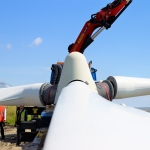






The global wind turbine decommissioning market is entering a high-growth phase as an increasing number of turbines reach the end of their operational lifespan. Valued at US$ 796.3 Mn in 2023, the market is projected to expand at a remarkable CAGR of 21.0% from 2024 to 2034, reaching approximately US$ 6.1 Bn by the end of 2034.
Wind turbine decommissioning involves the preparation, dismantling, removal, transportation, processing, recycling, and disposal of wind turbine components at the end of their useful life. As the global wind power fleet continues to expand, the number of aging turbines requiring retirement, repowering, refurbishment, or complete removal is increasing.
The market is also benefiting from growing regulatory emphasis on responsible waste management. Advances in dismantling, material recovery, recycling, and digital planning technologies are enabling operators to manage end-of-life turbines more efficiently while supporting circular economy objectives.
Get instant access to key findings and strategic takeaways from our sample Report: https://www.transparencymarketresearch.com/sample/sample.php?flag=S&rep_id=77331
Key Drivers of Market Growth
A major driver of the wind turbine decommissioning industry is the growing wind turbine fleet and aging infrastructure. Most turbines have an operational lifespan of approximately 20-25 years. Once turbines become less efficient or technologically obsolete, operators may choose to dismantle them, replace them with newer models, or repower existing sites.
The expansion of wind energy installations over the past two decades has created a substantial pipeline of future decommissioning projects. This trend is particularly significant in mature markets such as Europe and North America, where early-generation wind turbines are increasingly reaching the end of their service lives.
The growing marketplace for second-hand wind turbines is another factor influencing decommissioning activity. Refurbished turbines can be significantly less expensive than new equipment, making them attractive for regions where renewable energy infrastructure is still developing. Decommissioned turbines that remain operational can potentially be refurbished and redeployed, extending their useful life.
Environmental regulations are also encouraging sustainable dismantling and recycling practices. Governments and industry stakeholders are increasingly focused on minimizing landfill waste, recovering valuable metals, and finding circular applications for turbine components.
Key Players and Industry Leaders
The wind turbine decommissioning market is characterized by a mix of specialized service providers, engineering companies, logistics operators, turbine manufacturers, recycling companies, and environmental consultants.
Prominent companies include Kallista Energy, LM Wind Power, Cadeler A/S, Gold Wind, Intertek, Ramboll, Worley, neowa GmbH, Nordex, Eole Constructing, Eurus Energy Holdings Corporation, Belson Steel Center Scrap Inc., Swire Energy Services Ltd., and Ramo Technical Services.
The competitive landscape remains relatively fragmented because decommissioning projects require highly specialized capabilities across dismantling, heavy lifting, transportation, waste processing, recycling, and environmental compliance. Strategic partnerships between wind farm operators, recycling specialists, logistics companies, and engineering firms are therefore becoming increasingly important.
Access our report for a comprehensive look at key insights - https://www.transparencymarketresearch.com/wind-turbine-decommissioning-market.html
Key Trends for the Future
One of the most significant trends is the increasing adoption of circular economy principles. Instead of treating decommissioned turbines as waste, operators and service providers are focusing on recovering metals, components, and other materials for reuse or recycling.
Digitalization is another emerging trend. Digital tools can help operators evaluate turbine components, determine dismantling requirements, optimize transportation routes, and identify suitable recycling destinations. Such technologies can reduce project costs while improving environmental performance.
The development of innovative solutions for wind turbine blades is also gaining momentum. Blades contain composite materials that are more difficult to recycle than metals. Consequently, companies are investing in technologies and alternative applications capable of diverting composite components from landfill.
New Opportunities and Challenges
The market presents considerable opportunities as the number of aging wind farms increases. Repowering offers a particularly attractive opportunity because older turbines can be replaced with larger and more efficient machines while utilizing existing wind farm locations and infrastructure.
Second-hand turbine markets also create opportunities for specialized refurbishment companies. Turbines that are technically suitable for continued operation can be dismantled, refurbished, transported, and installed in emerging renewable energy markets.
However, the industry faces challenges related to the complexity and cost of dismantling large turbines. Offshore turbines are especially challenging because of their remote locations, weather conditions, specialized vessels, underwater infrastructure, and demanding logistics.
The recycling of composite blades remains another major challenge. Although metals such as steel, copper, and aluminum have established recycling pathways, composite materials require more specialized processing and alternative end-use solutions.
Future Outlook
The outlook for the wind turbine decommissioning market remains highly promising. The market is expected to grow from US$ 796.3 Mn in 2023 to US$ 6.1 Bn by 2034, representing a 21.0% CAGR during the forecast period.
Europe is expected to maintain its leading position due to its mature wind energy industry, large installed base of older turbines, and well-developed environmental and waste-management regulations. The region's early adoption of wind power has created a significant pipeline of turbines approaching or exceeding their original operational lifespans.
North America is also expected to generate substantial opportunities, while Asia Pacific is likely to experience growing demand as its wind energy capacity expands and its early-generation turbines gradually reach the decommissioning stage.
Buy this Premium Research Report and gain expert perspectives and analysis - https://www.transparencymarketresearch.com/checkout.php?rep_id=77331<ype=S
Market Segmentation
The global wind turbine decommissioning market is segmented by turbine type, process, component, capacity, and location.
By Turbine Type:
• Horizontal, Vertical, Others
By Process:
• Preparation and Initial Assessment, Dismantling of Equipment, Wind Turbine and Tower Dismantling, Structural Removal, Substation Removal, Cable Removal, Decontamination and Removal of Hazardous Waste, Downsizing and Cutting, Transportation, Others
By Component:
• Generator, Rotor Blades, Nacelle, Hub, Tower, Power Electronics Component, Yaw Drive and Motor, Controller, Gearbox, Others
By Capacity:
• Up to 1 MW, 1 MW to 3 MW, 3 MW to 5 MW, Above 5 MW
By Location:
• Onshore, Offshore
By Region:
• North America, Europe, Asia Pacific, Rest of World
o Latin America
o Middle East & Africa
Important FAQs with Answers
How big was the wind turbine decommissioning market in 2023?
The global market was valued at US$ 796.3 Mn in 2023.
How fast is the market expected to grow through 2034?
The market is estimated to expand at a CAGR of 21.0% from 2024 to 2034.
What will be the market size by 2034?
The global wind turbine decommissioning industry is expected to reach approximately US$ 6.1 Bn by 2034.
What are the key drivers of the market?
The growing wind turbine fleet, aging infrastructure, increasing repowering activity, demand for second-hand turbines, and stricter environmental and waste-management standards are key drivers.
Which turbine type dominated the market in 2023?
The horizontal turbine segment held the largest share under the turbine type category because horizontal-axis turbines account for the majority of installed wind turbines worldwide.
Which region was the most lucrative in 2023?
Europe was the leading regional market due to its mature wind energy industry, aging turbine fleet, and stringent sustainability and waste-management regulations.
Who are the prominent players in the wind turbine decommissioning market?
Key companies include Kallista Energy, LM Wind Power, Cadeler A/S, Gold Wind, Intertek, Ramboll, Worley, neowa GmbH, Nordex, Eole Constructing, Eurus Energy Holdings Corporation, Swire Energy Services Ltd., and Ramo Technical Services.
More Related Reports -
Renewable Natural Gas (RNG) Market: https://www.transparencymarketresearch.com/renewable-natural-gas-market.html
Aviation Battery Market: https://www.transparencymarketresearch.com/aviation-battery-market.html
Power Transmission and Distribution EPC Market: https://www.transparencymarketresearch.com/power-transmission-and-distribution-epc-market.html
Ammonia Energy Market: https://www.transparencymarketresearch.com/ammonia-energy-market.html
About Us Transparency Market Research
Transparency Market Research, a global market research company registered at Wilmington, Delaware, United States, provides custom research and consulting services. The firm scrutinizes factors shaping the dynamics of demand in various markets. The insights and perspectives on the markets evaluate opportunities in various segments. The opportunities in the segments based on source, application, demographics, sales channel, and end-use are analyzed, which will determine growth in the markets over the next decade.
Our exclusive blend of quantitative forecasting and trends analysis provides forward-looking insights for thousands of decision-makers, made possible by experienced teams of Analysts, Researchers, and Consultants. The proprietary data sources and various tools & techniques we use always reflect the latest trends and information. With a broad research and analysis capability, Transparency Market Research employs rigorous primary and secondary research techniques in all of its business reports.
Contact:
Abhishek Budholiya
Transparency Market Research Inc.
State Tower, 90 State Street, Suite 700,
Albany NY - 12207, United States
Tel: +1-518-618-1030
USA - Canada Toll Free: 866-552-3453
menu
menu
Menu