
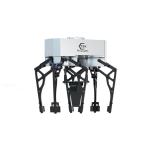

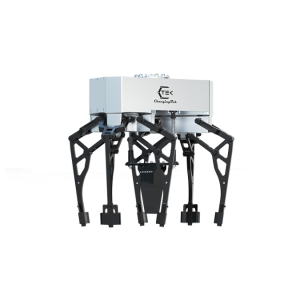



3C electronic manufacturing (consumer electronics, computers, communications) is one of the industries with the most active automation upgrades at present. The product lifecycle is continuously shortening, the integration degree of components is constantly increasing, and the workpieces are becoming increasingly thin - these trends have imposed strict requirements on the end actuators in the assembly process. The long stroke two-finger gripper, with its millimeter-level positioning accuracy, millonewton-level force control capability, and programmable flexibility, is becoming an indispensable core actuator component in 3C precision manufacturing.
I. Five Special Requirements for Grippers in 3C Electronic Manufacturing
Before discussing specific applications, it is necessary to understand the uniqueness of the working conditions in the 3C industry:
Extremely large quality range of workpieces: from less than 1g FPC connectors to hundreds of grams of mobile phone body frames, the gripping force requirements range from a few newtons to hundreds of newtons, and the force control resolution requirements are extremely high
High positioning accuracy requirements: for processes such as connector insertion and removal, camera alignment, and screen bonding, the repetitive positioning accuracy is usually required to be within ±0.02mm to ±0.05mm
Frequent variety switching: one production line needs to adapt to multiple product models, requiring the gripper stroke and force values to be programmable for adjustment, and the changeover time to be as short as possible
Sensitivity to workpiece damage: FPC traces, precision chips, high-gloss shells, etc., are extremely sensitive to the gripping force, and a slight mistake can cause irreversible damage
Compact production line cycle: the overall cycle is usually 2 to 5 seconds per piece, and the response speed of the end actuator must match it
Traditional pneumatic grippers have non-adjustable force values, suffer from pressure fluctuations and overshoot problems, and are difficult to meet all these requirements simultaneously. The long stroke two-finger gripper has fundamentally solved these contradictions.
II. Detailed Explanation of Four Core Application Scenarios
1. Chip Packaging and Mounting: The Ultimate Challenge of Micrometer-level Precision
Chip mounting is a key process connecting wafer cutting and packaging testing. When the gripping force of silicon-based chips exceeds 0.5N, microcracks may occur, and traditional pneumatic grippers cause about 3% of chips to be scrapped due to pressure fluctuations.
Solution for long stroke two-finger gripper:
Millonewton-level force control: Built-in high-precision force sensor (resolution 0.001N), real-time monitoring of gripping force and automatic compensation for fluctuations. When grasping a 0.3mm silicon wafer, the force value can be stabilized at 0.08N (fluctuation ≤ ±0.002N), and the chip breakage rate is reduced from 5% of the pneumatic gripper to 0.1%
Submicrometer-level positioning: High-resolution encoder and closed-loop control architecture, repetitive positioning accuracy up to ±0.02mm, combined with a vision guidance system to automatically correct offsets
Cleanroom compatibility: Oil-free lubricated bearings and sealing structure, particle emission meets CLASS 10 cleanroom standards, meeting the requirements of semiconductor manufacturing environment
Field test data: After an advanced packaging and testing enterprise introduced the intelligent long stroke two-finger gripper, the chip packaging yield increased to 99.8%, and the overall efficiency (OEE) of the production line significantly improved.
2. FPC/Flexible Circuit Board Assembly: Solving the "Destructible Problem" with Soft Force Control
FPC traces are thin, soft, and prone to deformation, and the surface is densely distributed with high-density components, making the gripping force size and contact method extremely sensitive. Traditional rigid finger grippers are prone to causing copper foil layer deformation or component detachment.
Solution for long stroke two-finger gripper:
Adaptive Force Control: Built-in force sensor and control algorithm can sense contact resistance in real time and dynamically adjust the clamping force. When the surface tension of the FPC changes is detected, it automatically switches to the "low force constant control mode".
Force/Position Hybrid Control: After position control is achieved, it automatically switches to force control mode. Based on the force feedback, it determines whether the assembly is successful, achieving online determination of each assembly quality.
High-speed Force Closed-loop: The control frequency reaches 10,000Hz (one closed-loop calculation is completed in 0.1ms), effectively suppressing force overshoot caused by inertial impact.
Production line measured data: An electronic module assembly line using the precise force control long stroke two finger gripper has significantly improved the FPC insertion yield, and also supports rapid model change for multiple specifications of FPC.
3. Camera Module Assembly: Multi-axis collaborative precise alignment
The camera module consists of multiple micro-components such as lenses, image sensors, and brackets, with an assembly accuracy requirement of within ±0.02mm, and it needs to complete multi-angle posture adjustment.
Solution for long stroke two finger gripper:
Vision-Force Control Integration: The multi-spectral vision system works in conjunction with the force sensor, using deep learning algorithms to parse the edge features of the module, achieving precise identification of irregular chips.
Integrated Rotating Claw: The rotating claw can achieve precise posture adjustment of the camera module within 360°, with independent control of clamping and rotation.
Flexible Clamping Finger Design: Silicone material clamping fingers increase the contact area, disperse the clamping force, and avoid sensor chips from cracking due to stress concentration.
Production line measured data: A certain electronic manufacturing enterprise adopted the three-finger long stroke two finger gripper, resulting in a 3.2% increase in chip packaging yield and a 40% reduction in changeover time.
long stroke two finger gripper https://www.changingtek-robotics.com/120s-d-collaborative-two-finger-gripper.html