
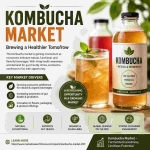





The Kombucha Market has firmly established itself as a leader in the health and wellness beverage revolution, driven by a global shift towards preventative healthcare and conscious consumption. The modern consumer is more informed than ever about the connection between diet and well-being, seeking out products that offer functional benefits beyond simple refreshment. This has created a fertile ground for kombucha, a product that inherently embodies the principles of holistic health with its natural fermentation, live cultures, and clean-label ingredients. Its position as a "better-for-you" alternative to carbonated soft drinks has been a primary catalyst for its growth, tapping into a powerful societal move away from artificial and highly processed foods.
This market's appeal is particularly potent among younger demographics, including millennials and Generation Z, who are vocal about their preference for brands that align with their personal values of health and sustainability. For these consumers, the choice of a beverage is not trivial; it is a statement of lifestyle. The emphasis on kombucha gut health benefits is a major purchase driver, as the importance of the microbiome for overall health and immunity becomes a mainstream concept . This has enabled kombucha to transition from a niche health drink to a staple in the diets of a wide range of consumers, from busy professionals to fitness enthusiasts, all seeking to incorporate more functional foods into their routines.
The market's expansion is being fueled by the increasing availability of kombucha in a diverse array of retail settings. No longer confined to specialty health food stores, kombucha is now a common sight in mainstream supermarkets, convenience stores, and online grocery platforms . This omnichannel presence is crucial for market growth, as it normalizes the product for the average consumer. Partnerships between kombucha brands and large retail chains, or even airlines as seen with some innovative brands, are expanding its reach and visibility, making it a convenient and accessible option for shoppers making everyday purchases .
However, for the market to reach its full potential, it must effectively address and communicate its value proposition to a broad audience. One of the key barriers remains the higher price point of kombucha compared to traditional soft drinks. This cost is a function of the expensive, time-intensive fermentation process and the need for premium, often organic, ingredients. To overcome this, brands are focusing on storytelling and education, highlighting the artisanal craftsmanship involved in the brewing process and the superior quality of the ingredients to justify the price. The development of more affordable formats and value-sized packs also represents a significant opportunity to attract a wider demographic.
In conclusion, the outlook for the kombucha market is exceptionally bright, underpinned by powerful secular trends in health and wellness. As consumers become increasingly proactive about their health, the demand for natural, functional, and delicious beverages like kombucha will continue to grow. The market's evolution will be shaped by continuous product innovation, expansion into new consumption occasions, and the ability of brands to build trust and communicate their authenticity. The kombucha market is not just a fleeting trend but a transformative force in the global beverage industry.
FAQ's
Q1: Why is kombucha considered a healthy beverage?
A1: Kombucha is considered healthy because it is a rich source of probiotics, which are beneficial bacteria that promote a healthy gut microbiome. Good gut health is linked to improved digestion, a stronger immune system, and better overall well-being .
Q2: How can I access a variety of kombucha products?
A2: Kombucha is widely available across various retail channels. You can find it in mainstream supermarkets, health and specialty food stores, and increasingly through online retailers and e-commerce platforms, making it more convenient to purchase than ever before .