
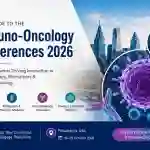


The 2nd Edition Immuno-Oncology & Biomarker Conference, organized by Veridon Global, will take place on 19–20 October 2026 at the Hilton Garden Inn Camden Waterfront in Philadelphia. The conference will bring together leading professionals from pharmaceutical and biotechnology companies, academia, healthcare organizations, CROs, diagnostic companies, and technology providers to explore emerging developments shaping the future of cancer treatment.
Registration Available at https://immunooncologyconference.com/upcoming-conferences/uk-edition/immuno-oncology-biomarker-summit-2026-registration-2/
Advancing Immuno-Oncology and Cancer Treatment
Immuno-oncology continues to transform cancer care by using the body's immune system to recognize and fight cancer cells. The conference will examine the latest advances in next-generation immunotherapies, immune checkpoint inhibitors, monoclonal and bispecific antibodies, CAR-T and other adoptive cell therapies, and innovative combination treatment strategies.
With many patients still experiencing limited responses or developing resistance to treatment, understanding the biological mechanisms behind treatment failure remains a major research priority. Discussions will explore strategies for overcoming resistance, identifying novel immune targets, and improving therapeutic effectiveness.
The role of the tumor microenvironment will also receive significant attention. Understanding interactions between cancer cells, immune cells, and surrounding tissues can help researchers develop more effective therapies and identify patients who are most likely to benefit from specific treatment approaches.
Biomarkers and Precision Oncology
Alongside immunotherapy developments, the conference will focus on how biomarker-driven precision medicine is changing oncology research and clinical practice. Biomarkers can help researchers and clinicians identify appropriate patients, predict treatment responses, monitor disease progression, and support personalized treatment decisions.
The program will explore emerging technologies including AI-powered analytics, multi-omics, liquid biopsy, minimal residual disease (MRD) monitoring, radiomics, spatial biology, and advanced companion diagnostics.
Artificial intelligence and multi-omics approaches are enabling researchers to analyze increasingly complex biological and clinical datasets. By integrating genomic, proteomic, transcriptomic, imaging, and clinical information, researchers can potentially identify new biomarkers and develop more precise approaches to patient stratification.
Emerging Biomarker Technologies
Liquid biopsy is another important area of innovation, offering less-invasive opportunities to analyze circulating tumor DNA and other cancer-related signals. Such technologies may support disease monitoring, treatment-response assessment, and the identification of emerging resistance mechanisms.
Similarly, MRD monitoring can provide valuable information about residual disease following treatment in appropriate cancer settings. Advances in spatial biology are also helping researchers understand the organization and interaction of tumor and immune cells within the tumor microenvironment.
As targeted therapies continue to evolve, companion diagnostics will play an increasingly important role in identifying patients who are most likely to benefit from specific treatments.
For more Detailed Information here at https://immunooncologyconference.com/upcoming-conferences/2nd-immuno-oncology-and-biomarker-summit-2026/
Connecting Researchers, Clinicians, and Industry
A key focus of the Immuno-Oncology and Biomarker Conference 2026 will be collaboration. Bringing together researchers, clinicians, pharmaceutical and biotechnology companies, CROs, diagnostic innovators, and technology providers can help accelerate the transition from scientific discovery to clinical application.
The event will provide opportunities to exchange scientific insights, discuss real-world experiences, explore emerging technologies, and establish strategic partnerships across the oncology ecosystem.
Shaping the Future of Oncology
The convergence of immunotherapy, biomarker research, precision medicine, artificial intelligence, and advanced diagnostics is creating new possibilities for personalized cancer treatment. Continued collaboration between scientists, clinicians, technology developers, and industry will be essential to translating these advances into meaningful patient outcomes.
The 2nd Immuno-Oncology & Biomarker Conference 2026 offers a focused platform to explore these developments and discuss the next generation of approaches to cancer research and treatment.