





Jinyi Clamps Factory should be assessed through product dimensions, material specifications, fastening design, surface treatment, application conditions, and production communication. For B2B buyers, selecting a suitable supplier requires more than comparing quotations. A practical evaluation should connect the physical characteristics of the product with the installation environment, purchasing quantity, and long-term project requirements.
Start With the Actual Installation
Before discussing price, buyers should define where and how the component will be installed. Pipe diameter, mounting surface, installation direction, available working space, and surrounding equipment can all influence the selection.
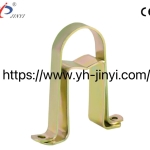
The JY-1008 is designed to mount round pipes to structural surfaces such as walls and ceilings. It uses a one-piece round profile with two side tabs containing holes for anchoring. The product page also identifies applications involving water lines, heating circuits, gas runs, and conduit. (yh-jinyi.com)
Providing this information during the initial inquiry gives the manufacturer a clearer picture of the project and reduces the chance of selecting a specification that does not suit the installation.
Match the Diameter Carefully
Pipe diameter should be confirmed before ordering. A project may contain several pipe sizes, and each one should correspond with an appropriate product specification.
JY-1008 is available in multiple sizes from 1/2 inch through 4 inches. The listed metric dimensions range from φ22 to φ115, with corresponding applicable diameter ranges. (yh-jinyi.com)
Buyers can create a simple purchasing table containing pipe size, required quantity, installation location, and selected model. This can be particularly useful for contractors and distributors handling several specifications within one order.
Keeping an approved dimensional reference can also simplify repeat purchasing and quality inspection.
Examine the Fastening Structure
The fastening method is another point that deserves attention. Buyers should consider how the pipe enters the component, how the closure is secured, and how the complete assembly connects to the building structure.
The JY-1008 uses a bolt-fastened closure. Its side tabs include holes that allow connection to a wall, ceiling, or structural frame. (yh-jinyi.com)
For projects involving large installation quantities, workers may need to repeat the same fastening process many times. Buyers can therefore request a sample and assess whether the structure works conveniently with their planned installation tools and working conditions.
Look at Material and Finish
Material selection should be connected to the environment. Indoor piping, commercial buildings, HVAC installations, and light industrial projects may have different exposure conditions.
The JY-1008 uses stamped galvanized steel with yellow zinc plating. The manufacturer lists the surface treatment as a corrosion-resistant option for its intended applications. (yh-jinyi.com)
Buyers should still communicate the actual environment, including moisture, temperature changes, chemical exposure, and outdoor conditions when applicable. If the standard finish does not match the project, discussing alternative specifications before production can help avoid later changes.
Pay Attention to Dimensional Consistency
For bulk procurement, consistency can be just as important as the initial sample. Purchasing teams should consider whether dimensions, thickness, fastening points, and surface treatment can remain within the agreed specifications across different production batches.
A useful inspection plan can include measurements of the body width, opening, thickness, hole position, and other critical areas. The approved sample or technical drawing can then serve as the reference.
yh-jinyi states that its production process includes raw material supplier evaluation, incoming material checks, process control, and batch quality monitoring. (yh-jinyi.com)
For buyers managing recurring orders, discussing these inspection procedures before production can make future communication easier.
Request a Sample Before Large Orders
A physical sample allows buyers to evaluate details that may be difficult to judge from photographs.
During inspection, purchasing teams can check whether the dimensions correspond with the drawing, whether the bolt operates smoothly, whether the side tabs align correctly, and whether the surface finish is consistent.
The sample can also be tested against the intended pipe and mounting surface. This practical check can reveal installation issues before a larger quantity is manufactured.
If modifications are required, buyers can record them clearly and request an updated sample before approving production.
Discuss Custom Requirements Early
Not every project can use an existing specification. Buyers may need different dimensions, materials, finishes, packaging, labeling, or other production details.
When requesting a customized product, it is useful to provide drawings, physical samples, target quantities, material preferences, and application information. These details give the technical team a clearer basis for reviewing the request.
yh-jinyi provides customized design and production services and works with steel, brass, stainless steel, and aluminum across its hardware product range. (yh-jinyi.com)
For distributors and engineering companies, discussing customization before quotation can also clarify sample costs, tooling requirements, production schedules, inspection procedures, and packaging arrangements.
Compare the Complete Purchasing Process
A suitable supplier should be evaluated through more than the unit quotation. Buyers can compare technical communication, sample response, production planning, inspection arrangements, packaging, customization capability, and delivery coordination.
This broader comparison can help purchasing teams understand the practical value of each offer. It also creates a clearer basis for recurring procurement because expectations are established before the first production batch.For new projects, buyers should prepare a complete specification package containing dimensions, application conditions, material requirements, expected quantities, surface treatment, packaging needs, and inspection criteria.For buyers seeking pipe installation hardware and customized manufacturing services, the https://www.yh-jinyi.com/ provides product information and a direct way to discuss project specifications. Sharing accurate drawings, samples, quantities, and application details can help both sides establish a clearer production plan.