
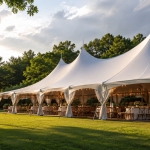
Planning an outdoor event in Toronto often starts with one simple question: “What size tent do I need?” Then the questions start multiplying. How many tables will fit? Do you need a dance floor? What about sidewalls, lighting, catering space, or flooring? Suddenly, choosing a tent looks less like picking a rental and more like planning a temporary venue.
If you are comparing tent rentals Toronto, start with your event rather than the tent catalogue. Your guest count matters, but it is only one part of the calculation. The type of seating, dining layout, dance floor, bar, catering area, site conditions, and access for installation all affect the space you need.
Toronto also has specific requirements for tents and temporary structures. The City of Toronto lists tents and temporary structures among building permit types, while its certified tent plans guidance explains the documentation required for applicable projects.
This guide looks at the practical side of renting a tent in Toronto, from choosing a size to planning the equipment underneath it. The goal is simple: help you understand what needs to be considered before you request a quote.
How Much Do Tent Rentals Cost in Toronto?
There is no useful single price for a tent rental because the tent itself is only one part of the rental setup.
The final cost depends on the tent size, structure, installation requirements, site, delivery, and additional equipment. Sidewalls, flooring, lighting, tables, chairs, linens, dance floors, catering equipment, and other event accessories also affect the total.
Some rental companies publish starting prices for individual tents. Varsity Tents, for example, currently lists starting prices for several frame-tent sizes, including 20x20, 20x40, 30x30, and 30x60 configurations.
Those figures are useful for comparison, but they should not be treated as the total cost of a complete Toronto event setup. A tent for a seated reception has different requirements from a simple shelter for a standing backyard gathering.
The better question is not “How much does a tent cost?” It is “What does my complete event setup require?”
That distinction becomes important when comparing quotes. Two companies might quote different totals for what appears to be a similar tent because delivery, installation, flooring, sidewalls, furniture, or other equipment are handled differently.
For AS Special Events, the rental inventory extends beyond tents to chairs, tables, linens, dinnerware, charger plates, glassware, flatware, staging, dance floors, and other event equipment. That gives you a way to consider the tent and the rest of the event setup together rather than treating each item as a separate planning exercise.
What Size Tent Do You Need?
Guest count gives you a starting point. It does not give you the answer.
A 100-person cocktail reception might need considerably less usable floor space than a 100-person seated wedding dinner with a dance floor, buffet, bar, and catering area.
The layout inside the tent matters just as much as the number of people.
A seated dinner needs room for tables and chairs. A wedding reception often needs additional space for a dance floor, DJ or band, bar, buffet, gifts, cake, or head table. A corporate event might need presentation space, staging, registration tables, or equipment areas.
This is why published capacity figures should be treated as planning references rather than automatic answers.
A 50-Guest Event
A smaller gathering might use a compact tent with space for seated dining, depending on the table arrangement and additional equipment.
If your event has only dining tables and chairs, the space requirement differs from a party where guests will also dance, gather around a bar, or move between several activity areas.
A 100-Guest Event
At 100 guests, layout decisions become more important.
You need to consider whether everyone will sit at round tables, long banquet tables, or another arrangement. Then add space for circulation, food service, and any entertainment.
A 100-person wedding reception is therefore not automatically a “100-person tent.”
A 150-Guest Event
Larger receptions need more attention to movement.
Guests need enough room to enter, find their seats, visit the bar, reach the washrooms, access food service, and move around without creating bottlenecks.
If a dance floor or stage forms part of the event, those areas also need dedicated space.
A 200-Guest Event
At 200 guests, planning the complete floor plan before selecting the tent becomes even more important.
The tent needs to accommodate the guests and everything they will use during the event. Tables, chairs, catering, entertainment, circulation, and service areas all compete for the same footprint.
The exact tent size should therefore follow the layout rather than the other way around.
What Type of Tent Is Right for Your Event?
Not every tent works for every site.
The main options you will encounter include frame tents, pole tents, and clear-span structures. The right choice depends on the event, available space, surface, layout, and installation requirements.
Frame Tents
Frame tents use a structural frame rather than a centre pole system. They are often considered where an unobstructed interior is useful or where the site has harder surfaces.
The Event Centre describes frame tents as a popular choice for patios and hard surfaces where staking is not possible.
The exact anchoring method still needs to be confirmed for your site.
Pole Tents
Pole tents use poles and tension to create their structure. They have a traditional event-tent appearance and are commonly associated with open outdoor spaces.
They need suitable space for anchoring and installation, so the property itself matters.
Clear-Span Structures
Clear-span structures provide a different approach for larger or more complex events. Premier Event Tent Rentals lists Clearspan structures among its Toronto products and describes projects involving corporate events, sporting events, private properties, parks, and other sites.
For large events, the tent structure becomes closer to a temporary building than a simple backyard shelter.
The important thing is to match the structure to the site and event instead of selecting one based on appearance alone.
What Should Go Inside the Tent?
The tent creates the covered space. Your rental equipment turns it into an event space.
Tables and chairs usually form the starting point. Then you need to think about linens, dining equipment, entertainment, catering, lighting, and guest movement.
AS Special Events provides event rental equipment including tables, chairs, linens, dinnerware, charger plates, glassware, and flatware. Its wider rental inventory also includes staging and dance floors.
That matters because your furniture choices affect the amount of tent space required.
A reception with closely arranged banquet tables has different requirements from a wedding with round guest tables, a dance floor, a head table, and a bar.
Tables and Chairs
Tables determine much of your floor plan.
You need enough room for guests to sit comfortably, but also enough space between tables for servers and guests to move.
Chair style matters too. Different chairs have different footprints and visual proportions. AS Special Events offers several chair options, including folding chairs, wooden chairs, cushioned chairs, bar chairs, park benches, and children's seating.
Linens and Table Settings
Linens finish the dining setup, but they also need to be selected around the tables you are using.
Dinnerware, glassware, flatware, and charger plates add another layer to the reception setup.
If you are planning a formal wedding reception, these details should be decided alongside the table layout rather than after the tent has already been selected.
Dance Floors and Staging
A dance floor takes up usable floor area.
The same applies to staging for a band, DJ, speaker, presentation, or other entertainment.
If you want these features, include them in your initial floor plan. Adding them later often means discovering that the tent you selected no longer provides enough practical space.
Can You Put a Tent on Grass, Concrete, or Asphalt?
The installation surface matters.
Grass is common for outdoor receptions, weddings, and backyard events. Hard surfaces create different anchoring and installation considerations.
Concrete and asphalt require the rental company to determine the appropriate installation method for the specific tent and site.
Decks, uneven ground, trees, narrow access points, overhead obstacles, and property restrictions also need to be considered before installation.
Do not assume a tent fits simply because its dimensions fit on paper.
The crew also needs room to bring equipment to the site and install the structure safely.
A site inspection or detailed site discussion is useful when the property has unusual access or physical restrictions.
Do You Need a Permit for a Tent in Toronto?
This is one area where you should not rely on a generic internet answer.
The City of Toronto identifies “Tents & Temporary Structures” as a building permit category for temporary construction such as a tent or temporary sales pavilion.
Toronto also has a specific process for certified tent plans. The City states that a certified plan does not itself constitute a building permit. A building permit must still be obtained for construction using a certified building plan. The City's requirements include dimensioned plans, elevations, sections, connection and anchorage details, and construction information.
The exact requirements depend on the project and site.
For events on roads, Toronto provides a specific exception for certain tents. Its street-event guidance states that a tent on a road erected more than three metres from other structures and occupying no more than 60 square metres does not require a building permit under the stated conditions. Larger tents require a building permit.
That is why you should confirm your specific situation with the City of Toronto rather than assuming every temporary tent follows the same rule.
What Happens If It Rains or Gets Windy?
Weather is part of outdoor event planning.
A tent gives you covered space, but it does not remove every weather concern.
Sidewalls can provide additional protection from rain and wind. Flooring can help create a more practical surface when the ground becomes wet. Lighting, heating, and other equipment might also become important depending on the season and event.
The rental company should also discuss installation and anchoring requirements for the selected tent and site.
Do not treat a tent as a guarantee against severe weather. If conditions become unsafe, the event plan needs to account for that possibility.
Your venue, rental company, and relevant authorities should determine the appropriate response to serious weather conditions.
How Early Should You Book Tent Rentals in Toronto?
Popular event dates fill quickly, especially during the wedding and summer seasons.
The right booking window depends on your event size, date, tent requirements, and equipment needs. Larger events often require more planning because the tent is only one component of the setup.
Varsity Tents advises booking several months ahead for peak dates, while its site also notes that it handles everything from backyard parties to large festivals.
If you already know your date, guest count, venue, and general event layout, starting the rental conversation earlier gives you more time to work through the practical details.
Waiting until the last few weeks creates a different problem. Even if a suitable tent remains available, tables, chairs, flooring, or other equipment might have different availability.
What Should You Prepare Before the Tent Crew Arrives?
The installation area should be ready before the crew arrives.
The site needs enough clear space for the planned structure. Access also matters. A tent might fit comfortably in a backyard while the delivery vehicle has no practical route to reach it.
Before installation, consider trees, buildings, fences, overhead obstacles, uneven ground, underground utilities, property boundaries, and the route equipment needs to take.
Your event venue should also confirm the installation and removal windows.
For complicated sites, discuss these issues with the rental company before the event date. A problem found on installation day is harder to solve than one identified during planning.
How Do You Plan a Tented Wedding or Reception?
Start with the guest experience.
Decide where guests will enter. Then work out where they will sit, eat, dance, collect drinks, and move between areas.
A simple reception might need tables, chairs, linens, and dining equipment.
A larger wedding might add a dance floor, head table, bar, buffet, catering area, staging, lighting, and additional service space.
This is why the same guest count can lead to different tent requirements.
A 100-person dinner with no dance floor has one layout. A 100-person wedding with a band, dance floor, buffet, bar, cake table, and head table has another.
Draw the layout before choosing the final tent size.
It does not need to look like an architect's drawing. A simple floor plan with rectangles representing tables, a dance floor, catering area, and service spaces is enough to expose obvious problems.
What Should You Ask a Tent Rental Company Before Booking?
Before comparing quotes, make sure you understand what each quote includes.
Ask about the tent size and structure first. Then ask about delivery, installation, pickup, anchoring, sidewalls, flooring, and any other required equipment.
Ask whether the quoted price includes the items you expect to use.
If you need tables, chairs, linens, dinnerware, glassware, flatware, a dance floor, staging, or catering equipment, confirm those items separately.
The site should also be discussed. Tell the rental company whether the tent will sit on grass, concrete, asphalt, a deck, or another surface.
If access is narrow or difficult, mention it early.
For larger or unusual installations, ask what documentation or site information is required.
A quote becomes much easier to compare when you know exactly what is included.
Tent Rental Checklist for Toronto Events
Before requesting a quote, have your event date, location, guest count, and basic layout ready.
Think about the tent structure, tables, chairs, linens, flooring, sidewalls, lighting, heating or cooling, power, catering space, dance floor, staging, and other event equipment.
Then check delivery access and installation space.
Finally, confirm whether your event requires permits or other approvals. Toronto's requirements vary by structure and situation, so use the City's current guidance for your specific project.
The more information you provide at the start, the easier it becomes for a rental company to recommend an appropriate setup.
Tent Rentals Toronto for Weddings, Parties, and Corporate Events
A wedding reception often needs more than shelter. Tables, chairs, linens, dining equipment, a dance floor, lighting, and guest-service areas all form part of the setup.
A backyard party might need a simpler arrangement.
Corporate events often introduce different requirements, such as staging, presentation areas, registration space, or equipment for guests and staff.
Large community events and special occasions bring their own planning considerations.
AS Special Events provides tent rentals alongside tables, chairs, linens, dinnerware, charger plates, glassware, flatware, staging, dance floors, and other event rental equipment. The company serves Toronto and the GTA from its Scarborough location at 80 Midwest Rd #24.
That broader inventory is useful when you are planning the entire event space rather than renting a tent in isolation.
Why Choose AS Special Events for Tent Rentals Toronto?
AS Special Events Party & Tent Rentals has served Toronto and the GTA since 2001, according to the company information provided for this article.
The company provides tent rentals alongside tables, chairs, linens, dinnerware, charger plates, glassware, flatware, dance floors, catering equipment, and other event accessories.
It serves weddings, corporate events, private parties, trade shows, and special occasions.
Delivery, setup, and pickup services are also part of the company's stated offering.
For someone planning a tented event, having access to the surrounding rental equipment in one place makes the planning process more straightforward. You still need to confirm the exact equipment, availability, pricing, site requirements, and service details for your event.
The right setup depends on your date, location, guest count, layout, and event requirements.
Frequently Asked Questions About Tent Rentals Toronto
How much does it cost to rent a tent in Toronto?
The total depends on tent size, structure, site, delivery, installation, and additional equipment. Tables, chairs, linens, flooring, lighting, and other rentals also affect the overall event cost.
What size tent do I need for 100 guests?
Guest count alone does not determine the correct size. Your table arrangement, dance floor, catering area, bar, staging, and circulation space also affect the required footprint.
Do I need a permit for a tent in Toronto?
Some tents and temporary structures fall under Toronto's building permit requirements. The City lists tents and temporary structures as a building permit category and provides specific guidance for certified tent plans. Check the requirements for your specific installation.
Can you put a tent on concrete or asphalt?
Some tent structures work on hard surfaces, but the installation and anchoring method depends on the tent and site. Discuss the surface with the rental company before booking.
Can I rent tables and chairs with the tent?
AS Special Events provides tables and chairs alongside its tent and event rental equipment. Availability and suitable quantities depend on your event requirements.
Does tent rental include setup?
AS Special Events states that it provides delivery, setup, and pickup services. Confirm the exact services included with your quote before booking.
How far in advance should I book?
Start planning several months ahead when possible, especially for popular wedding and summer dates or larger events. Availability depends on the date, tent requirements, and equipment needed.
What happens if it rains?
Sidewalls and flooring are among the equipment options used to address outdoor conditions. Weather planning should also include the site's drainage, access, tent structure, and conditions on the event day.
Do I need tent flooring?
Not every event needs flooring. The decision depends on the ground, weather, event type, guest expectations, and overall layout. Wet or uneven ground creates different considerations from a prepared hard surface.
Do I need a generator for my event tent?
The answer depends on the equipment and venue. Lighting, catering equipment, entertainment, heating, cooling, and other electrical requirements need to be assessed before the event.
Final Thoughts
A tent is not the whole event.It is the structure around which the rest of the event takes shape. Before you compare tent rentals Toronto, work out your guest count, site, seating plan, dining layout, entertainment, catering requirements, and other equipment. Then look at tent size and structure. That approach gives you a much clearer picture of what you are renting and why. For weddings, corporate events, backyard celebrations, trade shows, and special occasions, AS Special Events provides tent rentals along with tables, chairs, linens, dinnerware, glassware, flatware, dance floors, staging, catering equipment, and other event rentals across Toronto and the GTA.
The first useful conversation with a rental company is not simply “How much is a tent?”
It is “Here is my event, here is the site, here are my guests, and here is how I want the space to work.”
That gives everyone a better starting point.