
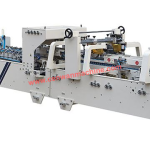

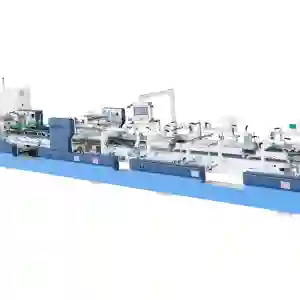
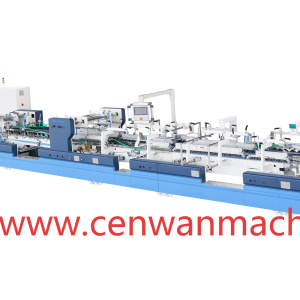
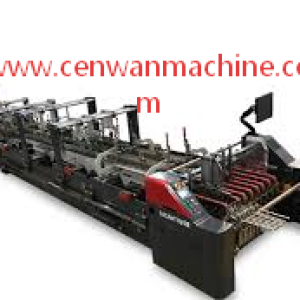
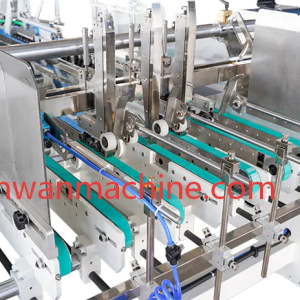
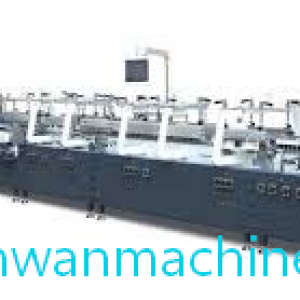
Packaging lines require equipment that matches daily volume targets and operational rhythms.Folding and Gluing Machine selections from cenwanmachine undergo review against expected throughput and carton handling demands. Which capacity and speed profiles align with existing production patterns?
Output potential varies according to machine architecture and automation level. Entry configurations handle moderate daily volumes with straightforward operation suited to shorter runs or frequent changeovers. Mid-range units support continuous flow for standard carton styles while maintaining consistent adhesive application. Advanced setups accommodate extended shifts and complex folding sequences through enhanced feed systems and programmable controls. Speed capability depends on board characteristics, glue type, and the number of active stations along the process path.
Carton dimensions and material properties influence achievable rates. Lightweight boards allow higher linear speeds under controlled tension. Heavier or coated stocks may require moderated pace to ensure precise fold formation and secure adhesion. Modular designs permit addition of specialized sections that maintain overall flow without unnecessary interruption. Delivery systems at the end of the line manage finished pieces for stacking or further handling according to downstream needs.
Facility layout and power availability shape practical capacity utilization. Compact frames fit constrained spaces while preserving functional reach. Larger frames support wider web paths and multiple simultaneous operations. Control interfaces display real-time metrics that assist operators in maintaining target rates. Safety interlocks and emergency functions integrate without compromising continuous performance during standard runs.
Clients assessing options compile data on current peak volumes and projected growth. Substrate variety lists guide recommendations on feeder design and pressure zones. Glue consumption estimates and adhesive compatibility enter the discussion. Shift schedules influence suggestions regarding continuous-duty ratings and cooling provisions. Documentation of these points creates a foundation for precise configuration proposals.
Sector-specific requirements introduce further considerations. Food packaging prioritizes surfaces that facilitate thorough cleaning between batches. Pharmaceutical applications emphasize consistent fold accuracy and minimal particulate generation. Consumer goods operations often value rapid size adjustment for mixed product schedules. Prior project experience across these areas informs practical capacity guidance during evaluation.
Manufacturing partners maintain adaptable production methods that address stated volume goals. Engineering teams examine carton samples or dimensional data to confirm handling suitability. Proposed arrangements balance target rates with material behavior under speed. Validation runs under simulated conditions verify functional alignment before final assembly. Summaries of confirmed parameters support shared understanding throughout the process.
cenwanmachine maintains structured channels for capacity-related inquiries. Technical staff review submitted volume data and suggest matching configurations. Follow-up exchanges clarify remaining details on timing or scope. Confirmed selections advance into detailed engineering and production scheduling. Clear communication on component selection builds confidence among partners seeking reliable output.
Preparation during the assessment phase reduces later modifications. Accurate figures on board ranges and adhesive formulations guide correct component pairing. Anticipated product mix affects station quantity and delivery arrangement. Plant environmental factors receive attention for sustained stability under load. Careful alignment of machine characteristics with daily realities yields systems suited to ongoing throughput demands.
Interest in capacity-matched packaging equipment persists as product ranges expand. Manufacturers prepared for detailed performance dialogue stand ready to examine new volume targets. Refinement of design approaches expands available adjustment ranges. Attentive pairing of speed and capacity features with operational conditions creates setups appropriate for sustained production flow.
Readers reviewing capacity and speed details for Folding and Gluing Machine models can examine available configurations and specifications mid-way through the product overview section at https://www.cenwanmachine.com/ where further information on performance ranges and setup choices awaits. Completing a structured capacity assessment forms one practical step toward equipment aligned with specific packaging volume objectives.