

North America is emerging as a significant region for advanced industrial monitoring technologies, supported by extensive oil and gas production, refining, petrochemical processing, and growing investments in emissions management. The US, in particular, has a large installed base of oil and gas facilities where flare systems are used to safely combust excess gases during production, processing, and operational upsets. Increasing attention to combustion efficiency, worker safety, emissions visibility, and operational performance is encouraging facility operators to adopt more sophisticated flare monitoring solutions.
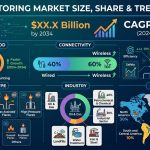
The Flare Monitoring Market Size was valued at US$1.45 billion in 2025 and is projected to reach US$2.98 billion by 2034, registering a CAGR of 9.36% from 2026 to 2034. The addressable opportunity is estimated at US$20.96 billion during 2026–2034. Within North America, the US represents a particularly important growth market because of its extensive upstream, midstream, refining, and petrochemical infrastructure and the increasing need for reliable monitoring of combustion and emissions performance.
Download Sample PDF - https://www.theinsightpartners.com/sample/TIPRE00004801
US Regulatory Requirements Strengthen Demand
Environmental regulations and evolving compliance requirements are among the most important drivers for the US flare monitoring industry. The US Environmental Protection Agency (EPA) has established requirements addressing emissions from oil and natural gas operations, including provisions related to flares and combustion devices. The regulatory framework has also evolved through technical reconsiderations and extensions to provide operators with additional compliance flexibility.
EPA guidance identifies monitoring parameters for flares, including the net heating value of fuel combusted, maximum flare-tip velocity, and minimum inlet flow. These requirements increase the importance of accurate instrumentation and monitoring technologies capable of providing dependable operational data.
Although US regulatory requirements have undergone changes in 2025 and 2026, monitoring remains strategically important for operators seeking to understand flare performance, maintain records, manage emissions, and demonstrate compliance. In April 2026, EPA finalized technical changes involving continuous net-heating-value monitoring and other flare-related provisions, illustrating the evolving regulatory environment surrounding industrial combustion systems.
Expansion of US Oil and Gas Infrastructure
The US oil and gas industry is a major demand generator for flare monitoring technologies. Large-scale production activities in regions such as the Permian Basin, Bakken Formation, Eagle Ford, and other producing areas require reliable flare infrastructure to manage associated gas and maintain safe operations.
The importance of monitoring is particularly evident where operators need to balance production requirements with emissions management. EPA's 2026 guidance addressed circumstances in which oil and natural gas producers may continue temporary flaring after the May 2026 phase-out deadline, particularly in situations outside operators' control.
As production facilities become increasingly automated, operators are moving toward continuous and remotely accessible monitoring systems. This creates opportunities for providers of flow measurement, gas analysis, infrared monitoring, flame detection, imaging, and integrated data-management technologies.
Refining and Petrochemical Sector Creates Additional Opportunities
The US has one of the world's largest refining and petrochemical industries, creating a substantial installed base for flare systems. Refineries use flares to safely dispose of excess hydrocarbons and process gases during routine operations, maintenance activities, and emergency conditions.
Monitoring systems help operators understand combustion conditions, identify abnormal flare behavior, and improve process visibility. Accurate monitoring can also support operational optimization by providing information about gas flow, combustion conditions, flame stability, and emissions-related parameters.
The presence of extensive refining and chemical-processing infrastructure across the Gulf Coast, particularly Texas and Louisiana, is therefore expected to contribute significantly to regional demand. Regulatory requirements for petroleum refinery flaring events further reinforce the need for appropriate monitoring and operational controls.
Advanced Monitoring Technologies Drive Market Growth
Technology advancement is transforming flare monitoring across North America. Traditional inspection methods are increasingly being complemented by automated and continuous technologies, including infrared cameras, optical flame monitoring, ultrasonic systems, flow meters, gas analyzers, and remote sensing solutions.
The integration of sensors with industrial control systems allows operators to collect real-time information and identify changes in flare performance. Connected systems can also support centralized monitoring across multiple facilities, reducing dependence on manual inspections.
Advanced analytics and artificial intelligence are expected to provide another growth opportunity. Data collected from monitoring equipment can be analyzed to identify operational patterns, predict potential failures, and support maintenance planning. This shift toward predictive and data-driven operations aligns with the broader digital transformation of the US energy and industrial sectors.
Focus on Methane and Emissions Reduction
Growing attention to methane and greenhouse gas emissions is another important factor supporting adoption. US environmental policy has increasingly emphasized measurement, detection, and reduction of emissions from oil and gas operations. EPA's regulatory framework has also recognized advanced monitoring technologies, including sensor networks, aerial screening, and satellite-based approaches, as tools for improving emissions detection.
For operators, accurate flare monitoring can provide greater visibility into combustion conditions and help identify situations that could lead to inefficient combustion or unnecessary emissions. As companies increasingly integrate environmental performance into operational strategies, demand for reliable measurement and monitoring technologies is expected to increase.
North America Competitive Landscape and Top Players
The competitive landscape includes global instrumentation, automation, sensing, and industrial technology companies. Key players associated with the flare monitoring industry include AMETEK Inc., Emerson Electric Co., Endress+Hauser Management AG, FLIR Systems Inc., Fluenta AS, John Zink Company LLC, LumaSense Technologies Inc., MKS Instruments, OleumTech Corporation, and Thermo Fisher Scientific.
Companies are increasingly competing through improved measurement accuracy, remote monitoring, digital connectivity, analytics, automation, and integration with plant-wide control systems. Vendors offering comprehensive monitoring solutions that combine hardware, software, data analytics, and technical support are well positioned to address the requirements of US energy and industrial customers.
Future Outlook for North America
The North American outlook remains promising through 2034 as the US continues to invest in oil and gas production, refining, petrochemical infrastructure, industrial automation, and emissions-management technologies. Regulatory developments may continue to evolve, but the underlying need for accurate operational information and emissions visibility will remain important for facility operators.
The transition from periodic inspection toward continuous, connected, and predictive monitoring is expected to be a defining trend. Integration with industrial IoT platforms, cloud-based analytics, artificial intelligence, remote sensing, and digital control systems could create additional opportunities for technology providers.
With the overall sector projected to grow from US$1.45 billion in 2025 to US$2.98 billion by 2034 at a CAGR of 9.36%, North America is expected to remain an important regional opportunity. The combination of extensive energy infrastructure, advanced industrial automation, environmental considerations, and demand for operational efficiency will continue supporting investments in next-generation flare monitoring solutions.
About The Insight Partners
The Insight Partners is a global market research and consulting firm providing industry intelligence across technology, industrial, energy, healthcare, semiconductor, electronics, and other high-growth sectors. The company's research combines market analysis, competitive intelligence, industry insights, and strategic assessment to help organizations identify emerging opportunities and make informed business decisions.
Contact Us
The Insight Partners
Email: sales@theinsightpartners.com
Phone: +1-646-491-9876
Website: https://www.theinsightpartners.com
Related Reports -
Submarine Fiber Cable Market Demand, Share & Growth by 2034
Aircraft Wiring Harness Market Dynamics and Trends by 2030
SCADA Oil and Gas Market Size, Trends & Growth by 2034