

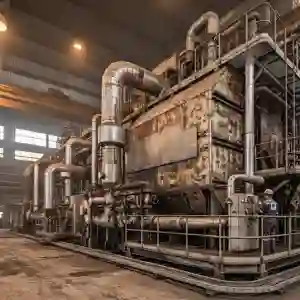
As an oil and gas field continues to produce, well pressure may gradually decline. When the natural gas pressure is no longer high enough for normal transportation or production, an oilfield gas compressor can be used to raise the gas pressure and help maintain stable production.
However, selecting an oilfield booster compressor requires more than choosing a machine with high power or high discharge pressure. The equipment needs to match the actual well conditions, gas volume, pressure range, power source, and site environment.
Understand the Production Conditions First
The first step in selecting an oilfield compressor is to understand how the gas system actually operates.
Buyers should provide information such as inlet pressure, required outlet pressure, gas flow rate, gas composition, operating temperature, expected working hours, available power, and installation conditions.
These details can have a direct impact on compressor selection. Two oilfields may require completely different compressor configurations even if they produce similar types of natural gas.
Providing accurate operating data to the supplier can therefore make the selection process easier and help avoid choosing equipment that does not match the actual application.
Pressure and Capacity Need to Work Together
When comparing an oilfield gas compressor, it is important to look at both pressure and gas capacity.
The compressor needs to raise the gas to the required pressure while also processing the expected gas volume. Focusing only on maximum pressure or motor power may lead to an unsuitable choice.
For example, the Zhongqi New Energy Equipment Oilfield Booster Compressor, model M-10.91/(3-5)-1202, has an inlet pressure of 0.3–0.5 MPa, a discharge pressure of 12.0 MPa, and a gas capacity of 80,000–100,000 m³/day. The main motor is rated at 560 kW.
These specifications demonstrate why compressor selection should consider pressure, gas flow, and power as a complete set rather than evaluating one specification by itself.
Allow for Changes in Well Conditions
Oilfield production conditions are rarely fixed throughout the entire operating period.
As production changes, gas pressure and flow rate may fluctuate. Gas temperature and composition can also change depending on the well and production stage.
For this reason, an oilfield booster compressor should be selected according to the expected operating range instead of being designed around only one set of conditions.
Different drive options can also make a difference. Zhongqi New Energy Equipment provides electric motor, gas engine, and diesel engine configurations. These options allow the compressor system to be adapted to different site conditions, especially remote oilfields where a stable electrical supply may not always be available.
Think About the Complete Gas Handling System
A compressor is only one part of an oilfield gas handling system.
Depending on the characteristics of the produced gas, the system may also require separators, coolers, gas purification equipment, valves, pipelines, and control systems.
If the gas contains water or other unwanted components, treatment may be needed before compression. Depending on project requirements, Zhongqi's oilfield booster solutions can be combined with processes such as three-phase separation, gas dehydration, and desulfurization.
Planning these components together from the beginning can make installation and future operation more straightforward.
Pay Attention to Remote Installation
Oil and gas production sites are often located in areas far from cities and industrial service centers. This makes transportation, installation, maintenance, and power supply important factors when purchasing compressor equipment.
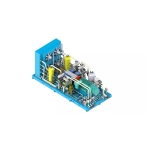
For remote projects, compact or integrated equipment can make transportation and installation more convenient. Zhongqi describes its oilfield booster compressor solutions as using an integrated and modular design to support deployment in different field environments.
The available power source should also be considered. Electric-driven compressors can work well where reliable electricity is available, while gas-engine or diesel-engine compressors may be more practical in areas with limited grid access.
Look Beyond the Purchase Price
The price of an oilfield gas compressor for sale is only one part of the overall investment.
Before making a decision, buyers should also consider energy consumption, maintenance frequency, spare-parts availability, installation requirements, technical support, and potential production losses caused by equipment downtime.
A compressor with a higher initial price may provide better overall value if it is better suited to the application and can operate reliably over a long period.
When comparing an oilfield gas compressor manufacturer, it is useful to ask about compressor specifications, available drive systems, delivery schedules, maintenance support, spare parts, and previous experience with similar oilfield projects.
Zhongqi New Energy Equipment for Oilfield Applications
Zhongqi New Energy Equipment provides oilfield booster compressor solutions for gas boosting and other oilfield gas-handling applications. Its product range also includes wellhead gas recovery and related gas equipment, giving customers options for building a more complete gas processing system.
For oilfield operators, the goal should not simply be to find an oilfield gas compressor for sale. The more important task is to find equipment that fits the actual production conditions.
A suitable compressor should provide the required discharge pressure and gas capacity, operate reliably under changing well conditions, work with the available power source, and remain practical to maintain.
By evaluating these factors before purchasing, operators can select a more suitable oilfield gas compressor, improve gas handling performance, and support stable production over the long term.
https://www.sczhongqigroup.com/oilfield-gas-compressor-how-to-choose-the-right-one.html