
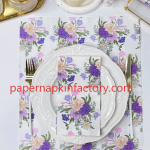


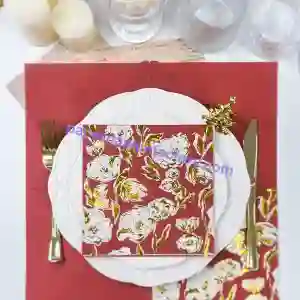
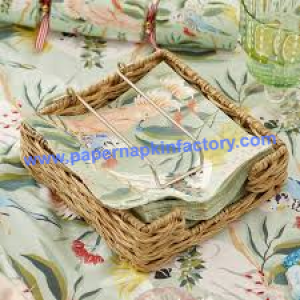
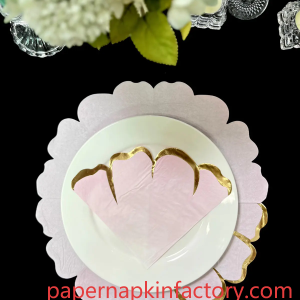
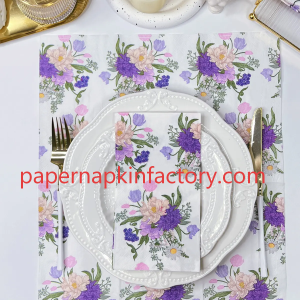
A host planning an elegant cocktail evening faces entirely different demands than a caterer supplying a barbecue festival, yet both shoppers often reach the same shelf and wonder why disposable party napkins arrive in so many layer configurations, and the papernapkinfactory platform treats that confusion as an invitation to educate rather than upsell, matching each celebration with the ply construction its menu and mood genuinely require—so how exactly should a buyer translate ply counts into real-world performance?
What Ply Actually Means at the Table
Ply refers to the number of paper layers pressed together during manufacturing, and each added layer changes the napkin's personality in ways guests notice immediately, from the crisp snap of a single sheet under a cocktail glass to the pillowy thickness of a multi-layer dinner square that survives an entire course without surrendering. Single-ply sheets excel where volume matters most, lining beverage stations and dessert buffets in economical stacks that keep costs predictable across large headcounts, while two-ply and three-ply constructions earn their place beside plated meals, where absorbency and hand-feel communicate care to diners who touch them repeatedly. FuRong's engineers explain that bonding quality matters as much as layer count, since two well-bonded plies routinely outperform loosely laminated stacks that separate at the first sign of moisture, which is why buyers evaluating samples should pull layers apart gently and check whether embossing points actually fuse the sheets or merely decorate their surfaces.
Matching Ply to Menus and Moments
Cocktail hours demand napkins that disappear gracefully under small plates and stemware, making lighter constructions the sensible choice for passed appetizers where guests juggle drinks, conversation, and nibbles in standing crowds, while seated dinners justify heavier stock because the napkin remains visible on laps and tables throughout the meal. Dessert service occupies a middle ground, since cake frosting and ice cream create moisture bursts that punish thin sheets, yet the napkin's decorative role often matters as much as its utility, prompting planners to choose embossed multi-ply pieces printed with motifs that complement the tablescape. FuRong advises clients to map every service moment before ordering, because a single event frequently needs two or three ply levels deployed strategically across stations rather than one uniform choice stretched awkwardly across all uses, a nuance that separates polished productions from visibly compromised ones when barbecue sauce meets an undersized sheet.
Quality Signals Beyond Layer Count
Thickness alone can mislead, because some manufacturers inflate bulk by embossing aggressively while skimping on fiber quality, producing napkins that feel substantial in the hand yet disintegrate under real moisture within moments of contact. Discerning buyers hold specimens to the light to check formation uniformity, rub printed surfaces to test ink adhesion, and soak corners in water to observe whether layers stay married or drift apart, simple rituals that reveal manufacturing discipline without laboratory equipment. Consistency across the carton matters equally, since a case mixing firm and limp sheets signals uneven calendering or storage damage, and FuRong's quality teams inspect ply lamination, emboss registration, and cut precision as a single integrated standard rather than isolated checkpoints, ensuring that the stack a diner pulls from the dispenser behaves exactly like the sample that won the contract months earlier.
Wholesale buyers balancing ambition against budget often discover that strategic ply mixing unlocks savings without visible compromise, pairing premium constructions at dining tables with economical single-ply at bars and backup stations, a choreography that guests experience as seamless while invoices shrink meaningfully. Restaurants and event rental companies also store napkins across seasons, which rewards constructions whose laminated layers resist delamination in humid warehouses, and FuRong supports such planning with guidance on stacking heights, carton ventilation, and rotation schedules that preserve hand-feel from delivery day through the final celebration of the season.
For readers ready to compare constructions side by side, the FuRong catalog at https://www.papernapkinfactory.com/ organizes disposable party napkins by ply, application, material, and print compatibility, and visitors exploring the wider papernapkinfactory range will find specification sheets, artwork guidance, and sampling programs that turn ply questions into confident orders—because when every layer earns its place at the table, hosts spend wisely and guests remember the occasion rather than the napkin that failed it.