
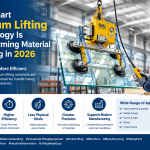


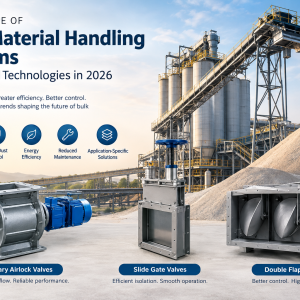
How Smart Vacuum Lifting Technology Is Transforming Material Handling in 2026
Material handling is becoming more technology-driven as industries look for safer, faster, and more efficient ways to move heavy and delicate materials. In 2026, smart vacuum lifting technology is gaining attention across manufacturing, construction, warehousing, glass processing, metal handling, and other industrial applications.
Traditional lifting methods often require significant manual effort and may involve multiple workers for positioning and handling large or heavy materials. Modern vacuum lifting equipment provides an alternative by using controlled suction to securely grip and move materials with greater ease and precision.
What Is Smart Vacuum Lifting Technology?
Smart vacuum lifting technology combines vacuum-based gripping with modern safety and control features. A vacuum lifting system creates suction between the lifting equipment and the material surface, allowing operators to lift, move, position, and release loads efficiently.
Depending on the application, vacuum lifters can be designed for materials such as glass, metal sheets, slabs, panels, pipes, billets, and other industrial components.
Why Vacuum Lifters Are Becoming Important in 2026
- Improved Material Handling Safety
Safety is a major consideration when moving heavy or difficult-to-handle materials. Vacuum lifting systems can reduce direct manual contact with the load and provide controlled handling during lifting and positioning operations.
Features such as vacuum monitoring, safety alarms, lifting controls, and secure gripping mechanisms can further support safer industrial operations.
- Better Handling Efficiency
Moving large materials manually can require additional time, manpower, and coordination. A suitable industrial vacuum lifter can simplify the handling process and help operators move materials more efficiently.
This can be particularly useful in manufacturing plants, warehouses, fabrication facilities, glass processing units, and construction-related applications.
- Reduced Physical Strain
Repeated lifting and positioning of heavy materials can place considerable physical demands on workers. Vacuum lifting solutions can assist with these operations by taking much of the load-handling effort away from operators.
This allows workers to focus more on controlling and positioning the material rather than physically carrying or manually supporting it.
- Greater Precision During Positioning
Industrial production often requires materials to be placed accurately. Vacuum lifting systems can provide controlled movement, making it easier to position materials at the required location.
This is useful for applications involving glass panels, metal sheets, slabs, pipes, and other components where careful positioning is important.
- Support for Modern Manufacturing
Manufacturing facilities are increasingly adopting automation and equipment designed to improve productivity. Vacuum lifting equipment can complement these modern production environments by providing efficient material transfer and handling capabilities.
In suitable applications, vacuum lifting systems can also be integrated into broader material-handling processes and automated workflows.
Applications of Vacuum Lifting Technology
Smart vacuum lifting solutions can be used across several industries and applications, including:
- Glass sheet and glass panel handling
- Metal sheet handling
- Stone and slab handling
- Billet handling
- Pipe and bar handling
- Panel and board handling
- Warehouse material movement
- Manufacturing and fabrication operations
- Construction material handling
- Industrial component positioning
The appropriate lifting solution depends on factors such as material weight, surface condition, dimensions, lifting orientation, operating environment, and required lifting capacity.
Choosing the Right Vacuum Lifting Equipment
Before selecting a vacuum lifting system, businesses should evaluate the material being handled and the operating conditions. Important considerations include lifting capacity, load dimensions, surface characteristics, lifting orientation, working environment, safety requirements, and frequency of operation.
Selecting equipment according to the specific application can improve handling efficiency while supporting safe and reliable operations.
The Future of Material Handling
The continued development of automation, smart monitoring, and advanced industrial equipment is changing how businesses approach material handling. Vacuum lifting technology is part of this transition, offering practical solutions for industries that need to handle heavy, large, or delicate materials efficiently.
As companies continue to focus on workplace safety, productivity, and operational efficiency in 2026 and beyond, smart vacuum lifting solutions are expected to remain an important part of modern material-handling systems.
Businesses looking for application-specific lifting solutions can explore the range of vacuum lifters and industrial material handling equipment from SKI Lifters to identify suitable options for different industrial requirements.
#VacuumLifter #MaterialHandling #IndustrialLiftingEquipment #SmartLifting #SKILifters #IndustrialAutomation #MaterialHandlingEquipment #WarehouseSolutions #LiftingTechnology #Manufacturing #SafeMaterialHandling #IndustrialEquipment #VacuumLifting #LiftingSolutions #WorkplaceSafety #Automation