


The growing emphasis on sustaining crude oil production from mature wells, shale formations, and technically challenging reservoirs is increasing demand for technologies that can maintain well productivity after natural reservoir pressure declines. Across North America, operators are investing in production optimization, well-life extension, automation, and advanced downhole equipment to improve recovery while controlling operating and intervention costs. The US is particularly important because of its extensive unconventional production base and large number of mature onshore wells.
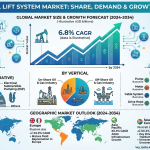
The Artificial Lift System Market Size was valued at US$15.34 billion in 2025 and is projected to reach US$28.66 billion by 2034, expanding at a CAGR of 7.19% during 2026–2034. The addressable opportunity is estimated at US$198.52 billion during 2026–2034. Within this industry, North America is estimated to account for 34–38% of global revenue in 2025, with the region projected to expand at a 6.4–7.4% CAGR through 2034. The US represents approximately 80–84% of North American revenue, supported by shale production, mature oilfields, and increasing deployment of automated lift optimization technologies.
Download Sample PDF - https://www.theinsightpartners.com/sample/TIPTE100000897
North America Artificial Lift System Market: Key Growth Drivers
Expanding US Shale Oil Production
The continued importance of shale production is one of the primary factors supporting artificial lift demand in the US. According to the US Energy Information Administration, US crude oil production reached a record 13.6 million barrels per day in 2025, with the Permian Basin alone accounting for approximately 48% of total US production. Production in the Permian increased to 6.6 million barrels per day in 2025.
The extensive use of horizontal wells in shale formations creates complex production conditions as wells mature and decline. Artificial lift systems help operators maintain drawdown and production rates as reservoir pressure changes. This is particularly important in the Permian, Eagle Ford, and Bakken regions, where large numbers of producing wells require continuous production optimization.
The EIA also reports that tight oil production accounted for approximately 81% of Lower 48 onshore oil production in 2024, demonstrating the importance of unconventional assets to US production.
Rising Demand from Mature Wells
Mature wells represent another major growth driver across North America. As reservoir pressure decreases, natural flow becomes insufficient to maintain economically attractive production rates. Operators can deploy rod lift, gas lift, progressive cavity pumps, or electrical submersible pumps depending on well depth, production rate, fluid characteristics, gas-to-liquid ratio, and other operating conditions.
Artificial lift allows producers to continue extracting hydrocarbons from existing wells while maximizing the value of established infrastructure. This approach is particularly relevant in mature US producing regions, where operators increasingly focus on improving recovery from existing assets rather than relying solely on new drilling.
Growing Adoption of ESP and Advanced Lift Technologies
Electrical submersible pumping is a major technology segment in North America because of its suitability for high-volume production and demanding well environments. According to The Insight Partners, ESP accounted for an estimated 36–40% share in 2025, with technology demand supported by high-production wells and offshore applications.
US operators are also adopting advanced gas handling, variable-speed drives, intelligent controllers, and monitoring systems to improve pump performance. These technologies can help operators adjust artificial lift operations as production conditions change throughout the life of a well.
Digitalization and Remote Well Monitoring
Digital transformation is becoming increasingly important for artificial lift operations in North America. Operators are integrating sensors, controllers, variable-speed drives, telemetry, and analytical software to monitor pump performance and identify abnormal operating conditions.
For producers managing large portfolios of geographically dispersed wells, remote monitoring can reduce the need for unnecessary field visits and support faster identification of potential equipment problems. Predictive maintenance can also help reduce unplanned downtime and improve equipment run life.
This transition is creating opportunities for suppliers that combine physical lift equipment with software, automation, surveillance, and production optimization services.
US Artificial Lift System Market Outlook
The US is the dominant contributor to North America's artificial lift demand. The country is estimated to account for 80–84% of North American revenue in 2025 and is projected to grow at approximately 6.3–7.3% CAGR during 2026–2034. Major production regions include the Permian Basin, Eagle Ford, Bakken, Midcontinent, and mature Gulf Coast assets.
The Permian Basin is especially significant. Its approximately 6.6 million barrels per day of crude oil production in 2025 highlights the scale of the production infrastructure requiring well optimization and artificial lift technologies.
Demand in the US is therefore expected to remain closely connected with well productivity, decline rates, production economics, and the need to optimize existing unconventional assets.
Canada and Broader North American Opportunities
Canada is another important contributor to regional demand, particularly through heavy-oil operations and mature producing assets. Progressive cavity pumping and rod lift technologies can be suitable for applications involving viscous fluids and relatively lower production rates.
Across North America, operators are increasingly emphasizing equipment reliability, energy efficiency, remote monitoring, and reduced intervention requirements. Offshore activity in the Gulf of America also creates opportunities for systems designed to operate reliably under demanding conditions.
Top Players in North America
Major companies participating in the Artificial Lift System industry include:
- Baker Hughes Company
- SLB
- Halliburton Company
- Weatherford International plc
- ChampionX Corporation
- Dover Corporation
- National Oilwell Varco, Inc.
- Tenaris S.A.
- Alkhorayef Petroleum Company
- Novomet Group
- Borets International Limited
- Flotek Industries, Inc.
- General Electric Company
These companies are competing through ESP technology, rod lift solutions, gas lift systems, pump equipment, controllers, digital monitoring, production optimization, and field services.
Technology and Segment Trends
The North American industry is segmented by progressive cavity pumping, rod lift, gas lift, electrical submersible pumping, and other technologies. Rod lift remains important across mature onshore wells because of its established service ecosystem and suitability for declining production rates. ESP systems are particularly relevant to high-volume wells, while gas lift is used across wells where gas injection can improve fluid movement.
By vertical, the industry covers onshore and offshore oil and gas operations. Onshore applications represent a substantial opportunity because of the extensive US shale and mature-well base. Offshore applications are also important because equipment reliability and remote monitoring become increasingly valuable where interventions are costly and operationally complex.
Future Outlook
The North American Artificial Lift System industry is expected to remain closely tied to the performance of US unconventional oil production, mature-well optimization, and technological improvements in production efficiency. As operators manage declining well pressures and increasingly complex horizontal wells, demand is expected to shift toward intelligent lift systems capable of adapting to changing production conditions.
Digital surveillance, predictive maintenance, variable-speed operation, advanced ESP designs, gas-handling capabilities, and automated production optimization are likely to become increasingly integrated into artificial lift deployments. The combination of a large installed well base, continued shale production, mature assets, and digital field development provides a strong foundation for technology adoption through 2034.
About The Insight Partners
The Insight Partners is a global market research and consulting firm providing industry intelligence across energy, technology, healthcare, semiconductors, industrials, chemicals, and other sectors. Its research combines industry analysis, company information, expert insights, and data-driven assessments to support strategic business decisions.
Contact Us
The Insight Partners
Email: sales@theinsightpartners.com
Phone: +1-646-491-9876
Website: https://www.theinsightpartners.com
Related Reports -
Submarine Fiber Cable Market Demand, Share & Growth by 2034
Aircraft Wiring Harness Market Dynamics and Trends by 2030
SCADA Oil and Gas Market Size, Trends & Growth by 2034