
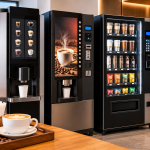

A coffee vending machine in an office, hotel, retail space, or other business setting can provide employees, customers, and visitors with convenient access to coffee throughout the day. However, businesses frequently face a crucial decision: should we rent or buy a coffee vending machine?
Both options have their merits and disadvantages. Budget, daily usage, business growth, maintenance requirements, and the estimated lifespan of the equipment all play a role in making the best pick.
Before choosing a decision, it's important to understand how both solutions work.
Understanding Coffee Vending Machine Rental
When a firm rents a coffee vending machine, it pays a recurring charge to use the equipment rather than acquiring it entirely. Depending on the source and agreement, maintenance, servicing, installation, or consumables may be included.
Rental might be beneficial for businesses that wish to begin using a machine without making a significant initial expenditure. It can also provide additional flexibility as business requirements alter.
For example, a growing organization may not know how many employees will utilize the machine in the next years. Renting allows you to easily modify the equipment as your needs evolve.
Advantages Of Renting A Coffee Vending Machine
Lower Initial Investment
One of the primary advantages of renting is the reduced initial financial commitment. Instead of paying the full purchase price, firms typically make periodical payments in accordance with the rental agreement.
This can be beneficial for startups, small firms, and companies that want to preserve funds available for other purposes.
Maintenance May Be Included
Certain leasing agreements include servicing and maintenance. This means that firms may not have to handle every repair or maintenance request themselves.
However, the specific services covered may differ, so businesses should carefully check the rental agreement before signing.
Greater Flexibility
Business requirements may alter. An office may expand, relocate, or adjust its daily coffee consumption.
Depending on the supplier's terms, rental agreements may make it easier to upgrade or replace equipment as needs change.
Easier Equipment Upgrades
Technology and coffee machine features continue to evolve. Some rental agreements allow you to upgrade equipment during or after the contract time.
Businesses should confirm whether upgrades are covered and what additional fees may apply.
Understanding Coffee Vending Machine Purchase
When a business purchases a coffee vending machine, it pays for the equipment and takes ownership of it.
The initial expenditure is typically higher than renting, but the company has more control over the machine. Following purchasing, continuing expenses may include ingredients, cleaning, service, repairs, filters, and replacement parts.
For firms with consistent and predictable consumption, purchasing might be viewed as a long-term equipment investment.
Advantages Of Purchasing A Coffee Vending Machine
Complete Ownership
Once the machine is purchased, the company owns it. There are no ongoing rental fees for continuing use after the purchase.
This allows for greater control over how and when the machine is used.
More Freedom To Select Equipment
When deciding on a specific model, capacity, features, or configuration, purchasing might provide you more options.
Businesses can select equipment based on their estimated daily consumption rather than limited to a supplier's rental alternatives.
Potential Long-Term Value
Purchasing a machine can make financial sense for a company that expects to use it for several years because there are no recurring rental fees.
However, the overall cost should include maintenance, repairs, consumables, and future replacement.
Better Control Over Operations
Ownership enables firms to handle the machine according to their specific needs. They can choose service providers, schedule maintenance, and pick when to upgrade or replace the machine.
What Should Businesses Consider When Deciding Whether To Rent Or Buy?
There is no single solution that fits every business. Instead, various things must be addressed.
1. Business Budget
If you want to save money up front, renting may be a good option. If the company has enough resources to spend in equipment, purchase may be an option.
2. Daily Coffee Consumption
Consider how many cups the machine will make each day. Higher and constant usage can make ownership worthwhile, whereas uncertain or variable demand may make rental more flexible.
3. Business Growth
A corporation experiencing tremendous expansion may eventually need a larger equipment. Rentals can be flexible provided the agreement allows for equipment modifications.
4. Maintenance Requirements
Ask who is in charge of servicing and repairs. A rental agreement may include certain maintenance services, although an owner must normally organize and budget for servicing independently.
5. Contract Terms
When renting, always read the contract thoroughly. Consider the rental time, monthly payments, maintenance coverage, upgrade choices, early termination terms, and what happens when the agreement expires.
A lower monthly price does not always imply a reduced total cost if the contract includes considerable additional costs.
How Can A Coffee Vending Machine Supplier Help?
A professional Coffee vending machine supplier can assist organizations in comparing various machine alternatives based on usage and needs.
Instead of selecting a machine only based on pricing, businesses can discuss estimated daily consumption, available space, preferred beverages, maintenance requirements, and budget with the provider.
A supplier may also describe the differences between rental and purchase packages, including as installation, maintenance, consumables, warranty, and technical support.
This makes it easier to determine the true cost and responsibility for each option.
Questions To Ask Before Renting Or Buying
Before making a decision, firms should consider:
- What is the overall cost of renting or purchasing?
- Is installation included?
- Who is responsible for maintenance and repairs?
- Are spares available?
- Are the coffee ingredients included?
- Is there a warranty?
- Can the machine be upgraded?
- What happens if the business relocates?
- Are there any charges for early termination?
- What happens at the conclusion of a rental agreement?
Getting detailed answers will help you avoid unexpected charges later.
Which Option Is Best For Your Business?
Renting may be appropriate for a firm seeking reduced upfront expenses, flexibility, included support, or the opportunity to alter equipment as needs change.
Purchasing may be appropriate when a company anticipates consistent usage, desires complete ownership, prefers long-term control, and is willing to manage maintenance and operating costs.
Instead of merely selecting the lowest initial cost, the decision should be based on the company's planned usage, financial strategies, operational requirements, and expected length of use.
Conclusion
Choosing whether to rent or buy a coffee vending machine is a crucial business choice. Renting can provide flexibility while lowering the initial cost, whereas purchasing provides ownership and better long-term control.
Before making a decision, organizations should consider the whole cost of each solution, which includes maintenance, servicing, materials, contract terms, and potential upgrades.
Working with an experienced Coffee vending machine supplier may also simplify the process by assisting businesses in identifying equipment and payment alternatives that are appropriate for their unique needs.