

How Long Does a Wire Wheel Brush Last? Factors That Affect Service Life
A Wire Wheel Brush is widely used for removing rust, paint, scale, weld residue, burrs, and other unwanted material from working surfaces. For buyers and production teams, service life is an important consideration because a brush is a working consumable rather than a permanent component. The actual period of use can vary greatly according to the workpiece, wire construction, operating conditions, and handling method. automaticmachinefactory provides access to brush-related equipment and industrial solutions for users who need to understand how brush performance connects with practical production requirements. So, what really determines how long a wheel brush can remain useful?
What Determines Brush Service Life?
There is no single lifespan that applies to every wheel brush. A brush used occasionally for light cleaning may experience very different wear from one used repeatedly against heavy rust, weld scale, or hardened surface deposits. The condition of the workpiece is therefore one of the first factors worth considering.
Wire material also has an important role. Carbon steel, stainless steel, brass-coated wire, and other configurations can serve different applications. The selection should match the material being treated as well as the required brushing action. For instance, stainless wire is commonly selected when corrosion resistance or work on stainless surfaces is required. Using an unsuitable wire type can cause unwanted surface contamination or unnecessary filament wear.
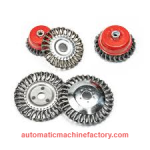
Brush construction is another key consideration. Crimped wire wheels generally offer flexible brushing action and are commonly used for cleaning, light surface preparation, and applications where the brush needs to follow an uneven contour. Knotted designs create a stiffer brushing face and are often selected for demanding rust, scale, and weld cleaning work. Because these structures respond differently to mechanical stress, their wear patterns are not identical.
Working Pressure and Operating Technique
One of the simplest ways to influence brush life is to control contact pressure. A common mistake is pressing a rotating brush heavily against the workpiece in an attempt to accelerate cleaning. Excessive pressure bends the filaments, increases heat, and can accelerate wire breakage. Industry guidance recommends allowing the filament tips to perform the brushing action instead of forcing the wheel deeply into the material.
The position of contact also matters. A wheel should be used according to its intended working direction rather than being forced against an edge or side in an unsuitable manner. Side loading can place additional stress on individual wires and create uneven wear. Keeping the contact controlled can help the brush maintain its working shape during repeated operations.
Operating speed should also match the brush and power tool specifications. A wheel running beyond its rated conditions can experience excessive centrifugal force and accelerated filament loss. Before installation, users should check the brush specification and confirm that the grinder or machine operates within the permitted range.
The Workpiece Changes the Wear Rate
The material being cleaned has a direct influence on consumption. Light surface dirt generally requires less aggressive brushing than thick corrosion, hardened scale, or stubborn weld residue. A brush working against a demanding surface can naturally experience faster wear.
The desired finish also affects product selection. A stiff knotted brush may suit heavy surface preparation, while a flexible crimped construction can be appropriate for controlled cleaning and finishing. Choosing a brush according to the actual task prevents users from relying on an unsuitable configuration.
Another consideration is the condition of the brush itself. Worn filaments become shorter, uneven, bent, or widely dispersed. Once the brush can no longer provide consistent contact with the workpiece, continuing operation may reduce cleaning efficiency and create unnecessary mechanical stress. Visible wire loss, damaged hubs, deformed bundles, or other structural problems are practical reasons to inspect the product before further use.
Storage and Routine Inspection
Storage is sometimes overlooked because a wheel brush may appear to be a simple metal accessory. However, moisture can contribute to corrosion, while improper stacking can deform the filaments. Keeping brushes in a dry environment and protecting their working surface can help preserve their original shape.
Routine inspection does not need to be complicated. Before use, operators can check whether the wires remain evenly distributed, whether the hub is intact, and whether the mounting area shows visible damage. During production, unusual vibration, rapid wire shedding, or an obvious change in brushing action should receive attention rather than being ignored.
Cleaning can also be useful when debris becomes trapped between filaments. Accumulated material may interfere with brushing action and increase the load placed on the tool. Maintenance guidance for industrial brushes commonly recommends removing packed debris and checking for damaged or loose filaments as part of regular care.
Choosing the Right Brush for the Job
Service life begins with selection. Before purchasing a wheel brush, users should consider the workpiece material, cleaning objective, required aggressiveness, available machine, mounting arrangement, wire type, filament construction, and operating speed.
For rust removal, weld cleaning, deburring, paint removal, and surface preparation, different brush structures can produce different working characteristics. A wheel selected according to the actual application can avoid unnecessary pressure and repeated passes. This approach also makes it easier for operators to establish a consistent working process.
For manufacturers, distributors, and industrial users, product information is especially valuable when several brush configurations are available. Clear specifications can help purchasers compare wire materials, construction types, mounting options, and intended applications before placing an order. This is also where a professional manufacturing and equipment platform can provide useful product information for businesses evaluating industrial brush solutions.
When users need to examine a specific Wire Wheel Brush solution, product information and application details can provide a practical starting point. The https://www.automaticmachinefactory.com/ from automaticmachinefactory presents a direct route for users who want to learn about the product category and explore a suitable industrial option. Matching brush construction with the workpiece, machine, and operating method remains an important part of achieving stable service performance.