
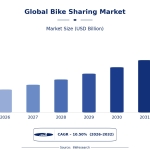


As cities become more populated and transportation networks face increasing pressure, shared mobility is becoming an important part of modern urban life. The Global bike sharing market is benefiting from growing urbanization, sustainability goals, technological improvements, and changing commuter preferences. According to market estimates, the market was valued at USD 5.2 billion in 2025 and is projected to reach USD 10.4 billion by 2032, expanding at a CAGR of 10.50% between 2026 and 2032. North America currently represents the largest regional market, while Asia is expected to record the fastest growth during the forecast period. E-bikes and dockless systems are also becoming important areas of market expansion.
Advantages of Investing in the Global Bike Sharing Market
Investment opportunities are expanding as cities look for transportation solutions that can reduce congestion while supporting cleaner mobility. Bike sharing requires comparatively less physical space than traditional transportation infrastructure and can complement buses, trains, and metro networks. This creates opportunities for operators, technology providers, fleet managers, manufacturers, and infrastructure developers.
The market's projected increase from USD 5.2 billion in 2025 to USD 10.4 billion by 2032 demonstrates the commercial potential of shared cycling services. Growing investment in e-bike fleets, digital platforms, charging solutions, tracking systems, and fleet management technologies can further support business opportunities. Public-private partnerships are also creating additional avenues for expansion as governments seek practical ways to encourage sustainable transportation.
For investors, the opportunity extends beyond simply providing bicycles. The ecosystem increasingly includes mobile applications, payment platforms, GPS systems, maintenance services, data analytics, smart docking infrastructure, and electric mobility solutions. This broader value chain can create multiple revenue opportunities as bike sharing becomes integrated into wider urban transportation systems.
Why People Prefer the Global Bike Sharing Market for Future Growth
Changing commuter behavior is one of the strongest factors supporting the future of bike sharing. Many urban residents want transportation that is affordable, convenient, flexible, and environmentally responsible. Bike sharing can provide short-distance mobility without requiring users to purchase, maintain, or store their own bicycles.
The rise of e-bikes is particularly important because electric assistance makes cycling more accessible across longer distances and challenging urban terrain. The e-bike segment is expected to account for approximately 55% of market share in 2025, reflecting strong consumer interest in easier and more efficient cycling. At the same time, dockless services offer users greater flexibility because bicycles can be accessed and parked across a wider service area.
Younger consumers are also contributing to this shift. The market report indicates that approximately 70% of bike-sharing users are under the age of 35, highlighting strong adoption among millennials and Generation Z. This demographic is generally more comfortable with app-based transportation, digital payments, and flexible mobility services.
Search Visibility Through the Global Bike Sharing Market
The growing relevance of shared mobility is also increasing online interest in the Global bike sharing market. Search demand is being shaped by topics such as e-bike sharing, dockless mobility, sustainable transportation, smart-city infrastructure, urban commuting, and last-mile connectivity.
Businesses operating within this ecosystem can benefit from creating useful digital content around these themes. Consumers, investors, transportation planners, and city authorities increasingly search for information about mobility technologies and sustainable alternatives. As the market develops, search visibility can therefore support brand awareness, customer acquisition, partnership opportunities, and industry positioning.
Technology is also changing how users discover and access services. App-based bike sharing has become an important part of the customer journey, allowing users to locate bicycles, unlock them, make payments, and manage rides through smartphones. The market report notes that app-based systems accounted for more than 60% of user acquisitions in 2022, demonstrating the importance of digital accessibility in the sector.
Demand and Benefits of the Global Bike Sharing Market
Demand is being strengthened by several interconnected urban challenges. Traffic congestion, limited parking, environmental concerns, rising transportation costs, and the need for efficient last-mile connectivity are encouraging cities to consider cycling as part of their mobility strategies.
Bike sharing can connect residential neighborhoods with public transportation stations and commercial centers, helping commuters complete journeys that may be inconvenient by walking alone. This makes shared bicycles particularly valuable for first-mile and last-mile transportation.
The benefits also extend to cities. Wider adoption can support lower-emission transportation options, improve mobility accessibility, and encourage more active lifestyles. Government support for cycling infrastructure is therefore becoming an important factor in market development. Initiatives in the United States, United Kingdom, Europe, and India have focused on cycling infrastructure, safety, and sustainable urban transportation.
Enhance User Experience with Smarter Bike Sharing Services
User experience is becoming a major competitive factor in the Global bike sharing market. Customers increasingly expect transportation services to be quick, simple, reliable, and digitally connected. Operators are responding by improving mobile applications, GPS tracking, payment systems, fleet availability, and bicycle security.
Dockless systems are particularly attractive because they provide greater flexibility than conventional docking models. The market report identifies dockless bike sharing as a rapidly expanding segment, supported by consumer preference for convenience and flexible parking.
E-bikes are another important development. They can reduce physical effort while allowing riders to travel longer distances, making bike sharing more practical for daily commuting rather than occasional recreational use. As battery technology, connectivity, and fleet management systems improve, the overall customer experience can become more seamless.
Lifestyle Benefits from the Global Bike Sharing Market
The lifestyle benefits of bike sharing are helping transform bicycles from an occasional recreational product into a practical urban mobility option. For many users, cycling provides an opportunity to combine transportation with physical activity while avoiding some of the challenges associated with crowded roads and public transportation.
The flexibility of shared bicycles can also suit different daily routines. A user may choose a bike for a short commute, a trip to a transit station, an appointment, or a leisure journey without needing to own a bicycle. This pay-per-use approach can be particularly attractive to people living in apartments or densely populated urban areas where bicycle storage is limited.
As sustainability becomes more important to consumers, environmentally conscious transportation choices are also becoming part of modern lifestyles. This changing mindset is expected to continue supporting demand for shared mobility services.
Infrastructure Development Is Creating New Opportunities
Infrastructure development will remain critical to the future of the Global bike sharing market. Expanding cycling lanes, safer roads, dedicated parking areas, charging facilities, smart docking stations, and connections with public transportation can make bike sharing more convenient and secure.
Asia is expected to be the fastest-growing regional market, supported by rapid urbanization and increasing government interest in sustainable transportation. The market report projects a 15% CAGR for Asia from 2026 to 2032, while North America remains the largest regional market.
The development of smart cities could further accelerate this trend. Connected infrastructure can help operators understand demand patterns, reposition fleets efficiently, monitor bicycle conditions, and improve availability. Artificial intelligence and advanced analytics may also help optimize fleet management and provide more responsive services.
Wrapping Up
The Global bike sharing market is moving beyond a simple bicycle rental model and becoming an increasingly connected component of urban mobility. Rising city populations, sustainability objectives, digital technology, e-bike adoption, dockless services, and infrastructure investment are creating favorable conditions for continued market development.
With the market projected to reach USD 10.4 billion by 2032 at a CAGR of 10.50%, the opportunity is supported by both consumer demand and structural changes in urban transportation. E-bikes, smart applications, dockless networks, and integration with public transit can create additional growth avenues for businesses and investors.
For companies considering expansion into sustainable mobility, entering or strengthening their position in the bike-sharing ecosystem now can provide an opportunity to participate in the long-term transformation of urban transportation. As cities continue to seek cleaner, more flexible, and technology-enabled mobility solutions, investing in the Global bike sharing market today can position businesses to benefit from the next phase of shared urban transportation.
Who We Are
About 6Wresearch
6Wresearch is a commercial strategy and growth advisory firm founded in 2011 and headquartered in New Delhi, India, with partners across Southeast Asia and the Middle East & Africa. The firm has delivered over 20,000 commercial engagements for over 2,000 organizations, including Fortune 500 companies, government agencies, and multilateral institutions such as the World Bank and the Asian Development Bank. Backed by proprietary market research and advanced analytics, 6Wresearch combines sector expertise with data-driven intelligence to help organizations navigate market complexity and drive sustainable growth. These capabilities explain why organizations trust 6Wresearch Global Market Research & Consulting Firm for reliable commercial insights and confident decision-making.
Our Proprietary Platform: 6W Export GTM
6W Export GTM is 6Wresearch’s proprietary trade intelligence and go-to-market platform, built on UN Comtrade data and enhanced with 6Wresearch’s in-house analytical and simulation models, including system dynamics-based forecasting. Unlike broad, sector-level market sizing tools, 6W Export GTM operates at the individual product level down to specific HS codes and micro-segments to identify precise, actionable export opportunities by country and product pair, including markets where trade currently does not exist. This granular, simulation-driven approach allows 6W Export GTM to surface opportunities that sector-wide analysis typically misses, positioning it among a small number of platforms globally offering this depth of product-and-country-specific export intelligence.
Read More..