





Market Overview
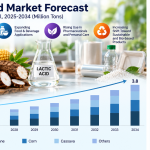
The global lactic acid market size reached 1.9 Million Tons in 2025. Looking forward, IMARC Group expects the market to reach 3.8 Million Tons by 2034, exhibiting a growth rate (CAGR) of 7.68% during 2026-2034. North America currently leads the regional landscape, holding over a 35.0% revenue share in 2025, backed by an abundant domestic corn feedstock base, a well-established fermentation infrastructure, and strong downstream demand from the bioplastics and food-processing sectors. Growth in the market is chiefly attributed to rising demand for biodegradable plastics, expanding use of clean-label food ingredients, growing adoption of natural personal care formulations, and the increasing reliance on polylactic acid (PLA) in sustainable packaging.
Lactic Acid Market Key At a Glance
-
Base Year: 2025
-
Historical Period: 2020–2025
-
Forecast Period: 2026–2034
-
Market Size (2025): 9 Million Tons
-
Market Forecast (2034): 8 Million Tons
-
CAGR (2026–2034): 68%
-
Leading Region: North America (over 35.0% share, 2025)
-
Dominant Raw Material: Sugarcane
-
Dominant Form: Liquid
-
Dominant Application: Polylactic Acid – PLA (34.6% share, 2025)
Request for a Sample Report for Detailed Evaluation: https://www.imarcgroup.com/lactic-acid-market/requestsample
Lactic Acid Market Report: Key Highlights
-
Market Size & Growth: The global lactic acid market share was valued at 1.9 Million Tons in 2025 and is projected to reach 3.8 Million Tons by 2034, registering a CAGR of 7.68% during 2026–2034, according to IMARC Group.
-
Regional Leadership: North America represents the largest regional market with over a 35.0% share in 2025, supported by abundant corn-based feedstock, established fermentation capacity, and growing bio-based chemical investment.
-
By Raw Material: The market is segmented into corn, sugarcane, cassava, and others, with sugarcane emerging as the leading feedstock in 2025 on account of its high sugar content and cost efficiency.
-
By Form: The market is divided into liquid and solid lactic acid, with the liquid segment continuing to lead demand across food processing, beverages, and chemical manufacturing applications.
-
By Application: The market covers industrial, food and beverages, pharmaceuticals, personal care, polylactic acid (PLA), and other uses, with PLA forming the largest segment at 34.6% share in 2025.
-
Key Market Drivers: Rising demand for biodegradable plastics, increasing use of lactic acid as a natural food preservative, growing consumer preference for clean-label ingredients, and expanding applications in personal care and pharmaceuticals.
-
Key Market Trends: Significant growth in fermented and functional food products, rising use of lactic acid-based exfoliants in skincare, and extensive R&D into next-generation fermentation and purification technologies.
-
Key Market Challenges: Price volatility of agricultural feedstocks, continued competition from conventional petrochemical-based plastics, and the technical complexity of scaling high-purity fermentation processes.
-
Key Players: Leading players in the global lactic acid market include Cellulac plc, Corbion N.V., Dupont De Nemours Inc., Foodchem International Corporation, Galactic, Godavari Biorefineries Ltd. (Somaiya Group), Henan Jindan Lactic Acid Technology Co. Ltd., Jungbunzlauer Suisse AG, Musashino Chemical Laboratory Ltd., Spectrum Chemical Mfg. Corp., Vaishnavi Bio Tech International Limited, Vigon International Inc. (Azelis Americas LLC), and others.
What Is Driving Lactic Acid Market Growth in 2026?
Rising Demand for Biodegradable Plastics and PLA
The push toward sustainable materials is placing lactic acid at the center of the bioplastics value chain, since it serves as the core building block for polylactic acid (PLA). PLA is increasingly adopted across packaging, agriculture, textiles, and healthcare as a renewable substitute for conventional plastics. In the United States, NatureWorks, a leading PLA manufacturer, is building a new biopolymer production facility in Georgia at an estimated cost of USD 600 Million, with operations expected to begin by 2025, underscoring the scale of investment flowing into bio-based lactic acid derivatives.
Growing Use in Food Preservation and Clean-Label Products
Lactic acid is widely used as a natural preservative that extends shelf life and inhibits the growth of bacteria, yeasts, and molds, making it central to fermented and cultured foods such as yogurt, cheese, and sourdough. Rising consumer attention to ingredient labels is reinforcing this trend: the International Food Information Council reports that 63% of consumers are now more focused on reading ingredient labels, favoring naturally derived preservatives and flavoring agents over synthetic alternatives.
Expanding Application in Personal Care and Pharmaceuticals
Lactic acid's role as an exfoliating agent and pH adjuster is driving its growing use in moisturizers, serums, and anti-aging formulations. Clinical research published via NCBI found that combining 30% lactic acid with 12% ferulic acid improved signs of photoaging by 42%, compared with 27% for ferulic acid alone, reinforcing the ingredient's efficacy case in skincare. Parallel growth in pharmaceutical drug formulation and delivery systems is further diversifying end-user demand.
Connect for Detailed Segmentation Analysis – Speak to an Analyst: https://www.imarcgroup.com/request?type=report&id=6067&flag=C
Lactic Acid Market Segmentation Analysis:
By Raw Material
-
Corn
-
Sugarcane
-
Cassava
-
Others
Sugarcane emerged as the leading feedstock in 2025 owing to its high sugar content, cost efficiency, and ready availability across key producing countries such as Brazil, India, and Thailand. Its suitability for fermentation and renewable profile have made it a preferred input for manufacturers seeking to scale production while supporting sustainability mandates across food, pharmaceutical, and bioplastics applications.
By Form
-
Liquid
-
Solid
Liquid lactic acid continues to lead demand given its ease of solubility and direct usability in food processing, beverages, personal care, and PLA production, while also supporting continuous fermentation workflows favored by large-scale manufacturers. Solid lactic acid, in powder or granule form, is gaining traction in animal nutrition, pharmaceuticals, and cosmetics, where extended shelf life, precise dosing, and lower transportation costs are valued, particularly in regions with limited cold-chain infrastructure.
By Application
-
Industrial
-
Food and Beverages
-
Pharmaceuticals
-
Personal Care
-
Polylactic Acid (PLA)
-
Others
Polylactic acid (PLA) led the market in 2025 with a 34.6% share, propelled by its growing use in sustainable packaging, disposable products, and biodegradable materials. Regulatory measures targeting plastic-waste reduction and circular-economy practices are accelerating PLA adoption in food packaging and e-commerce shipping, while emerging medical uses in sutures and implants are opening further downstream demand for high-purity lactic acid.
By Region
-
North America (United States, Canada)
-
Asia Pacific (China, Japan, India, South Korea, Australia, Indonesia, Others)
-
Europe (Germany, France, United Kingdom, Italy, Spain, Russia, Others)
-
Latin America (Brazil, Mexico, Others)
-
Middle East and Africa
North America held the largest regional share at over 35.0% in 2025, underpinned by an abundant corn-feedstock supply, established fermentation infrastructure, and rising investment in PLA and bio-based chemicals by U.S. manufacturers. Within the region, the United States alone accounted for 88.10% of North America's lactic acid market share in 2025. Europe is advancing on the back of stringent EU regulations discouraging petrochemical-based plastics, while Asia Pacific is being driven by urbanization, rising processed-food consumption, and expanding pharmaceutical manufacturing in India and China.
Key Regional Insight: North America’s Strategic Position
North America's leadership in the global lactic acid market rests on its dual strength as a major corn-producing region and a hub for bio-based chemical innovation. U.S.-based manufacturers are scaling PLA and bio-based chemical production to meet rising consumer and regulatory demand for sustainable alternatives, supported by established logistics networks and a growing base of biotechnology firms investing in fermentation R&D. Continued policy support for biodegradable materials and single-use plastic reduction is expected to keep the region at the center of global lactic acid demand through 2034.
Competitive Landscape in the Lactic Acid Industry
The competitive landscape of the global lactic acid market is shaped by a mix of established fermentation specialists and diversified chemical manufacturers investing in capacity expansion and sustainable raw-material sourcing. Companies are prioritizing bio-based process innovation and product diversification to serve growing applications across packaging, food, and personal care. Recent moves illustrate this dynamic: Brenntag acquired Brazil-based PIC and PharmaSpecial in August 2024 to expand its specialty chemicals and life-science portfolio, which includes lactic acid, while SK Geo Centric introduced a new microbial fermentation technology in April 2024 aimed at lowering costs and chemical byproducts in lactic acid production for PLA applications. First-mover advantage, proprietary fermentation technology, and long-term supply partnerships remain key differentiators across the industry.
Key Lactic Acid Market Players Include:
-
Cellulac plc
-
Corbion N.V.
-
Dupont De Nemours Inc.
-
Foodchem International Corporation
-
Galactic
-
Godavari Biorefineries Ltd. (Somaiya Group)
-
Henan Jindan Lactic Acid Technology Co. Ltd.
-
Jungbunzlauer Suisse AG
-
Musashino Chemical Laboratory Ltd.
-
Spectrum Chemical Mfg. Corp.
-
Vaishnavi Bio Tech International Limited
-
Vigon International Inc. (Azelis Americas LLC)
Market Drivers, Challenges & Opportunities:
Major Market Drivers:
-
Bioplastics and PLA Demand: Growing adoption of polylactic acid in sustainable packaging and disposable products is driving sustained demand for high-purity lactic acid.
-
Clean-Label Food Trends: Rising consumer scrutiny of ingredient labels, with 63% of U.S. consumers reportedly paying closer attention to them, is boosting demand for natural preservatives such as lactic acid.
-
Personal Care and Pharmaceutical Growth: Expanding use of lactic acid as an exfoliant and pH adjuster in skincare, alongside growing pharmaceutical formulation applications, is diversifying end-user demand.
Key Challenges:
-
Feedstock Price Volatility: Fluctuations in the cost and availability of corn, sugarcane, and cassava can affect production economics and margins for lactic acid manufacturers.
-
Competition from Conventional Plastics: Petrochemical-based plastics remain cheaper to produce at scale in many regions, posing a competitive hurdle for PLA and other bio-based lactic acid derivatives.
Emerging Opportunities:
-
Next-Generation Fermentation Technology: Innovations such as consolidated bioprocessing and continuous fermentation are lowering production costs and improving yields, opening opportunities for capacity expansion.
-
Medical-Grade PLA Applications: Growing exploration of PLA in sutures and implants, owing to its biocompatibility, is creating new high-value demand streams for pharmaceutical-grade lactic acid.
-
Emerging Market Expansion: Rising food-processing investment across the Middle East and Africa, including Siniora Foods' USD 40 Million food-processing plant in Jeddah, Saudi Arabia, points to new regional growth avenues.
Lactic Acid Market FAQs
-
What is the current size of the lactic acid market?
The lactic acid market reached 1.9 Million Tons in 2025 and is expected to grow at a CAGR of 7.68% through the forecast period to 2034, reaching 3.8 Million Tons by 2034.
-
What is driving the growth of the lactic acid market?
The market is driven by rising demand for biodegradable plastics, increasing use as a natural food preservative, growing consumer preference for clean-label ingredients, and expanding applications in personal care and pharmaceuticals.
-
Which region dominates the lactic acid market?
North America leads the market with over a 35.0% share in 2025, supported by abundant corn-based feedstock, strong fermentation infrastructure, and growing investment in bio-based chemicals.
-
Which segment holds the largest share in the lactic acid market?
Sugarcane leads the market by raw material, liquid lactic acid dominates by form, and polylactic acid (PLA) holds the largest share by application at 34.6%, reflecting the shift toward sustainable, bio-based materials.
-
What are the key trends in the lactic acid market?
Key trends include rising use in fermented and functional food products, growing adoption of lactic acid-based exfoliants in skincare, and extensive R&D into next-generation fermentation and purification technologies.
Conclusion: Lactic Acid Market Outlook to 2034
The global lactic acid market is set for steady growth through 2034, underpinned by rising demand for biodegradable plastics, expanding clean-label food applications, and continued advancement in fermentation and purification technologies. While feedstock price volatility and competition from conventional plastics present ongoing challenges, manufacturers remain focused on delivering more sustainable, high-purity, and application-specific lactic acid solutions.
With North America maintaining its position as the leading regional market and Europe, Asia Pacific, Latin America, and the Middle East and Africa offering further growth avenues, the outlook through 2034 remains positive. Companies that invest in next-generation fermentation technology, PLA capacity expansion, and bio-based personal care formulations will be best placed to capture value as the market evolves alongside broader sustainability and clean-label trends.
About the Author:
IMARC Group is a leading global market research company providing data-driven insights and expert consulting services to businesses seeking to achieve their strategic objectives. With a multi-disciplinary team of industry experts, IMARC delivers thorough, reliable market intelligence across sectors including Energy and Mining, Construction and Manufacturing, Automotive, Chemicals and Materials, and more.
Media & Sales Contact:
IMARC Group
United States: +1-201-971-6302
India: +91-120-433-0800
United Kingdom: +44-753-714-6104