


Adding a camera to a laser engraver can make more than simple visual monitoring possible. With a suitable imaging system, operators can check the work area, position materials more accurately, review engraving results, and support software-based image processing. For equipment manufacturers and system integrators, choosing the right camera involves several factors, including resolution, autofocus, connectivity, physical dimensions, and software compatibility.
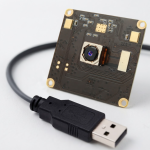
The ELP 13MP Autofocus USB Camera Module is designed for compact imaging applications that require detailed images and straightforward computer connectivity. Featuring a Sony IMX214 CMOS sensor, autofocus, USB 2.0, UVC support, and a compact 38 × 38 mm board, this USB camera module can be integrated into laser engravers, embedded systems, and other machine vision applications.
1. Why Image Resolution Matters for Laser Engraving
A camera used with laser engraving equipment may need to capture small objects, fine patterns, product outlines, QR codes, or barcodes. A higher-resolution image can provide more visual detail, helping operators and software systems inspect the work area.
The ELP 13MP USB camera module uses a 1/3-inch Sony IMX214 CMOS sensor, supporting a maximum resolution of 3840 × 2880 pixels. This resolution can be useful when detailed imaging is important for material positioning or inspection.
However, resolution alone does not determine the final image quality. Lighting conditions, exposure, lens characteristics, focus, and camera placement also affect the result. When integrating a LightBurn camera into a laser engraver, these factors should be evaluated together to achieve a clear view of the working surface.
2. Autofocus for Flexible Working Distances
The distance between a camera and its target can vary depending on the equipment design, material thickness, and installation position. A fixed-focus camera may be sufficient for a setup where the distance never changes, but it can be less flexible when working conditions vary.
The ELP 13MP autofocus USB camera supports an object distance ranging from approximately 8 cm to 100 m, according to the product specifications. Its autofocus function gives developers more flexibility when designing imaging systems for different working distances.
Beyond laser engraving, autofocus can also be useful in document capture, code reading, 3D printing, 3D scanning, and robotic vision. Buyers should still verify that the camera's focus range and performance suit the specific application and target size.
3. A Compact Camera Module for Embedded Integration
Space can be a major consideration when designing laser equipment and other embedded devices. A conventional webcam may include a housing and stand that are unnecessary when the camera needs to be installed directly inside a machine.
The ELP USB camera module features a compact board measuring approximately 38 × 38 mm. This design gives equipment developers greater flexibility when planning mounting positions and integrating the camera into an enclosure.
The module uses USB bus power with a 5V power supply, helping simplify connections to compatible host systems. For OEM equipment manufacturers, its board-level design may also make it easier to incorporate imaging functions into customized products.
Before installation, it is important to confirm the available mounting space, cable routing, USB connection, and power requirements.
4. UVC Support and Cross-Platform Compatibility
Hardware compatibility is another important consideration when choosing a USB camera module. A camera may offer excellent image quality, but integration can become complicated if it requires specialized drivers or does not work with the target operating system.
The ELP 13MP camera supports USB Video Class (UVC), which allows it to work with compatible systems and applications. The listed supported platforms include Windows, Linux, macOS, Android, Ubuntu, and Raspberry Pi.
The product can also be used with software such as OpenCV, VLC, Amcap, QuickTime, Photo Booth, CameraFi, and USB Camera, subject to platform and application compatibility.
For developers working on machine vision projects, this flexibility can simplify initial testing and software integration. Nevertheless, buyers should verify support for their specific operating system, application version, and intended image-processing workflow before deployment.
5. Understanding USB 2.0 Performance
USB 2.0 can be sufficient for many imaging applications, depending on the required resolution, frame rate, and amount of image data being transferred.
The ELP autofocus USB camera uses USB 2.0 High Speed and supports MJPEG and YUYV image formats. According to the listed specifications, it supports up to 10 frames per second at 3840 × 2880 resolution, with frame rates of up to 30 fps at lower resolutions.
For laser engraving setup, work-area viewing, image capture, and code recognition, these options may offer a practical balance between image detail and transfer requirements. Applications involving fast-moving objects or time-sensitive visual control may need higher frame rates or a different interface.
When comparing cameras, evaluate performance at the resolution and frame rate you actually intend to use, rather than relying on the maximum resolution alone.
6. Image Controls for Different Materials and Lighting
Laser engraving projects can involve wood, plastics, coated surfaces, metals, and other materials. Their appearance varies with surface texture, reflectivity, color, and surrounding light, so a single set of image settings may not work equally well in every situation.
The ELP 13MP USB camera module supports adjustments for brightness, contrast, saturation, hue, sharpness, gamma, gain, white balance, exposure, and focus.
These controls allow developers to tune the image for their working environment. For example, exposure and white balance adjustments may help improve visibility under different lighting conditions, while focus settings can help maintain clarity at the required working distance.
Good results still depend on the overall imaging setup. Camera angle, illumination, reflections, and lens selection should be considered alongside software adjustments.
7. What Should You Check Before Buying?
When choosing a 13MP autofocus USB camera for laser engraving, buyers should assess the complete application rather than focusing on megapixels alone.
Consider the following factors:
-
Working distance and field of view: Can the camera capture the entire work area with sufficient detail?
-
Resolution and frame rate: Does the camera meet the needs of positioning, inspection, or image recognition?
-
Installation dimensions: Is there enough space for the board, lens, connectors, and cables?
-
Interface and power: Does USB 2.0 and the specified 5V power supply fit the host system?
-
Operating system and software: Is the camera compatible with the target platform and required applications?
-
Lighting conditions: Will the camera produce usable images on reflective, dark, or textured materials?
-
OEM integration requirements: Are mounting, cable length, operating environment, and image controls suitable for the final product?
For commercial projects, testing the camera in the intended installation environment is a useful way to identify compatibility or image-quality issues before large-scale deployment.
Conclusion
A suitable camera can improve visibility and support image-based functions in laser engravers and other embedded equipment. The ELP 13MP Autofocus USB Camera Module combines a Sony IMX214 CMOS sensor, autofocus, USB 2.0 connectivity, UVC support, adjustable image settings, and a compact 38 × 38 mm board design.
These features make it worth considering for LightBurn camera applications, laser engraving systems, QR and barcode recognition, 3D printers, 3D scanners, and embedded machine vision projects.
For equipment manufacturers and developers, the best choice depends on how the camera will be installed, the detail required, the working distance, and the software environment. Reviewing these factors together can help ensure that the selected ELP USB camera module fits the needs of the finished system.
To learn more about the product, visit the ELP 13MP Autofocus USB Camera Module page or explore ELP's company information.
https://www.hdusbcameras.com/lightburn-camera-elp-13mp-autofocus-usb-camera-module.html