


IMARC Group has published a new research report titled “Argentina Residential Real Estate Market Size, Share, Trends and Forecast by Type, and Region, 2026-2034.” The report provides a comprehensive analysis of market dynamics, growth drivers, emerging trends, segmentation, investment opportunities, and the competitive landscape, offering insights into the industry's current performance and future growth prospects.
Argentina Residential Real Estate Market Size, Growth, and Forecast (2026-2034)
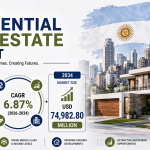
The Argentina residential real estate market reached USD 41,234.37 million in 2025 and is projected to reach USD 74,982.80 million by 2034, growing at a CAGR of 6.87% during 2026-2034. Increasing urbanization, improved mortgage accessibility, and rising demand for modern, energy-efficient housing are among the primary factors supporting market expansion.
Government initiatives promoting affordable housing and increasing private sector investment are encouraging the development of residential projects across major urban centers.
Additionally, the adoption of sustainable construction techniques and smart home technologies is enhancing property appeal and supporting the growth of Argentina's housing sector.
As urban populations expand, developers are increasingly focusing on multifamily residential buildings and mixed-use communities that integrate housing with retail, leisure, and recreational facilities. Infrastructure improvements, including better public transportation and upgraded utilities, are also increasing the attractiveness of emerging residential areas and contributing to the long-term development of the Argentina residential real estate market.
Get Insights on the Argentina Residential Real Estate Market — Access the IMARC Sample Report: https://www.imarcgroup.com/argentina-residential-real-estate-market/requestsample
Key Trends Driving the Argentina Residential Real Estate Market
- Growing Emphasis on Sustainable and Energy-Efficient Housing: Homebuyers are increasingly prioritizing environmentally friendly features, including solar panels, energy-efficient insulation, water-saving systems, and sustainable building materials. These features help reduce utility expenses while minimizing environmental impact. Developers are also incorporating smart home technologies, such as automated lighting and climate control, into new residential projects, aligning with growing interest in energy efficiency and sustainable construction.
- Increasing Investment and Improved Mortgage Accessibility: Better access to housing finance and rising domestic and international investment are supporting market development. Competitive mortgage rates and flexible repayment arrangements can make homeownership more accessible to middle-income households. Meanwhile, international investors are exploring opportunities in Argentina's residential property market, attracted by rental income potential and comparatively competitive property prices.
- Urbanization and Increasing Housing Demand: Continued urbanization and population concentration in cities such as Buenos Aires, Córdoba, and Rosario are increasing the need for new residential developments. Demand is particularly relevant in affordable and mid-range housing categories. Changing lifestyle preferences are also encouraging the development of apartments, multifamily housing, and mixed-use residential communities across Argentina's expanding urban centers.
Argentina Residential Real Estate Market Report Segmentation
The IMARC Group report provides a detailed analysis of the Argentina residential real estate market based on property type and geographical region. This segmentation helps businesses understand housing preferences and identify potential investment opportunities across different residential categories.
Type Insights
- Condominiums and Apartments: Increasing urbanization and limited land availability in densely populated metropolitan areas are supporting demand for condominiums and apartments. These properties appeal to young professionals, smaller households, and buyers seeking conveniently located homes with access to urban amenities and essential services.
- Villas and Landed Houses: Villas and landed houses continue to attract families and buyers seeking larger living spaces, greater privacy, and more outdoor areas. Demand is particularly relevant in suburban locations and regional markets beyond the most densely populated urban centers.
Regional Insights
- Buenos Aires Region: Buenos Aires leads the Argentina residential real estate market, supported by its large population, developed infrastructure, extensive housing inventory, and concentration of economic activity. Its established residential neighborhoods and access to employment opportunities continue to attract homebuyers and investors.
- Litoral, Northern, Córdoba, Cuyo, and Patagonia Regions: These regions contribute to market development through expanding urban infrastructure, regional housing initiatives, and increasing demand for different types of residential properties. Growing economic activity and infrastructure improvements are creating opportunities for apartment developments and landed housing beyond the capital region.
Competitive Landscape of the Argentina Residential Real Estate Market
The Argentina residential real estate market comprises established domestic developers and diversified real estate companies competing through project design, location, sustainability features, financing accessibility, and residential amenities. Competition is largely project-oriented, with developers seeking to differentiate their properties through construction quality, contemporary designs, and features that address changing homebuyer expectations.
The integration of energy-efficient technologies, sustainable building practices, and modern amenities is becoming increasingly relevant as developers respond to evolving consumer preferences. Access to financing and the ability to manage construction costs also remain important considerations in maintaining competitiveness.
Key Players in the Argentina Residential Real Estate Market
- IRSA Inversiones y Representaciones: IRSA is one of Argentina's leading diversified real estate companies, with a significant presence in large-scale property development and investment. Its activities across major urban centers contribute to the country's broader residential and commercial real estate landscape.
- Consultatio S.A.: Consultatio is a prominent Argentine real estate developer known for premium residential and mixed-use projects. The company focuses on large-scale developments and maintains a presence in the country's higher-end housing segment.
Challenges Impacting the Argentina Residential Real Estate Market
Persistent inflation and currency fluctuations continue to affect construction costs, property valuations, and mortgage affordability in Argentina. These conditions create uncertainty for developers planning new residential projects and for prospective homebuyers evaluating long-term financial commitments.
Increasing prices for construction materials and labor can further raise development expenses and put pressure on housing affordability. In addition, limited access to long-term financing outside major metropolitan areas can constrain residential development in regional markets and lower-income housing segments. Addressing these challenges will be important for sustaining growth and broadening access to homeownership.
Outlook of the Argentina Residential Real Estate Market (2026-2034)
The outlook for the Argentina residential real estate market remains positive, supported by urbanization, improving access to mortgage financing, and growing interest in sustainable and energy-efficient housing. The market is projected to expand from USD 41,234.37 million in 2025 to USD 74,982.80 million by 2034, registering a CAGR of 6.87% during 2026-2034.
The increasing adoption of green construction practices, integration of smart home technologies, and development of public-private housing initiatives are expected to influence the market's evolution. Developers are also likely to focus on multifamily housing and mixed-use communities to address changing urban lifestyles and growing demand for conveniently located residential properties.
As infrastructure improves and investment opportunities expand, the ability to deliver affordable, modern, and energy-efficient homes will remain an important factor in the market's long-term development.
Frequently Asked Questions (FAQs): Argentina Residential Real Estate Market
1. What is the current size of the Argentina residential real estate market?
The Argentina residential real estate market reached USD 41,234.37 million in 2025 and is projected to reach USD 74,982.80 million by 2034, growing at a CAGR of 6.87% during 2026-2034.
2. What are the key drivers of the Argentina housing market?
The primary growth drivers include increasing urbanization, improved mortgage accessibility, rising demand for energy-efficient housing, government initiatives supporting affordable homes, and growing domestic and international investment.
3. What is the segmentation of the Argentina residential real estate market by type?
By type, the market is segmented into condominiums and apartments, and villas and landed houses.
4. Which regions lead the Argentina residential real estate market?
The Buenos Aires Region leads the market, supported by its population concentration, established infrastructure, and economic activity. The Litoral, Northern, Córdoba, Cuyo, and Patagonia regions also contribute to market development.
5. Who are the key players in the Argentina residential real estate market?
Key players include IRSA Inversiones y Representaciones and Consultatio S.A., alongside other real estate developers involved in residential and mixed-use projects across Argentina.
Author IMARC Group
IMARC Group is a global management consulting firm that helps the world's most ambitious changemakers to create a lasting impact. The company provide a comprehensive suite of market entry and expansion services. IMARC offerings include thorough market assessment, feasibility studies, company incorporation assistance, factory setup support, regulatory approvals and licensing navigation, branding, marketing and sales strategies, competitive landscape and benchmarking analyses, pricing and cost research, and procurement research.
Contact Us
IMARC Group,
134 N 4th St. Brooklyn, NY 11249, USA,
Email: sales@imarcgroup.com,
United States: +1-201971-6302