
Picture the scene: the crane worked hard all year, and now the maintenance budget for the coming twelve months sits on someone's desk, blank. The pressure to produce a defensible number is immediate, and the margin for error is thin. Get it too low, and you're requesting supplemental funds by mid-year. Get it too high, and finance questions every line item.
Forecasting replacement costs doesn't require guesswork or clairvoyance. It requires a methodical approach anchored in the machine's physical condition, its spending history, and a realistic assessment of what's coming. The sections below outline that method in the sequence that builds the strongest case.
Examine the Machine, Not Just the Spreadsheet
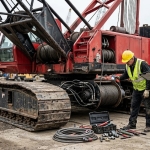
Every credible estimate begins at the crane, not the desk. Walk the machine with the operator and the mechanic, service log in hand. Three people examining the same equipment notice more than one person working alone.
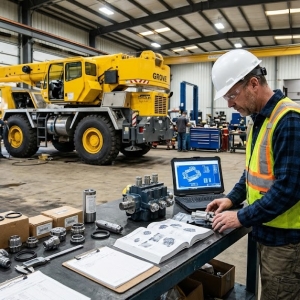
Start with components the manufacturer measures precisely. Hoist ropes, boom pendants, swing bearings, brake packs, hydraulic hoses, and filter elements all have published standards for replacement or discard. Record each reading against the applicable threshold. Then examine the components that rarely appear on standard checklists: pin and bushing clearances, gearcase oil condition, electrical contactors, and limit switches. Those quiet items account for a surprising share of unplanned downtime.
Turn your observations into a written inventory before the team disperses. Notes captured on site carry authority that recollections typed later cannot match. Photograph questionable items as well; visual evidence resolves disputes efficiently when the budget discussion moves to an office.
Some measurements fall near their decision point, creating ambiguity. Resolve it before the budget takes shape. A crane parts supplier who works with this equipment regularly can confirm the manufacturer's discard criteria in one short conversation. That confirmation prevents both premature replacement and overdue neglect.
Classify Items by Replacement Certainty
Once the inspection produces findings, categorize them. Two distinct groups emerge, and each demands a different budgeting approach.
The first group covers replacements the manufacturer's schedule determines. Ropes retired at documented discard criteria. Filters changed at published intervals. Slew-ring bolts serviced on defined cycles. These events arrive on schedule regardless of conditions on the ground. Budget the related Manitowoc parts at full estimated cost, since timing holds no uncertainty.
The second group covers items identified through condition rather than calendar. A brake pack showing glazing. A hose with surface checking. A gearcase that's grown louder over recent weeks. These components will need attention; the timing remains genuinely unpredictable.
Weight each conditional item at approximately fifty percent of its cost, then add the subtotal to the scheduled column. This blended approach produces a number that acknowledges uncertainty without drifting into worst-case territory. An honest estimate earns more credibility during review than one padded against every conceivable outcome.
Ground the Estimate in Purchasing History
One of the most reliable planning tools sits in last year's purchasing records, and most teams barely glance at it. Actual expenditure reveals more about the machine's needs than any amount of professional intuition.
Pull every invoice from the previous twelve months related to component replacement. List line items and totals. Lay those figures beside the budget that was originally approved and note the distance between plan and reality. The gap tells you how well your estimating method has performed.
If the projection missed by twenty percent or more, recalibrate from the ground up. Prior actuals become the new floor for this year's estimate, and the inspection findings layer on top of that baseline. A floor built on real transactions anchors the entire structure.
Repeating purchases reveal patterns worth noting. A component that appeared in each of the last three years' orders isn't optional; it's expected. Recognizing that pattern now prevents an unpleasant rediscovery under pressure later in the year.
Start Pricing Conversations Early
Budgets built on last-minute quotes tend to reflect the urgency of the requester rather than the reality of the market. Vendors approached in the final days before a deadline quote conservatively or defer detail. Neither outcome strengthens your estimate.
Begin outreach weeks ahead, ideally as soon as the inspection list takes organized shape. Share model, configuration, year, and operating environment alongside part numbers. The same component can price differently depending on setup, and an experienced crane parts supplier will probe those variables before quoting anything.
Ask about lead times at the same time as pricing. A component quoted at three thousand dollars with a fourteen-week wait can impose far more cost through idle production than through the invoice. When the calendar favors moving a purchase into the current cycle, document that decision in the budget file.
For significant expenditures, obtain competing quotes before committing. Inventory position, sourcing origin, and freight logistics all shift the number. Variation between vendors is normal in this market, and one additional call frequently reveals a difference worth noting.
Reserve Funds for the Unexpected
Careful preparation reduces surprises; it doesn't eliminate them. Pins shear without warning. Pendants crack during a lift. Control cards fault during a night shift hours before a scheduled job. The budget that assumed an orderly year now absorbs several disruptions at once.
Decide the cushion size based on the machine's profile. The traditional figure is ten percent of the parts total. That works for a late-model crane in moderate service. Push toward twenty for older machines in punishing environments—quarries, coastal exposure, and relentless double shifts all qualify. Fifteen serves the middle ground well.
This cushion absorbs genuine surprises rather than funding convenience. It prevents the mid-year supplement request that draws unwanted scrutiny from finance, and that scrutiny lingers into the next planning round. A properly sized reserve keeps the conversation professional.
Surplus cushion funds roll forward or return to the general budget. Either outcome confirms the reserve fulfilled its purpose without being redirected.
Budget Beyond the Component Cost
Parts dominate the conversation, yet they represent only one layer of what the year actually demands. Any total that stops at the part number systematically underestimates the commitment.
Add installation labor to every line item. Include inbound freight—Manitowoc parts travel heavily, and shipping a boom section or counterweight set to a remote site produces charges that dwarf catalog prices. Factor in rigging whenever major disassembly is required. Account for downtime exposure when the crane will sit idle during productive lift windows.
Filters and seals fold into routine shop capacity without strain. Rope replacements, bearing jobs, and major component removals demand dedicated scheduling and sometimes additional personnel. Budgets that assume the shop absorbs everything without adjustment create friction once the work actually arrives. Match labor estimates to the scope of each task.
Sequencing affects the bottom line. Work coordinated around the lift calendar imposes less disruption than identical work forced by an unexpected failure. Build the execution timeline into the budget file before the year begins rather than improvising when a component fails.
Close the Loop Monthly
Almost nobody tracks a budget consistently through the year. Those who do find the practice pays for itself repeatedly. Monthly reconciliation transforms an annual guess into a managed process.
Set up one spreadsheet with four columns: line item, budgeted amount, actual, variance. Update it as invoices clear. Keep the format simple enough that a colleague could maintain it in your absence. Complex systems get abandoned by spring; simple ones endure.
Three months in, the estimate's accuracy becomes measurable. Six months in, emerging problems surface while correction remains inexpensive. Twelve months in, you hold a validated record of what the year genuinely consumed.
That record transforms next year's exercise entirely. Rather than reconstructing from memory, you begin from documented, reviewed history. The conversation compresses, and the resulting number carries more weight.
Final Reflections
Annual budgeting rewards method over instinct, repetition over improvisation.
Inspect the machine with the people who operate and maintain it. Classify findings by certainty of replacement. Build the estimate on actual prior spending. Obtain quotes early from a crane parts supplier who understands this equipment line. Size the contingency to the machine's age and duty cycle. Carry labor, freight, and downtime into the total. Track variance every month without exception.
Run the sequence correctly once and you establish a credible baseline. Repeat it annually, and the process takes less effort each time while producing more accurate results and fewer uncomfortable conversations.