
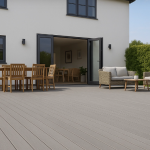





Composite decking UK homeowners consider offers an alternative to traditional timber decking for gardens, patios and outdoor entertainment areas. Manufactured using a combination of materials, composite boards are designed to provide a timber-like appearance while reducing some of the maintenance associated with natural wood.
With a range of colours, textures and board profiles available, composite decking can complement both contemporary and traditional properties. Understanding its advantages and limitations helps buyers make a more informed decision.
What Is Composite Decking?
Composite decking is generally manufactured from a blend of wood fibres or wood flour and plastic polymers, together with additives that influence colour, processing and performance.
Some products feature a protective outer layer, often called a capped surface, designed to improve resistance to staining, moisture and fading. Other boards use an uncapped construction.
The precise composition varies between manufacturers. Buyers should review technical specifications rather than assuming all composite boards offer identical performance.
Benefits of Composite Decking
One of the main advantages is reduced routine maintenance. Unlike traditional timber, composite decking generally does not require regular staining, painting or sealing unless the manufacturer specifies otherwise.
Other potential benefits include:
- Consistent appearance: Boards are manufactured to provide relatively uniform colours and dimensions.
- Reduced risk of splintering: Many composite products avoid the typical splintering associated with weathered timber.
- Design flexibility: Different colours and finishes can complement outdoor furniture and garden landscaping.
- Moisture resistance: Suitable products can offer improved resistance to moisture-related deterioration compared with untreated wood.
- Cleaning convenience: Routine sweeping and washing are generally sufficient.
Composite decking is not completely maintenance-free. Dirt, algae, scratches and staining can still occur, depending on the product and environment.
Choosing the Right Composite Decking
Begin by considering how the deck will be used. A small seating area may require a different board layout and supporting structure from a large raised entertainment space.
Board profiles include solid and hollow designs. Solid boards may offer a substantial feel, while hollow boards can reduce weight. Neither option is automatically superior; suitability depends on the manufacturer's specifications and installation method.
Look at the surface texture, colour, board width and expected weather exposure. Dark boards may become particularly hot in direct summer sunlight, so consider orientation and intended use.
Check the warranty, cleaning instructions, slip-performance information and compatibility with the proposed subframe and fixings.
Preparing the Ground and Installing Decking
A durable deck needs a stable supporting structure. Installation typically involves preparing the ground, providing suitable drainage and constructing a compatible subframe.
The required foundation depends on ground conditions, deck height and product instructions. Raised decking may require additional structural design and suitable foundations.
Composite boards expand and contract with temperature changes. Correct expansion gaps, end clearances and fixing arrangements are therefore essential.
Follow the manufacturer's spacing instructions carefully. Incorrect installation can cause boards to buckle, joints to open or water to collect.
For elevated decking, check guarding, staircase and structural requirements before construction. A suitable balustrade may be necessary to protect users from falls.
Composite Decking UK Costs
Project costs depend on the decking area, board quality, subframe materials, ground preparation, fixings and labour.
Comparing only the price per board can be misleading. A complete quotation should include the supporting structure, edging, steps, drainage and installation.
Although composite decking uk may have a higher initial cost than some basic timber options, reduced staining and sealing requirements may offer savings over time. The actual value depends on the product's lifespan and maintenance needs.
Cleaning and Maintenance
Sweep away leaves and dirt regularly. Wash the surface using an approved cleaning method and address algae or stains according to manufacturer guidance.
Keep drainage gaps clear and inspect the subframe and fixings periodically. Avoid aggressive chemicals or abrasive tools unless specifically approved.
Final Thoughts
Composite decking UK homeowners choose can create an attractive outdoor living area with relatively low routine maintenance. Careful product selection, proper ground preparation and correct installation are essential for achieving a durable, functional and visually appealing deck.