


Choosing a wedding band is an important part of celebrating a lasting commitment. The right ring should reflect personal style, feel comfortable throughout the day, and remain meaningful for years to come. From classic gold bands to elegant designs featuring sparkling stones, there are many options to consider. Wedding Bands for Women are available in a wide range of styles, making it easier to find a ring that suits different preferences and budgets. Among these options, diamond bands remain popular for their brilliance, versatility, and timeless appeal.
What Makes Diamond Wedding Bands Worth Considering?
Diamond wedding bands combine traditional symbolism with decorative beauty. Their sparkling stones can add detail to a simple metal band, creating a design that feels both elegant and personal.
One of their main advantages is versatility. Diamond bands can be worn alone for a refined appearance or paired with an engagement ring for a coordinated look. They are available in understated styles suitable for everyday wear as well as more elaborate designs for people who prefer noticeable jewelry.
Diamonds are also relatively hard gemstones, making them suitable for jewelry intended for frequent use. However, the durability of a complete ring depends on its setting, metal, construction, and maintenance. Regular inspection remains important to help prevent stones from becoming loose.
Whether a diamond band is worth choosing ultimately depends on your budget, lifestyle, and preferred design.
Which Diamond Wedding Band Styles Can You Choose?
Different settings and diamond arrangements create distinct appearances. Understanding the available styles can help you select a ring that matches your preferences.
Eternity Wedding Bands
Eternity bands feature diamonds arranged around the entire circumference of the ring. This continuous pattern creates sparkle from multiple angles and gives the design a distinctive appearance.
Full eternity bands can be difficult to resize because the stones extend around the entire ring. Half-eternity designs place diamonds along only part of the band, offering a similar visual effect while often allowing greater flexibility for resizing.
These styles are suitable for people who appreciate detailed jewelry and want a band with consistent sparkle.
Half-Eternity Diamond Bands
Half-eternity bands feature diamonds across the upper portion of the ring. They can provide a balance between decorative detail and everyday practicality.
Because the underside generally contains plain metal, these bands may feel more comfortable for some wearers and can be easier to maintain. They also offer an attractive option for buyers who want diamond detailing without choosing a fully set band.
Pavé Diamond Wedding Bands
Pavé bands feature small diamonds set closely together, creating the appearance of a continuous sparkling surface. The individual stones are usually held by small metal prongs or beads.
These designs can look particularly elegant alongside solitaire engagement rings. However, the small settings require proper care, and the ring should be checked periodically for loose stones.
Channel-Set Diamond Bands
Channel-set bands hold diamonds between two parallel edges of metal. This setting creates a neat, structured appearance and reduces the exposure of the stones' sides.
The relatively smooth surface can be appealing to people who prefer a clean design. Channel settings are available in several metal colors and can complement both modern and traditional engagement rings.
Classic Diamond Bands
Classic diamond bands may feature a single row of stones, a small central diamond, or a simple arrangement of accent diamonds. Their restrained appearance makes them suitable for people who want a ring that feels elegant without excessive decoration.
These designs can also work well as standalone wedding rings, especially for wearers who prefer a lighter visual profile.
Which Metal Is Best for a Diamond Wedding Band?
The metal affects a ring's appearance, durability, maintenance, and price. Consider how each option fits your preferences and lifestyle.
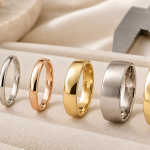
Yellow Gold
Yellow gold offers a traditional, warm appearance that complements many skin tones and jewelry styles. It pairs well with diamonds and can create a classic look when worn alongside a matching gold engagement ring.
Gold wedding bands are available in different purities, including 14K and 18K. Fourteen-karat gold contains a greater proportion of alloy metals, which can make it a practical choice for frequent wear. Eighteen-karat gold has a higher gold content and a richer appearance, although the specific alloy also affects its properties.
White Gold
White gold provides a bright, contemporary finish that highlights the sparkle of diamonds. It is a popular option for people who prefer silver-toned jewelry.
Many white gold rings have a rhodium coating that creates their bright white surface. This coating can wear over time and may require reapplication to maintain the original appearance.
Platinum
Platinum is valued for its naturally white appearance and durability. It is often chosen for fine jewelry intended for long-term wear.
Platinum is generally more expensive than many gold alternatives, although actual prices depend on market conditions and ring design. It can develop a surface patina with use, which some wearers appreciate as part of the metal's character.
Rose Gold
Rose gold has a warm pinkish tone created by its copper content. It offers an alternative to traditional yellow and white metals and can give a diamond wedding band a distinctive appearance.
This metal can work particularly well with vintage-inspired jewelry and romantic designs. When choosing rose gold, consider whether you want it to match your engagement ring or create a deliberate contrast.
How Do You Match a Diamond Wedding Band with an Engagement Ring?
A wedding band and engagement ring are often worn together, so their proportions and settings deserve careful consideration.
Start by comparing the metal colors. Matching metals create a coordinated appearance, while mixed metals can provide an intentional contrast. Neither approach is inherently better; the choice depends on your personal style.
Next, consider the shape of the engagement ring. A straight wedding band may sit neatly beside a solitaire ring, while an engagement ring with a large center stone or an unusually shaped setting may require a curved or contoured band.
Ring height is another important factor. If the engagement ring has a low setting, a thick band may leave a noticeable gap between the two rings. Trying different combinations can help you identify a comfortable fit.
Finally, consider the overall amount of sparkle. A diamond engagement ring may pair beautifully with a simple metal band, while a plain solitaire can be complemented by a pavé or eternity design.
Are Diamond Wedding Bands Suitable for Everyday Wear?
Diamond wedding bands can be worn every day, but the best design depends on your daily activities and comfort requirements.
A low-profile setting may be more practical for someone who regularly works with their hands. Channel-set diamonds or a simple band with a modest row of stones can reduce the likelihood of catching on clothing compared with some raised settings.
People who work with machinery, lift heavy objects, or perform tasks that could damage jewelry should remove their rings when appropriate. Diamonds are hard, but they can still chip under certain impacts, and metal settings can bend or loosen.
Consider these factors when selecting a ring for regular use:
-
Comfort: Choose a band width and thickness that feel natural on your finger.
-
Setting height: Lower-profile designs may be less likely to catch on clothing.
-
Maintenance: Diamond settings should be inspected regularly.
-
Lifestyle: Select a style that suits your work, exercise, and daily routines.
-
Fit: The ring should remain secure without feeling tight or restricting movement.
A well-chosen ring can balance beauty and practicality without requiring you to compromise on personal style.
Natural or Lab-Grown Diamonds: Which Should You Choose?
Diamond wedding bands are available with natural and lab-grown diamonds. Both have the same essential chemical composition and crystal structure, although their origins differ.
Natural diamonds form through geological processes over long periods, while lab-grown diamonds are produced using controlled technological processes. Both can offer attractive brilliance and are available in a range of sizes and quality grades.
Lab-grown diamonds generally cost less than comparable natural diamonds, allowing buyers to consider larger stones or more elaborate designs within a set budget. Natural diamonds may appeal to buyers who value geological origin or traditional market preferences.
When comparing either option, review the diamond specifications, including cut, color, clarity, and carat weight. For a wedding band containing many small diamonds, the overall quality of the setting and the consistency of the stones are also important.
The best choice is the one that fits your priorities, budget, and expectations for long-term ownership.
What Should You Consider Before Buying a Diamond Wedding Band?
Before making a purchase, evaluate more than the ring's appearance.
Set a Realistic Budget
Decide how much you want to spend and compare designs within that range. The metal, diamond quality, total carat weight, craftsmanship, and setting style can all influence the final price.
Select the Right Size
Ring size affects both comfort and security. Your fingers can change slightly with temperature and other conditions, so professional sizing can be helpful. If you are considering a full eternity band, confirm the fit carefully because resizing options may be limited.
Check Diamond Security
Inspect the settings and ask about the manufacturer's quality checks. Prongs, channels, and other settings should hold the stones securely without obvious gaps or damage.
Review the Return and Warranty Policies
Understand the terms for returns, resizing, repairs, and routine maintenance before purchasing. These details can be particularly important for rings with intricate diamond settings.
Think About Long-Term Care
A wedding band is often intended to be worn for many years. Choose a design that suits your lifestyle and consider the cleaning and maintenance it will require over time.
How Do You Care for a Diamond Wedding Band?
Regular care can help preserve the ring's appearance and reduce the risk of damage.
Clean the ring using a method suitable for its metal and setting. For many designs, gentle cleaning with warm water, mild soap, and a soft brush may be appropriate, but follow the jeweler's instructions, especially for rings containing other gemstones or delicate components.
Remove the ring before activities that could expose it to harsh chemicals, heavy impacts, or excessive abrasion. Store it separately from other jewelry to reduce scratches, and avoid placing it loose in a bag or drawer.
It is also wise to have the ring inspected periodically by a qualified jeweler. Professional checks can identify worn prongs, loose diamonds, and other issues before stones are lost.
Conclusion
Diamond wedding bands are worth considering for people who appreciate sparkle, lasting symbolism, and versatile jewelry design. From classic diamond bands and pavé settings to half-eternity and channel-set styles, there are options to suit different budgets and preferences.
The right choice depends on the metal, diamond arrangement, comfort, and how the band will be worn alongside an engagement ring. By comparing these factors and considering your daily routine, you can select a wedding band that feels personal, practical, and meaningful for years to come.
Frequently Asked Questions
Are diamond wedding bands worth the investment?
They can be worth the cost if you value their appearance, symbolism, and craftsmanship. However, resale value is not guaranteed, so it is best to choose a ring for personal enjoyment rather than expected financial returns.
Which diamond wedding band is best for everyday wear?
Low-profile designs, including some channel-set and half-eternity bands, can be practical for daily use. Comfort, secure settings, and the wearer's lifestyle should guide the final choice.
Is a full eternity band better than a half-eternity band?
A full eternity band offers diamonds around the entire ring, while a half-eternity band places them across the upper portion. Half-eternity designs may be easier to resize and can be more practical for some wearers.
Should a wedding band match the engagement ring?
Matching metals and designs create a coordinated look, but mixing styles can also be attractive. The most suitable combination depends on your preferences and how comfortably the rings sit together.
Are lab-grown diamond wedding bands a good choice?
Yes. Lab-grown diamonds have the same essential chemical composition and crystal structure as natural diamonds and are often more affordable. Buyers should compare stone quality, setting craftsmanship, and certification where applicable.
How often should a diamond wedding band be inspected?
Periodic inspection by a qualified jeweler can help identify loose stones, worn settings, and other damage. The appropriate interval depends on how frequently the ring is worn and the complexity of its design.