




In modern drilling engineering, the drill bit is functionally defined as an energy transducer. Under the axial load provided by the drill collars (Weight on Bit, WOB), the bit transforms the majority of the rotary energy from the drill string into the mechanical work of rock fragmentation. A small fraction of this energy is radiated into the formation as seismic waves, providing the primary signal source for Seismic While Drilling (SWD) applications.
Roller-Cone Bit Mechanics: Indention and Gouging
The roller-cone bit, typically featuring three cones, operates through a dual-action mechanism of indention and gouging [1].
-
Fragmentation Process: The fracturing process follows a sequence where axial waves provide energy for the initial indention (minor fracturing), while rotary power drives the subsequent gouging and scraping (major fracturing) that removes the rock.
-
Structural Parameters:
○ Teeth Classification: Milled teeth (cut from the bit body) are utilized for soft, shallow formations, whereas tungsten-carbide inserts (TCI) provide the durability required for consolidated or abrasive formations.
○ Cone Offset: The "offset distance"—the eccentricity between the cone axis and the bit center—determines the level of scraping action. Higher offsets increase the rate of penetration (ROP) in softer rocks but complicate directional control.
-
Engineering Risks: Roller-cone bits rely on lubricated, sealed bearings and seals. Their operational life is strictly limited by the mechanical fatigue of these moving parts. Bearing failure often results in cone loss, necessitating expensive "fishing" operations to recover debris from the borehole.
-
Data Integrity: From a geological perspective, roller-cone bits are preferred in exploratory wells as they produce distinct, identifiable rock cuttings for stratigraphic analysis.
Fixed-Cutter Technology: Shearing and Thermal Stability
Fixed-cutter bits eliminate moving parts and primarily break rock through a shearing and grinding action.
-
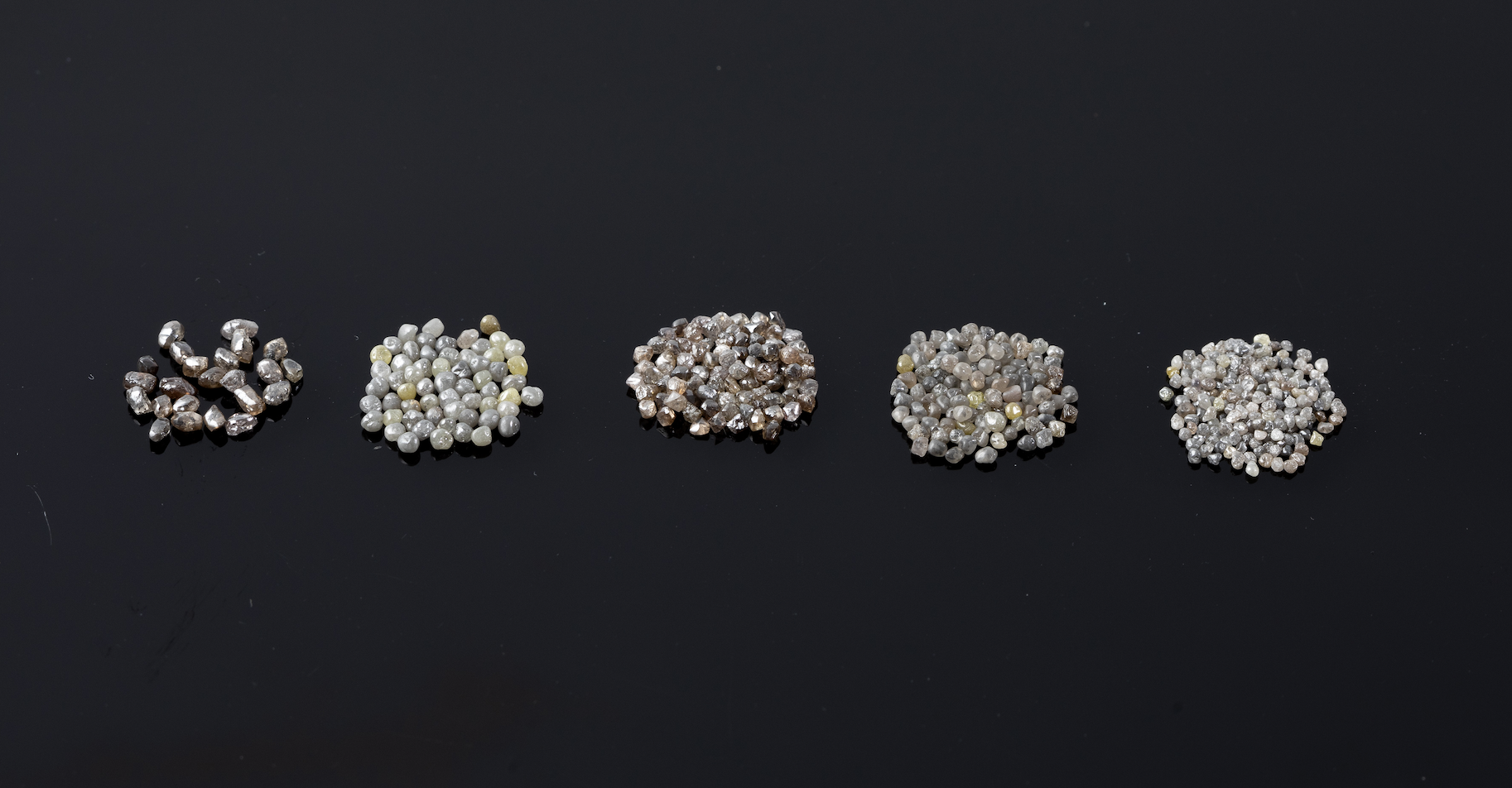
Natural Diamond Bits: Utilizing diamonds embedded in a matrix, these bits require less effort for shearing than the cracking action of roller bits. They are characterized by low weight and high reliability, making them ideal for high-speed turbine drilling and deviation control.
-
Polycrystalline Diamond Compact (PDC) Bits:
○ Mechanical Efficiency: PDC bits combine diamond's abrasion resistance with the impact strength of tungsten carbide. They typically operate at lower WOB (20–40 kN), which significantly reduces drill-string fatigue caused by vibrations.
○ Thermal Constraints: Standard cutters degrade rapidly above 350°C. For high-temperature or extremely abrasive formations, Thermally Stable Polycrystalline (TSP) bits are utilized, maintaining stability up to 1,200°C.
○ Geological Trade-offs: PDC bits pulverize rock into fine dust. The associated frictional heat can metamorphose cuttings, making it difficult for geologists to interpret the formation through mudlogging.
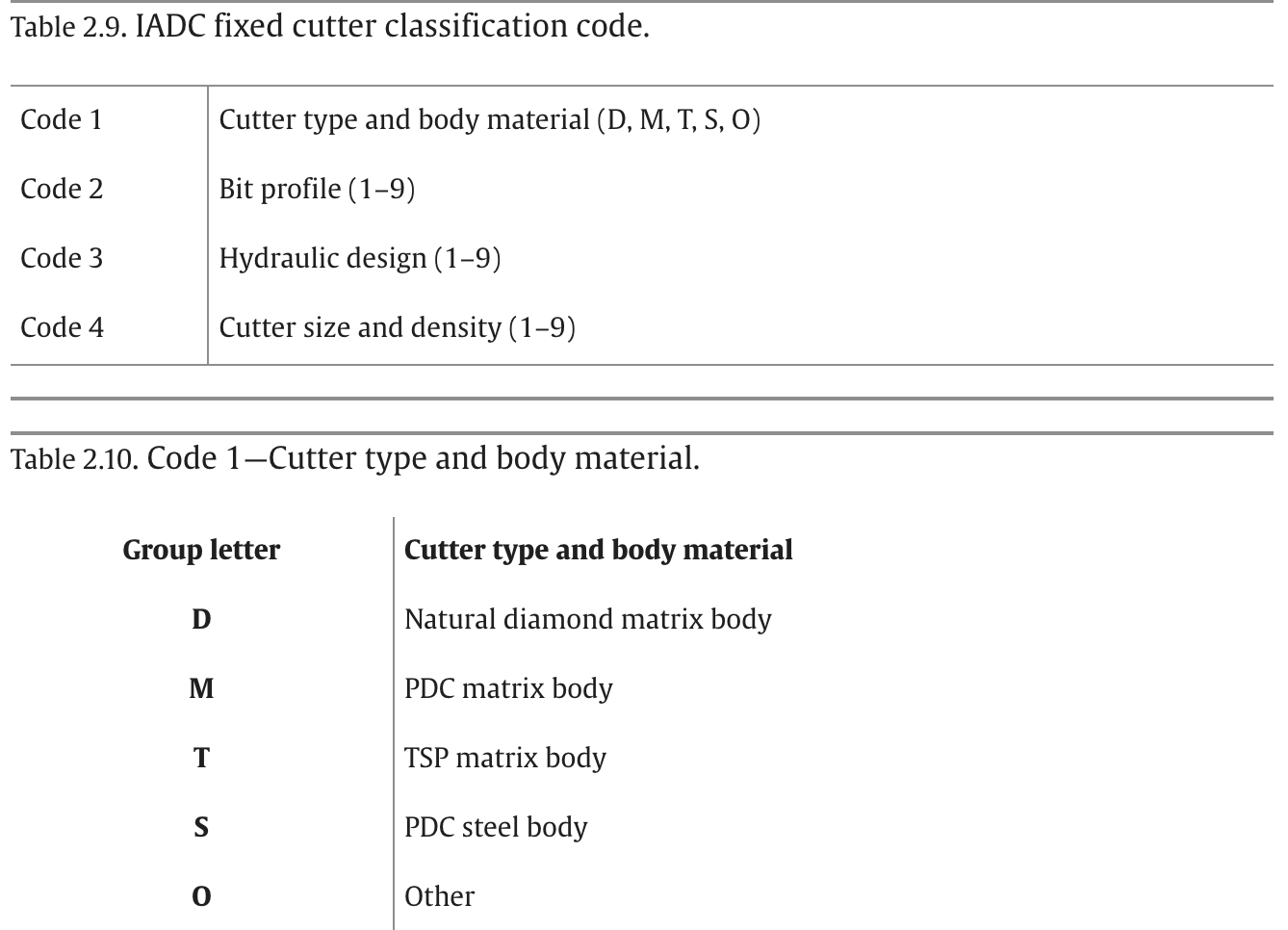
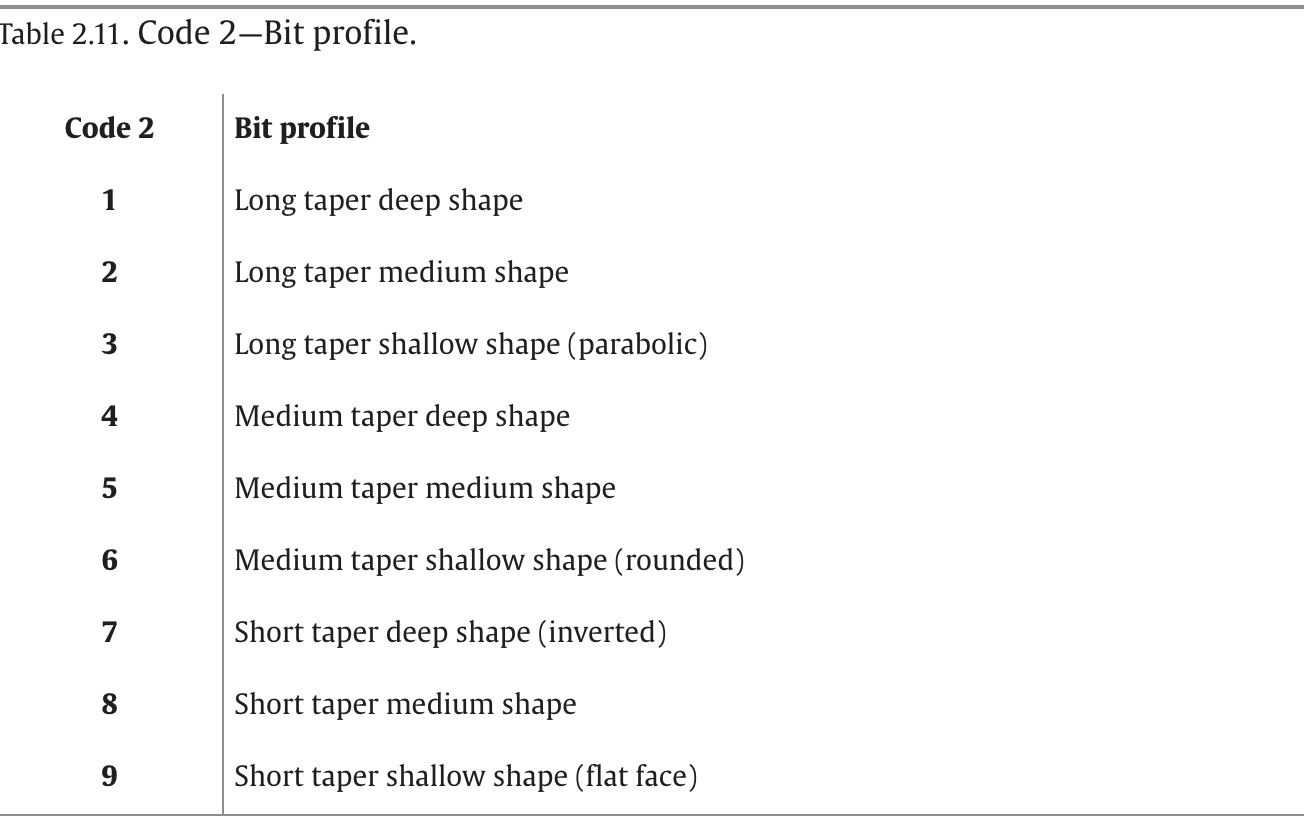
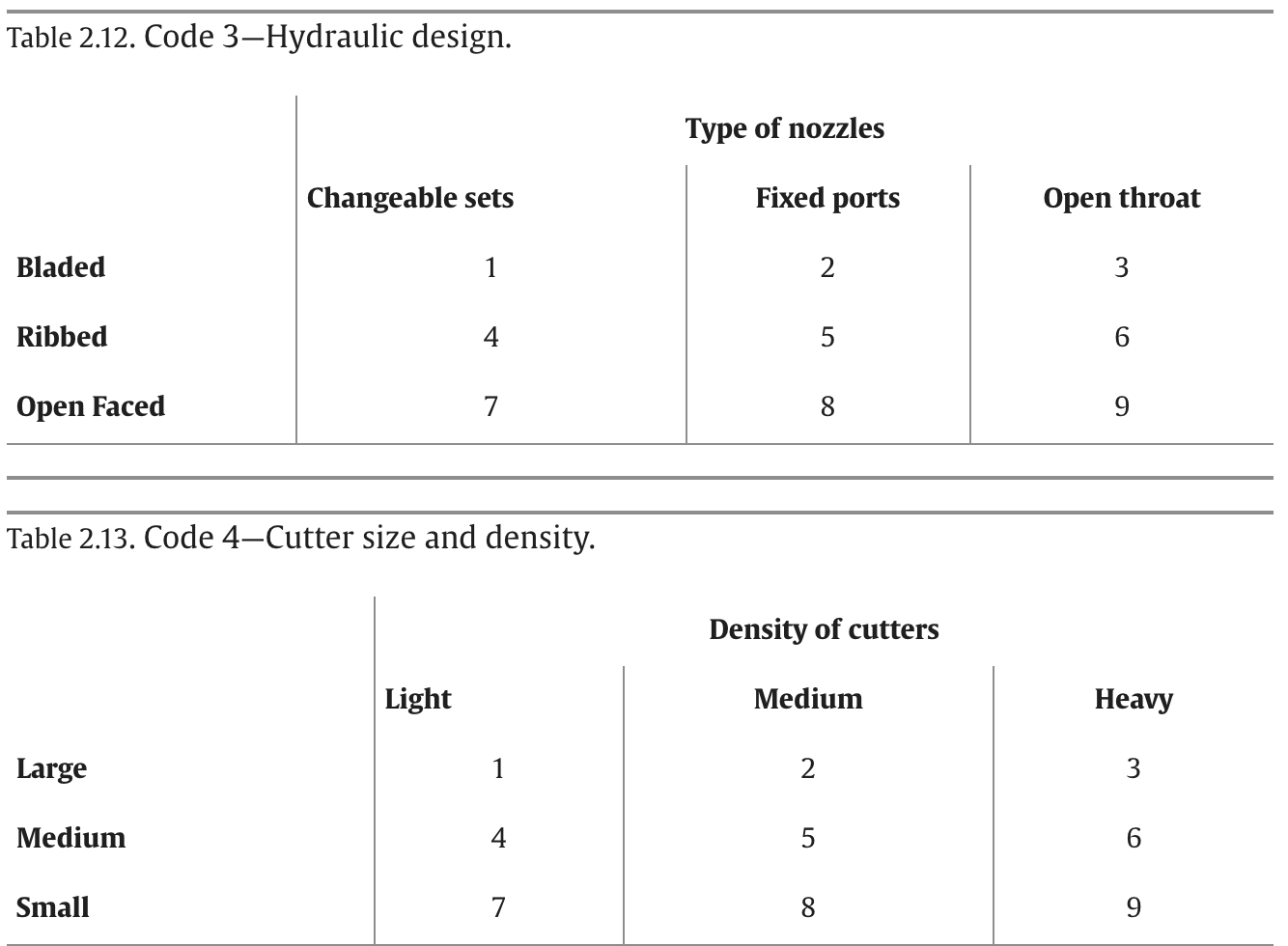
Fixed cutter classification according to IADC
“To catalogue the wide range of fixed cutter bits, including natural diamond and PDC, IADC introduced the following classification system. The classification system consists of a four-character code (Table 2.9). The Code-1 subgroup classification is simply a five-letter designation categorising the type of cutter and body material (see Table 2.10). The Code-2 numbers (1–9) categorise the bit profile by shape (see Table 2.11). The Code-3 numbers (1–9) describe the hydraulic features (see Table 2.12). The Code-4 numbers (1–9) categorise the cutter size and cutter material (see Table 2.13). An example bit code would be M442. It equates to a PDC bit with matrix body, medium taper-deep shape and changeable jets-ribbed design with large size cutter of medium density.” [1].
Specialized Tooling for Complex Engineering
Beyond standard excavation, specialized bit designs address specific engineering challenges:
-
Underreamer Bits: These tools feature mobile arms or blades that extend downhole to enlarge the borehole below existing casing strings. In SWD applications, the underreamer acts as a secondary vibration source that must be accounted for in signal processing.
-
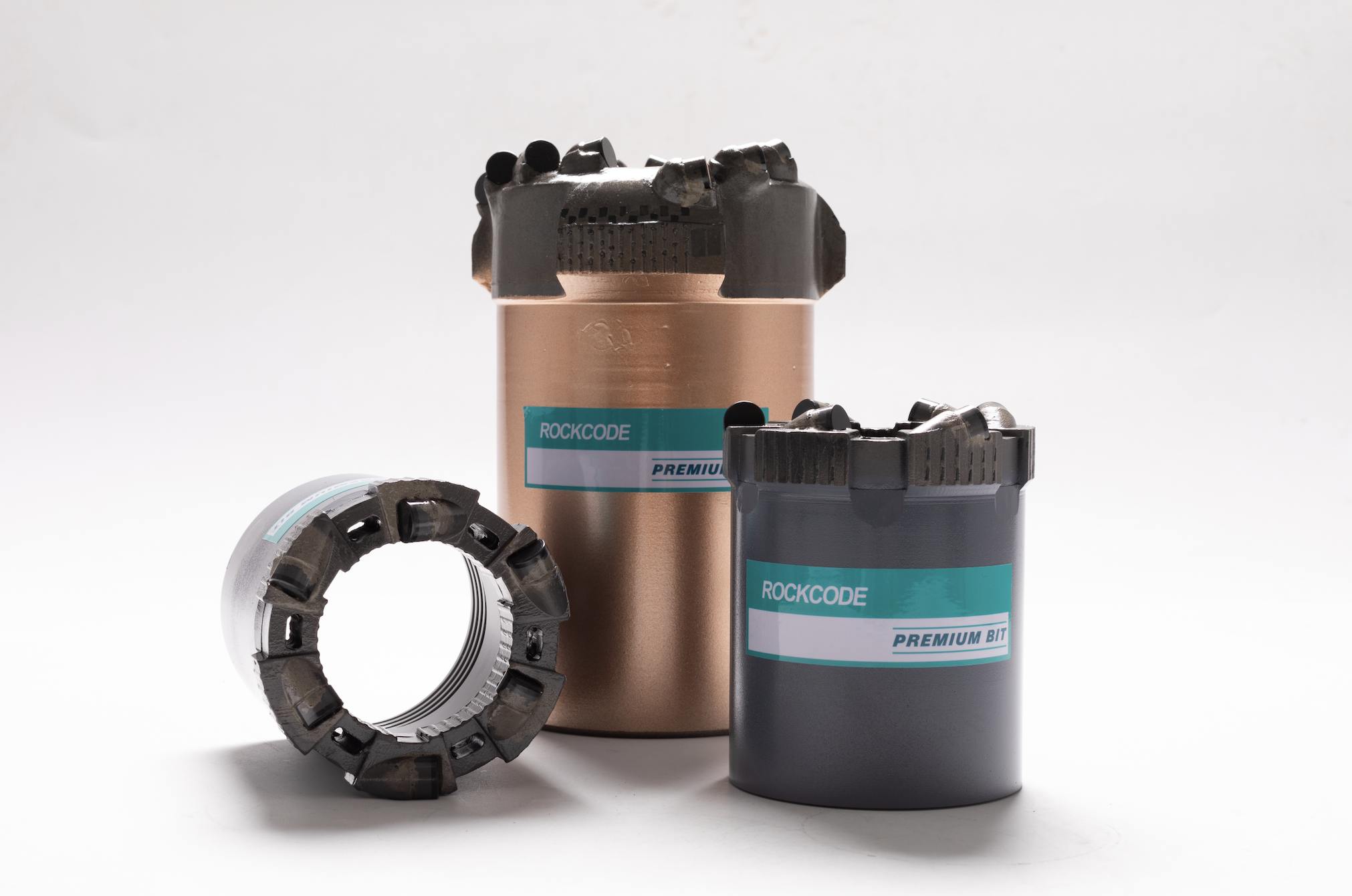
Coring Bits: Designed with a hollow center (resembling a hole saw), these bits allow a cylindrical rock core to pass into a core barrel for geological analysis. They are engineered to minimize the flushing of formation fluids and typically operate with a significantly reduced WOB.
-
Bicenter PDC Bits: These feature a non-symmetric, eccentric geometry that allows the bit to pass through tight casing and drill a hole of larger diameter. They are frequently used in moving salt formations to prevent sticking. Technical studies indicate that bicenter bits produce higher vibration energy, which is favorable for SWD purposes.
Strategic Procurement and Operational Experience
Selecting a bit is a balance between ROP, cost per unit depth, and bit life.
-
Walk Tendency: Rotary drilling typically induces a "right-hand" walk, which increases with cone offset. Conversely, turbine drilling may exhibit a "left-hand" walk.
-
Hydraulic Performance: Bits utilize tungsten-carbide nozzles to inject high-pressure mud, which is critical for cleaning the bit face, removing heat.
→ For more information about ROCKCODE’s Products, please visit: https://www.rockcodebit.com/geotechnical-core-bits
→ Email us at: info@rockcodebit.com
→ Information in this article is for general reference only. For specific drilling projects and drilling bits, please consult qualified professionals. Thank you.
Source
[1] Poletto, F., & Miranda, F. (2022). Seismic while drilling : fundamentals of drill-bit seismic for exploration (2nd edition.).