



Global travel is becoming faster, more connected, and increasingly technology-driven. While smartphones and smart wearables have transformed how people plan and experience travel, luggage has long remained a passive accessory. That is rapidly changing.
Automatic luggage represents a new category of intelligent travel gear—designed to actively assist travelers rather than slow them down. By integrating sensors, motors, and smart control systems, automatic luggage reduces physical strain, improves mobility, and enhances overall travel efficiency.
Manufacturers such as SYEV are at the forefront of this transformation, developing automatic luggage solutions that align with the needs of modern travelers, airports, and mobility ecosystems.
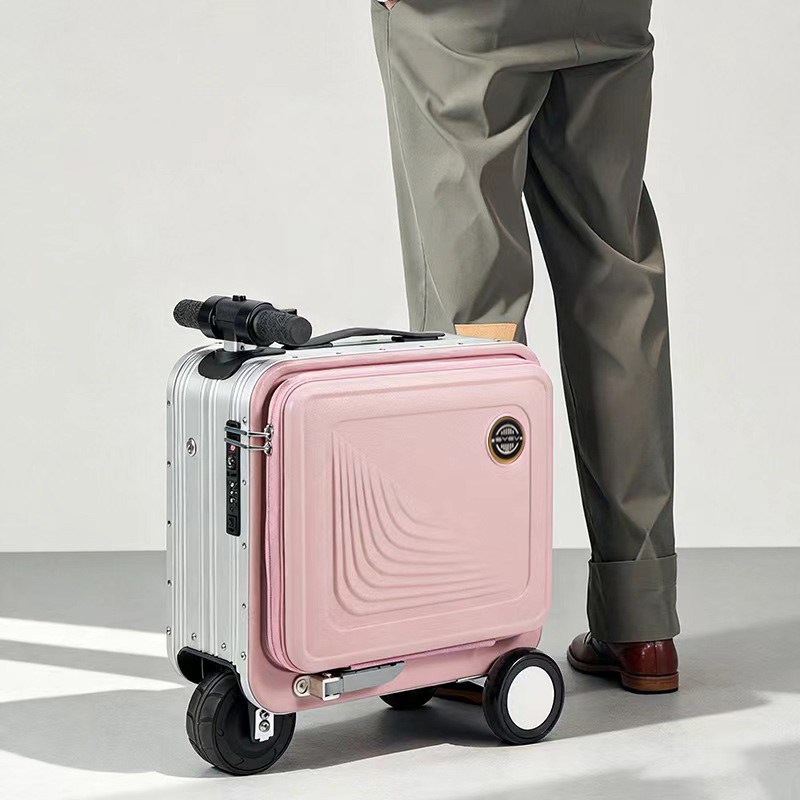
What Is Automatic Luggage?
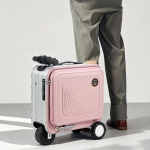
Automatic luggage refers to suitcases equipped with motorized movement systems and intelligent control technology. Unlike conventional luggage that must be pushed or pulled, automatic luggage can:
-
Follow the user automatically
-
Move with minimal manual force
-
Maintain balance and directional stability
-
Adapt to different walking speeds and environments
These systems rely on a combination of gyroscopic sensors, proximity detection, electric drive units, and embedded software, enabling seamless human–luggage interaction.
Core Technologies Behind Automatic Luggage
Intelligent Motion Control
At the heart of automatic luggage is its motion control system. This includes:
-
Electric motors integrated into the wheels
-
Speed-matching algorithms to sync with walking pace
-
Obstacle detection to avoid collisions
Advanced models from SYEV are engineered to ensure smooth acceleration and deceleration, preventing sudden movements that could destabilize the user or the luggage itself.
Sensor and Tracking Systems
Automatic luggage uses multiple sensors to understand its environment:
-
Distance sensors to maintain safe following range
-
Orientation sensors to stay upright on uneven surfaces
-
Smart pairing with wearable devices or mobile apps
These technologies allow the luggage to respond intelligently in crowded terminals, narrow walkways, or open transit spaces.
Practical Benefits of Automatic Luggage
Reduced Physical Strain
Frequent travelers often experience fatigue from handling heavy suitcases. Automatic luggage minimizes this burden by:
-
Eliminating constant pulling or pushing
-
Reducing wrist, shoulder, and back strain
-
Supporting travelers with mobility limitations
This is particularly valuable for business travelers, elderly users, and long-haul passengers.
Improved Travel Efficiency
Automatic luggage enhances movement efficiency in airports, train stations, and hotels:
-
Faster walking pace without drag resistance
-
Hands-free mobility for multitasking
-
Better flow through crowded areas
Travelers can focus on navigation, communication, or security procedures while their luggage moves automatically alongside them.
Enhanced Security and Control
Many automatic luggage systems incorporate security features such as:
-
User authentication via app or wearable
-
Locking mechanisms when separated from the owner
-
Alerts for unauthorized movement
SYEV integrates security-focused design principles to ensure automatic luggage remains both convenient and reliable in public environments.
Design Considerations in Automatic Luggage Manufacturing
Structural Strength and Weight Balance
Automatic luggage must balance durability with weight efficiency. Key design factors include:
-
Reinforced frames to support motor components
-
Optimized center of gravity for stable movement
-
Lightweight materials to offset added electronics
Poor balance can compromise both safety and usability, making engineering precision essential.
Battery Performance and Energy Management
Battery systems determine how practical automatic luggage is for real travel scenarios. Important considerations include:
-
Sufficient operating time for full travel days
-
Fast charging capabilities
-
Compliance with airline battery regulations
Manufacturers like SYEV design power systems that align with international travel standards, ensuring usability across airlines and regions.
Use Cases Across Travel Scenarios
Automatic luggage is not limited to one type of traveler. Common applications include:
-
Business travel: Efficient airport transfers and hands-free mobility
-
Tourism: Reduced fatigue during long walks and transfers
-
Exhibitions and events: Easy transport of materials
-
Smart cities and future mobility hubs
As infrastructure evolves, automatic luggage is expected to integrate seamlessly with smart transport ecosystems.
Conclusion: Automatic Luggage as a Smart Travel Companion
Automatic luggage represents a meaningful evolution in travel equipment. By combining intelligent motion, ergonomic design, and secure control systems, it transforms luggage from a passive object into an active travel companion.
With its focus on engineering reliability, usability, and scalability, SYEV continues to contribute to the advancement of automatic luggage, supporting a future where travel is smoother, smarter, and less physically demanding.
https://www.syevglobal.com/travel-smart-the-benefits-of-syev-s-automatic-luggage.html