
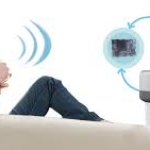


The Far Field Speech And Voice Recognition Market is becoming a strategically important part of the broader voice AI, smart device, and embedded human-machine interaction ecosystem. It centers on technologies that allow devices to detect wake words, isolate speech, suppress noise, cancel echo, and recognize spoken commands from several meters away, even when music, television audio, room noise, or multiple speakers are present. Far-field voice is no longer limited to smart speakers. It is now relevant across smart home products, televisions and set-top boxes, conference systems, vehicles, appliances, and other embedded endpoints where hands-free voice control must work reliably in real-world acoustic environments. From 2026 to 2034, the market is expected to be shaped by broader smart home adoption, automotive voice integration, hybrid edge-and-cloud voice architectures, and the increasing use of natural voice interfaces in connected consumer and enterprise environments.
Market Overview
The Far Field Speech And Voice Recognition Market was valued at $ 8.36 billion in 2026 and is projected to reach $ 35.05 billion by 2034, growing at a CAGR of 19.62%.
The far field speech and voice recognition market serves device makers, automotive OEMs, consumer electronics brands, collaboration system vendors, and enterprise solution providers that need voice interaction to work from across the room rather than only at close range. In practical terms, the market spans microphone arrays, voice DSPs, far-field algorithms, wake-word engines, acoustic echo cancellation, beamforming, speech enhancement, embedded automatic speech recognition support, and the broader software and hardware stack needed to translate distant speech into usable digital commands. The market sits at the intersection of acoustics, embedded computing, and AI software, because performance depends on both physical capture quality and digital interpretation accuracy.
From 2026 to 2034, the market is expected to benefit from the spread of hands-free interfaces into a wider range of devices and environments. Far-field voice is now embedded in smart speakers and displays, operator set-top boxes, television platforms, conference systems, and in-vehicle assistants. This indicates that market growth is being driven not only by consumer demand for convenience, but also by the broader shift toward natural voice-based control in environments where touch is inconvenient, remote controls are fragmented, or users need to stay visually focused on another task. This growing relevance is helping far-field voice move from a premium differentiator toward a more standard interface layer across connected devices.
Industry Size and Market Structure
The far field speech and voice recognition market is best understood as a hardware-plus-software market with value distributed across microphones, microphone arrays, voice processors, AI-enabled system-on-chips, wake-word and beamforming software, acoustic signal processing, embedded speech interfaces, and system integration services. Revenue comes not only from the sale of voice-enabled chips or modules, but also from development kits, tuning tools, reference designs, software frameworks, multilingual support, and integration into finished consumer and enterprise products. The market therefore extends beyond isolated components and includes the full signal-capture and voice-processing chain required for dependable distant-speech operation.
The market structure includes semiconductor vendors, voice-processing specialists, smart device OEMs, automotive voice platform providers, and conferencing technology suppliers. It is also a market in which ecosystem support matters strongly, because performance depends on how well hardware, acoustics, wake-word technology, multilingual recognition, cloud or edge inference, and product-specific tuning work together. This creates a competitive environment where success depends not only on raw recognition accuracy, but also on time to market, design flexibility, and the ability to adapt far-field voice to specific device classes such as speakers, TVs, cars, and collaboration systems.
Key growth trends shaping 2026–2034
One major trend is the shift from single-purpose smart speaker use toward broader embedded voice experiences. Far-field capability is becoming an expected interface layer in the connected home rather than a premium novelty limited to a few flagship products. Smart displays, televisions, streaming devices, appliances, and operator-managed home platforms are increasingly adopting far-field input to create more seamless device control experiences.
A second trend is the increasing importance of on-device and edge-based voice processing. The market is moving toward architectures where part of the voice pipeline stays local for responsiveness, privacy, resilience, and better control over user experience. This is especially important for wake-word detection, fast command response, and applications where internet connectivity may be inconsistent or where latency must be minimized.
Third, far-field voice is expanding into specialized acoustic environments such as vehicles and meeting rooms. In these settings, the technology must handle cabin noise, multiple speakers, directional voice pickup, and full-duplex interaction. This broadening use-case base is important because it shifts the market from consumer convenience toward productivity-oriented and operationally important voice interaction.
Fourth, multilingual and context-aware voice support is becoming more important. As device makers target wider geographic markets and more diverse households and enterprise settings, far-field systems are increasingly expected to recognize different accents, languages, and command structures while maintaining a high level of accuracy.
Core drivers of demand
The primary driver is the growing preference for hands-free interaction with connected devices. Far-field voice removes the need to stand close to a microphone or hold a remote control, making it attractive in kitchens, living rooms, cars, conference rooms, and other settings where users want natural spoken interaction while keeping their hands and eyes free for other tasks. This improves convenience and can also enhance safety and productivity in specific use cases.
A second driver is the rise of device ecosystems that need continuous, seamless voice access. Smart speakers, smart displays, TVs, set-top boxes, and home systems increasingly act as service gateways for media, automation, search, and controls. Manufacturers are building voice into multiple categories rather than relying on a single central hub. This expands the installed base opportunity for far-field components and software and supports more ambient, always-available forms of user interaction.
A third driver is the need for localized performance in demanding acoustic conditions. Conference rooms require long-range pickup and echo management, while vehicles require low latency, noise suppression, and support for natural conversation. These requirements raise the value of advanced microphone arrays, beamforming, wake-word detection, and embedded voice-processing hardware, especially as organizations seek better voice interfaces without depending entirely on cloud processing.
Browse more information
https://www.oganalysis.com/industry-reports/far-field-speech-and-voice-recognition-market
Challenges and constraints
One major challenge is acoustic complexity in real-world environments. Far-field systems must work across varying room sizes, background noise, reflections, music playback, television output, and multiple speakers. Recognition performance remains highly dependent on system design rather than software alone. This makes deployment more complex than near-field voice capture and often requires careful tuning for each product category.
Another constraint is fragmentation across device categories and use cases. The requirements for a tabletop smart speaker, a television or set-top box, a vehicle cabin, and a conference room are quite different in terms of microphone geometry, directional pickup, latency, language coverage, and processing location. As a result, vendors must support multiple hardware and software configurations, which can raise development cost and lengthen product qualification cycles.
A further challenge is privacy and user trust. Always-listening device behavior can raise concerns about continuous monitoring, data handling, and unwanted activation. Vendors must therefore balance convenience with visible privacy controls, secure local processing options, and clearer communication about how voice data is managed.
Key Market Players
Amazon, Google, Apple, Microsoft, Baidu, Sensory Inc., Nuance Communications, Xiaomi, Samsung Electronics, Alibaba, SoundHound, Harman International, Cirrus Logic, Qualcomm, NXP Semiconductors
Segmentation outlook
By component, microphones and microphone arrays remain foundational because they determine pickup geometry and voice capture quality, while voice DSPs, system-on-chips, wake-word engines, and embedded recognition software account for a growing share of value as processing becomes more intelligent and more localized. By application, smart speakers and displays remain important, but televisions, set-top boxes, conferencing systems, automotive assistants, and smart home controls are becoming more commercially relevant as far-field voice spreads into new endpoints.
By deployment model, hybrid edge-and-cloud architectures are likely to remain important, with local wake-word and signal processing increasingly paired with broader voice assistant and conversational AI stacks. Pure on-device models are also expected to gain traction in privacy-sensitive and latency-sensitive applications.
Competitive landscape and strategy themes
Competition in the far field speech and voice recognition market is shaped by recognition performance, microphone efficiency, echo cancellation quality, multilingual capability, wake-word accuracy, edge-processing strength, and ease of product integration. Large ecosystem players compete through full-stack voice platforms and reference hardware, while semiconductor and DSP vendors differentiate through performance-per-microphone, custom wake words, on-device AI, and faster deployment support.
Strategy themes through 2026–2034 are likely to include stronger edge intelligence, better barge-in and full-duplex performance, broader multilingual support, lower-cost microphone configurations, and tighter tuning for vertical use cases such as automotive, TV, appliances, and conferencing. Vendors that can combine hardware efficiency with software maturity and real-world tuning capability are likely to build stronger positions.
Regional Analysis
North America remains a strong market because of its mature smart home ecosystem, established voice assistant platforms, automotive voice development activity, and broad enterprise adoption of collaboration technologies. Europe benefits from automotive integration, conferencing deployments, and multilingual voice requirements, while Asia-Pacific is positioned for faster expansion through smart device manufacturing, television and set-top box integration, automotive electronics, and rising adoption of connected home products. Latin America, the Middle East, and Africa represent selective growth opportunities as voice-enabled consumer devices and digital service platforms become more widely distributed.
Forecast perspective (2026–2034)
From 2026 to 2034, the far field speech and voice recognition market is expected to record steady and strategically important growth as voice interfaces become more ambient, more embedded, and more context-aware. The strongest value creation is likely to come from platforms that combine robust distant-speech capture, efficient edge processing, multilingual voice interaction, and easier integration across smart home, automotive, media, and enterprise environments. While acoustic complexity, fragmentation, and tuning challenges will remain important constraints, the long-term market direction favors vendors that can deliver reliable far-field performance across everyday real-world conditions. By 2034, far-field speech and voice recognition is likely to be valued not merely as a feature for premium smart speakers, but as a core interface layer for ambient computing and hands-free digital interaction across connected environments.
Browse Related Reports
https://www.oganalysis.com/industry-reports/ultra-short-throw-projector-screen-market
https://www.oganalysis.com/industry-reports/automotive-heads-up-display-market
https://www.oganalysis.com/industry-reports/mobile-computer-market
https://www.oganalysis.com/industry-reports/4k-set-top-box-market
https://www.oganalysis.com/industry-reports/interactive-kiosk-market