
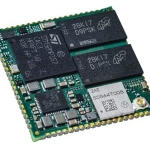





The System On Module Market is a core part of the broader embedded computing and edge device ecosystem, centered on compact compute modules that integrate processors, memory, power management, and essential interfaces into ready-to-deploy building blocks for OEM products. System on modules are increasingly valued as a way to shorten development cycles, reduce hardware complexity, and provide scalable performance across industrial automation, medical equipment, transportation, smart retail, robotics, edge AI, and communications infrastructure. Open standards continue to shape the market, with performance-oriented formats serving higher-end modular computing and smaller low-power formats supporting compact and directly soldered module designs.
Market Overview
The System On Module Market was valued at $ 3.2 billion in 2026 and is projected to reach $ 7.90 billion by 2034, growing at a CAGR of 10.56%.
The system on module market serves OEMs and product developers that need embedded computing platforms without designing full custom boards from the ground up. In practical terms, a SoM combines core processing, memory, storage, and connectivity onto a compact module that is mounted on a carrier board tailored to the end application. This architecture allows product makers to reuse compute platforms across multiple products while adapting input and output design, thermal management, ruggedization, and peripherals to each use case. The result is a market defined by modularity, faster time to market, and easier migration to new processor generations.
From 2026 to 2034, the market is expected to benefit from three overlapping shifts: broader edge intelligence, rising demand for application-specific embedded platforms, and stronger interest in open module standards that reduce vendor lock-in. High-performance module standards are aimed at edge servers and compute-intensive embedded systems, while smaller low-power formats are designed for compact implementations, including directly soldered designs for miniaturized products. That breadth allows the SoM market to serve everything from rugged industrial gateways to compact medical devices and vision-enabled automation systems.
Industry Size and Market Structure
The system on module market is best understood as a hardware-plus-ecosystem market with value distributed across module hardware, carrier boards, software support, design services, validation, lifecycle management, and long-term supply commitments. Revenue comes not only from module shipments, but also from customization, engineering support, board support packages, security features, thermal solutions, and migration services across processor generations. The structure of the market favors suppliers that can provide both off-the-shelf modules and a path to semi-custom or fully customized productization.
The market structure is also strongly influenced by standards. Mainstream, high-performance, low-power, and solderable module formats all play important roles in expanding modular computing into different use cases. Standardization is extending modular computing into higher-performance edge and client or server applications while also pushing into smaller AI-oriented embedded designs. This reinforces the role of open standards as a long-term market growth engine.
Key growth trends shaping 2026–2034
One major trend is the move toward AI-capable SoMs for edge computing. New modules across major standards are increasingly designed with AI acceleration for industrial, vision, and edge workloads, showing that embedded customers now expect SoMs to support inference, machine vision, and real-time analytics rather than only conventional control tasks. This is pushing the market toward more heterogeneous compute options and richer software ecosystems.
A second trend is the rise of smaller and solderable module formats. Compact soldered modules are well suited to space-constrained products and give OEMs SoM advantages in devices where connector-based modules may be too large or too mechanically limiting. This trend is especially important in medical devices, compact industrial controllers, smart cameras, and other tightly designed electronics.
Third, standardization is becoming more important as a commercial strategy. The coexistence of multiple recognized SoM formats indicates a market where buyers want long-term scalability, reuse, and easier second-source planning. Standardized SoMs help reduce engineering effort while preserving upgrade paths across performance classes and processor roadmaps.
Core drivers of demand
The primary driver is faster product development. OEMs use SoMs to shorten design time, reduce board-level complexity, and accelerate certification and deployment compared with fully custom embedded designs. This is especially valuable in industrial and medical markets where design cycles are long, product reliability matters, and refreshes must happen without complete hardware redesign.
A second driver is the spread of edge computing into physical industries. Industrial automation, vision systems, smart healthcare, transportation, and connected infrastructure increasingly need compact but powerful embedded platforms that can process data locally. SoMs are well positioned here because they offer scalable compute in a reusable form factor.
A third driver is lifecycle and scalability. Embedded customers often need longer availability, stable software support, and a predictable path from entry-level to higher-performance products. The SoM model supports this by separating application-specific carrier design from the compute core, allowing OEMs to refresh processors while preserving much of the surrounding system architecture.
Browse more information
https://www.oganalysis.com/industry-reports/system-on-module-market
Challenges and constraints
One major challenge is ecosystem fragmentation. The market spans multiple form factors, processor architectures, standards bodies, and software environments, which can complicate module selection and long-term standardization for OEMs. The diversity of available approaches creates flexibility, but it also makes architecture decisions more strategic and sometimes more difficult.
Another constraint is thermal and integration complexity at the high-performance end. As SoMs move into AI, edge server, and graphics-heavy workloads, module performance increases, but so do power, cooling, and carrier-board design requirements. This means the benefit of modularity must still be matched with strong system integration capability, especially in rugged or fanless deployments.
A further challenge is balancing standardization with differentiation. Buyers want open and reusable module ecosystems, but they also need application-specific performance, security, and mechanical optimization. Vendors must therefore provide enough flexibility to support product differentiation without undermining the simplicity that makes SoMs attractive.
Segmentation outlook
By standard and form factor, mainstream modules remain a strong core segment, high-performance formats are positioned for edge and client or server designs, smaller low-power modules continue to serve compact systems, and solderable mini-modules are gaining relevance where miniaturization is a priority. By processor class, x86- and Arm-based modules both remain important, with Arm especially relevant in power-sensitive designs and x86 remaining strong in industrial and performance-oriented embedded systems.
By application, industrial automation, medical devices, transportation, communications, robotics, and edge AI are likely to remain the most commercially attractive areas. These applications benefit most from the SoM value proposition of modularity, faster development, and easier compute refresh over long product lifecycles.
Key Market Players
Axiomtek Co Ltd., Reliance Industries Ltd., Avnet Inc., Advantech Co Ltd., Kontron S&T AG, Mercury Systems Inc., DFI Inc., AAEON Technology Inc., Avalue Technology Inc., iBase Technology Inc., SECO S.p.A., Eurotech S.p.A., Congatec AG, Phytec Messtechnik GmbH, iWave Systems Technologies Pvt Ltd., Toradex AG, TechNexion Ltd., Intrinsyc Technologies Corporation, VersaLogic Corporation, iENSO Inc., MYIR Tech Limited, Enclustra AG, Critical Link LLC, Variscite Ltd., SolidRun Ltd., Shiratech Solutions Ltd., Emtrion GmbH, TorizonCore by Toradex, Forlinx Embedded Technology Co Ltd.
Competitive landscape and strategy themes
Competition in the system on module market is shaped by standards support, processor roadmap depth, software enablement, lifecycle commitments, and customization capability. Vendors compete not only on compute performance, but also on how easily customers can move from evaluation to carrier-board integration to production.
Strategy themes through 2026–2034 are likely to include stronger edge AI support, deeper standardization, expansion of solderable mini-modules, and more vertical optimization for industrial, medical, and communications use cases. Suppliers that combine modularity, long-term availability, software readiness, and strong engineering support are likely to strengthen their market positions.
Regional Analysis
Europe remains a strong market because of its concentration of SoM standardization bodies and embedded computing suppliers. North America is an important market through industrial automation, medical technology, communications, and edge infrastructure demand. Asia-Pacific is likely to be the fastest-growing region due to its scale in electronics manufacturing, industrial equipment, robotics, and smart device production. Latin America, the Middle East, and Africa present selective opportunities as industrial automation, digital infrastructure, and embedded device deployment expand.
Forecast perspective (2026–2034)
From 2026 to 2034, the system on module market is expected to record sustained growth as embedded computing becomes more modular, more AI-capable, and more distributed across edge environments. The strongest value creation is likely to come from suppliers that combine open standards, long lifecycle support, compact form factors, and ready-to-deploy ecosystems for industrial and intelligent edge systems. While fragmentation and integration complexity will remain constraints, the long-term direction of the market favors SoM platforms that let OEMs build faster, scale more efficiently, and refresh compute capability without redesigning complete systems.
Browse Related Reports
https://www.oganalysis.com/industry-reports/encoder-market
https://www.oganalysis.com/industry-reports/agricultural-machinery-ecu-market
https://www.oganalysis.com/industry-reports/highpower-transformers-market
https://www.oganalysis.com/industry-reports/display-driver-market
https://www.oganalysis.com/industry-reports/led-drivers-market