
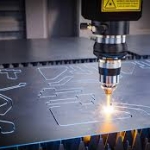





The Laser Processing Market is a major part of the broader advanced manufacturing, precision engineering, and industrial automation ecosystem, built around the use of laser energy for cutting, welding, drilling, marking, structuring, surface treatment, and micromachining across a wide range of materials and industries. The market is no longer defined only by general industrial cutting and welding. It is increasingly shaped by fiber-laser productivity, ultrafast processing, electronics miniaturization, battery manufacturing, semiconductor-linked precision work, and the growing integration of sensing and automation into laser systems. From 2026 to 2034, market development is expected to be driven by the need for cleaner, faster, and more precise processing in automotive, e-mobility, electronics, medical devices, display manufacturing, and high-value industrial production.
Market Overview
The Laser Processings Market was valued at $ 20.46 billion in 2026 and is projected to reach $ 43.40 billion by 2034, growing at a CAGR of 9.86%.
The laser processing market serves manufacturers that need non-contact, highly controllable, and increasingly automated material-processing solutions. In practical terms, the market includes laser systems for cutting, welding, drilling, marking, engraving, micromachining, and surface modification, supported by beam sources, optics, sensors, scanning systems, process monitoring, and application-specific automation. What distinguishes laser processing from many conventional manufacturing methods is its ability to deliver localized energy with high precision, reduced tooling wear, and strong adaptability across metals, polymers, ceramics, foils, membranes, and advanced electronic materials. This makes laser processing especially attractive in environments where dimensional accuracy, repeatability, and low thermal distortion are commercially important.
From 2026 to 2034, the market is expected to benefit from the ongoing shift toward more precise and digitally connected production. Laser vendors are increasingly positioning their systems not only as standalone machines, but as integrated manufacturing solutions that improve throughput, yield, process control, and quality assurance. In battery production, for example, lasers are now used across electrode processing, cell assembly, module and pack joining, and cooling-plate welding. In electronics and display manufacturing, ultrashort-pulse and high-precision systems are being used where reproducibility, fine-feature capability, and high-volume output are essential. These dynamics are pushing the market beyond conventional heavy-industry processing toward a broader role in next-generation manufacturing.
Industry Size and Market Structure
The laser processing market is best understood as a hardware, systems, and services market with value distributed across laser sources, beam-delivery components, scanning and shaping optics, workstations, turnkey production systems, process-monitoring tools, automation integration, and lifecycle services. Revenue comes not only from machine sales, but also from application development, custom tooling, integration engineering, retrofits, quality-monitoring modules, and maintenance support. This structure is important because many industrial users do not buy a laser as a stand-alone product; they buy a process-capable production solution tailored to a material, geometry, and throughput requirement.
The market structure includes diversified industrial laser suppliers, application-focused system builders, automation integrators, and specialist providers in micromachining, battery manufacturing, semiconductor processing, and display production. Fiber lasers remain highly influential in mainstream industrial processing, while ultrafast lasers, excimer systems, and application-specific beam-control solutions are gaining importance in precision-heavy segments. As a result, the market contains both high-volume production platforms for established processes and higher-value engineered systems for demanding applications such as advanced electronics, membranes, battery foils, and deep-weld quality control.
Key growth trends shaping 2026–2034
One major trend is the increasing role of lasers in battery and e-mobility manufacturing. Lasers are becoming essential across the battery production chain, from electrode cutting and welding to gas-tight cooling-plate welding and repeatable busbar connections. This makes e-mobility one of the clearest current growth pillars for the laser processing market.
A second trend is the rise of ultrafast and microprocessing applications. Improved ultrashort-pulse laser performance and real-time pulse control are supporting industrial series production of complex battery and display films, while also enabling multispot membrane drilling. This reflects a broader market shift toward fine-feature manufacturing where precision, reduced heat impact, and process flexibility matter more than simple material removal speed.
Third, process monitoring and closed-loop quality assurance are becoming more important. Real-time weld measurement, deep-weld keyhole imaging, integrated on-the-fly welding systems, optical monitoring, and AI-supported seam inspection are raising the value of laser processing beyond beam power alone. This trend shows that measurable process control and in-line quality performance are becoming central to competitive differentiation.
Fourth, electronics, semiconductor, and display manufacturing are becoming stronger demand anchors. These sectors strengthen the market’s move toward smaller features, tighter tolerances, and higher-value precision processing. As a result, laser processing is increasingly positioned as an enabling technology for complex and miniaturized manufacturing environments.
Core drivers of demand
The primary driver is the need for higher precision and repeatability in modern manufacturing. Lasers enable accurate cutting, welding, drilling, and surface processing with limited mechanical contact and strong control over where energy is delivered. This is increasingly important in applications where manufacturers must balance throughput with quality, especially in electronics, battery systems, and precision assemblies.
A second driver is the push for automation and productivity improvement. Laser solutions are increasingly linked to high-throughput production, automated welding, reduced defect rates, and better series-manufacturing economics. The move toward integrated laser systems for battery lines, robotic welding, and continuous-motion welding reflects how closely market growth is tied to industrial automation goals.
A third driver is the expansion of advanced manufacturing sectors that need material-specific and high-value processing. E-mobility, advanced displays, semiconductors, and precision industrial components are all placing greater demands on joining quality, fine machining, and process consistency. These sectors are helping shift the market toward more specialized and higher-margin laser solutions.
Browse more information
https://www.oganalysis.com/industry-reports/laser-processings-market
Challenges and constraints
One major challenge is application complexity. Laser processing often requires careful matching of wavelength, pulse behavior, beam shaping, optics, materials, and motion strategy to the target process. The growing emphasis on customized solutions, application centers, and tightly integrated process development suggests that deployment is rarely plug-and-play in demanding production environments.
Another constraint is the need to balance productivity, quality, and capital efficiency. Higher precision and advanced monitoring can improve yield, but they also increase system sophistication. For many users, the buying decision depends not only on technical capability but on whether the laser process can be industrialized at acceptable cost, uptime, and cycle time.
A further challenge is market segmentation by process and industry. The requirements for battery foil cutting, thick busbar welding, membrane drilling, display processing, and semiconductor-related manufacturing are very different. This fragmentation creates opportunity, but it also means suppliers must support a wide variety of technology stacks, engineering approaches, and customer expectations.
Segmentation outlook
By technology, fiber lasers remain central in industrial welding and cutting, while ultrafast lasers are gaining ground in micromachining and high-precision material processing. By application, welding and cutting remain core revenue areas, but drilling, micromachining, electronics processing, and battery manufacturing are becoming more strategically important. By end use, automotive and e-mobility, electronics, semiconductor-linked manufacturing, display production, and general industrial fabrication are likely to remain the most commercially attractive segments through the forecast period.
Key Market Players
Henkel AG & Co., Ashland Global Specialty Chemicals Inc., BASF SE, Bostik, DuPont de Nemours Inc., Evonik Industries AG, H.B. Fuller Company, Merck KGaA, Morchem SA, Sika AG, Sun Chemical, 3M Company, The Dow Chemical Company, DIC Corporation, Minnesota Mining and Manufacturing Company, Adhesive Films Inc., Avery Dennison Corporation, Coim Group, Dow Inc., Drytac Corporation, Franklin International, Huntsman Corporation, Illinois Tool Works Inc., Jowat SE, Konishi Co. Ltd., Lintec Corporation, Lohmann Adhesive Tape Group, Master Bond Inc., Nitta Corporation, Paramelt B.V., SABA Dinxperlo B.V., Scapa Group plc, Toyo-Morton Ltd., Valspar Corporation, Vibac Group S.p.A., Vimasco Corporation
Competitive landscape and strategy themes
Competition in the laser processing market is shaped by application depth, beam-source capability, process reliability, automation readiness, and quality-monitoring strength. Leading suppliers compete not only on laser performance, but also on how effectively they combine optics, sensing, software, automation, and process engineering into complete manufacturing solutions. Strategy themes through 2026–2034 are likely to include stronger battery-focused offerings, broader use of ultrafast lasers in series production, deeper in-line quality measurement, and greater integration of laser processing into digitally managed production lines.
Regional Analysis
Europe remains a strong market because of its concentration of industrial laser suppliers, battery manufacturing development, automotive engineering, and precision-manufacturing depth. North America is important through advanced manufacturing, industrial automation, aerospace, and growing electrification-related investment. Asia-Pacific is likely to be the fastest-growing region due to its scale in electronics, battery production, automotive manufacturing, and precision industrial output. Latin America, the Middle East, and Africa present more selective opportunities, especially where automotive, metal fabrication, electronics assembly, and industrial modernization programs expand.
Forecast perspective (2026–2034)
From 2026 to 2034, the laser processing market is expected to record sustained and strategically important growth as manufacturers seek cleaner, faster, and more controllable production methods. The strongest value creation is likely to come from systems that combine high productivity with process intelligence, especially in battery manufacturing, precision electronics, micromachining, and advanced welding. While application complexity and integration demands will remain important constraints, the long-term direction of the market favors suppliers that can deliver reliable, automated, and quality-assured laser processes for next-generation manufacturing environments.
Browse Related Reports
https://www.oganalysis.com/industry-reports/din-rail-terminal-blocks-market
https://www.oganalysis.com/industry-reports/floormounted-commercial-sauna-heater-market
https://www.oganalysis.com/industry-reports/ambient-lighting-market
https://www.oganalysis.com/industry-reports/emergency-lighting-market
https://www.oganalysis.com/industry-reports/high-brightness-led-market