
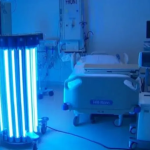


The UV Disinfection Equipment Market is an important segment of the broader water treatment, indoor air quality, healthcare hygiene, and environmental control ecosystem, built around equipment that uses germicidal ultraviolet energy to inactivate microorganisms in water, air, surfaces, and enclosed devices. The market is no longer limited to municipal drinking water systems or niche industrial treatment. It is increasingly shaped by water reuse projects, wastewater polishing, HVAC and upper-room air disinfection, healthcare and laboratory hygiene, and the growing transition toward UV-C LED and other mercury-free or lower-maintenance system designs. From 2026 to 2034, market development is expected to be driven by tightening hygiene expectations, broader water-stress and reuse strategies, demand for chemical-free treatment approaches, and stronger interest in digitally monitored and application-specific UV platforms.
Market Overview
The Uv Disinfection Equipment Market was valued at $ 8.34 billion in 2026 and is projected to reach $ 28.28 billion by 2034, growing at a CAGR of 16.49%.
The UV disinfection equipment market serves utilities, industrial plants, hospitals, commercial buildings, transport hubs, food and beverage facilities, and equipment reprocessing environments that need non-chemical microbial control. In practical terms, the market includes municipal and industrial UV reactors, wastewater and reuse systems, HVAC UVGI systems, upper-room disinfection units, surface disinfection chambers, and compact UV-C modules used inside appliances or point-of-use systems. UV disinfection is valued because it can be integrated into continuous treatment processes, can reduce reliance on chemical dosing in selected applications, and is increasingly adaptable across large centralized systems and smaller decentralized platforms.
From 2026 to 2034, the market is expected to benefit from two broad shifts. The first is the expansion of reuse-oriented water infrastructure, where UV is used in wastewater polishing, tertiary treatment, and non-potable or indirect reuse schemes. The second is the normalization of UVGI in indoor air strategies, particularly through upper-room and HVAC-integrated systems designed for continuous operation in occupied or mechanically ventilated spaces. These shifts are helping move UV disinfection from a specialist technology into a broader platform for public health, infrastructure resilience, and building hygiene.
Industry Size and Market Structure
The UV disinfection equipment market is best understood as a hardware, systems, and services market with value distributed across lamp-based systems, UV-C LED systems, reactors, chambers, controls, sensors, validation services, retrofit programs, and lifecycle maintenance. Revenue comes not only from equipment sales, but also from engineering, commissioning, control integration, performance monitoring, lamp or module replacement, and long-term service support. This matters because many buyers do not purchase a UV source alone; they purchase a validated treatment solution designed for a specific flow rate, pathogen target, installation footprint, and operating environment.
The market structure spans large municipal water-treatment vendors, industrial treatment specialists, indoor-air and lighting suppliers, UV-C LED innovators, and medical or chamber-based disinfection device makers. Conventional mercury-lamp systems remain highly relevant in established municipal and industrial water treatment, while UV-C LED platforms are gaining attention in decentralized, compact, and cycling-intensive applications because they offer instant on-off behavior, compact form factors, and mercury-free design. That creates a market where mature large-scale systems and newer miniaturized platforms are growing side by side rather than replacing one another all at once.
Key growth trends shaping 2026–2034
One major trend is the growing importance of water reuse and advanced municipal treatment. Municipal providers are turning to reuse to strengthen water supply resilience, and UV systems are increasingly used in filtered tertiary effluent, non-potable reuse, and advanced treatment trains. This trend is commercially important because reuse projects tend to require validated, high-reliability disinfection systems with strong operating records and integration into larger water-quality control strategies.
A second trend is the shift toward UV-C LED systems in selected applications. The market is moving toward more decentralized, mercury-free, and modular product formats, especially where small footprint, intermittent duty cycles, or lower maintenance burden are valuable. This is opening opportunities in compact water systems, specialty industrial units, and device-level hygiene solutions.
Third, indoor-air disinfection is becoming a stronger market pillar. Upper-room UVGI and HVAC UVGI are supporting greater adoption in healthcare, commercial buildings, education, and other high-occupancy environments where airborne risk management and ventilation support are strategic priorities. This is expanding UV equipment demand beyond liquid treatment and into building-engineering and indoor-environment applications.
Fourth, smarter controls and performance monitoring are becoming more important. Buyers increasingly want equipment with dose tracking, sensor feedback, remote diagnostics, and lifecycle alerts. This is improving system reliability and helping UV disinfection become part of more digitally managed treatment and facility operations.
Core drivers of demand
The primary driver is the need for effective microbial control without relying solely on chemical disinfectants. In water applications, UV is used as a physical disinfection method and is especially relevant where utilities and industrial users want strong pathogen reduction without adding chemical residuals in the primary treatment step. In indoor environments, UVGI supports air treatment strategies that complement ventilation and filtration.
A second driver is rising pressure on water infrastructure. Water reuse, wastewater upgrading, and industrial process-water treatment are expanding in importance as utilities and manufacturers respond to scarcity, stricter quality expectations, and circular water strategies. UV systems are well positioned here because they can be integrated into reuse and polishing steps across municipal and industrial treatment schemes.
A third driver is the wider modernization of hygiene systems in buildings, healthcare, and device reprocessing. UV-C equipment is increasingly used for air, surfaces, objects, and enclosed chamber-based disinfection, broadening market demand beyond traditional water treatment. This diversified use base supports growth in smaller, application-specific platforms as well as centralized treatment systems.
Browse more information
https://www.oganalysis.com/industry-reports/uv-disinfection-equipment-market
Challenges and constraints
One major challenge is that UV performance is application-dependent and must be validated carefully. Water quality, flow profile, reactor design, fouling, lamp condition, and dose delivery all influence effectiveness, which means successful deployment depends on engineering discipline rather than simple equipment substitution. In air applications, UVGI likewise depends on correct design, placement, maintenance, and airflow conditions.
Another constraint is that UV disinfection does not provide a downstream residual in water systems. That means it often complements rather than fully replaces other disinfection steps, especially where protection through the distribution system is needed. This can limit adoption in some use cases or require hybrid treatment strategies that balance UV with other barriers.
A further challenge is the transition from conventional mercury-lamp systems toward newer UV-C LED formats. LED systems are promising, but larger-scale economic and technical feasibility is still evolving in some applications. As a result, the market is likely to remain mixed, with established lamp systems dominant in many large installations while LEDs expand first in smaller, modular, and specialty deployments.
Segmentation outlook
By application, water and wastewater disinfection remain foundational segments, including drinking water, municipal wastewater, industrial process water, and reuse systems. Air disinfection is becoming more commercially important through upper-room UVGI and HVAC-integrated systems, while surface and enclosed-chamber disinfection support smaller but growing niches in healthcare, commercial hygiene, and equipment reprocessing. By technology, conventional UV lamp systems remain central in large-scale installations, while UV-C LED systems are gaining momentum in compact and decentralized formats.
Key Market Players
Xylem, Trojan Technologies, Halma, Evoqua Water Technologies, Atlantic Ultraviolet, American Ultraviolet, AquiSense Technologies, Calgon Carbon, Severn Trent, Lumalier, Ozonia (Suez), Xenex Disinfection Services, LightSources, UV Pure Technologies, Atlantium Technologies
Competitive landscape and strategy themes
Competition in the UV disinfection equipment market is shaped by application depth, validation capability, system efficiency, monitoring and controls, footprint, and lifecycle economics. Large suppliers compete through municipal and industrial reference bases, while newer entrants and LED-focused vendors differentiate through compact design, mercury-free operation, and modular deployment. Strategy themes through 2026–2034 are likely to include stronger water-reuse positioning, broader HVAC and upper-air offerings, UV-C LED scaling, and smarter controls for dose monitoring, maintenance, and remote asset management.
Regional Analysis
North America and Europe remain important markets because of mature municipal treatment infrastructure, reuse investments, healthcare hygiene adoption, and strong commercial-building retrofits. Asia-Pacific is positioned for strong expansion as water treatment, urban infrastructure, industrial processing, and compact disinfection platforms gain wider relevance. Latin America, the Middle East, and Africa also present selective opportunities, particularly where water scarcity, reuse planning, hospitality hygiene, and decentralized treatment needs create demand.
Forecast perspective (2026–2034)
From 2026 to 2034, the UV disinfection equipment market is expected to record sustained growth as utilities, industries, and building operators seek scalable hygiene solutions that combine microbial control with operational flexibility. The strongest value creation is likely to come from systems that pair validated disinfection performance with lower maintenance, smarter controls, and stronger fit for reuse, indoor air, and decentralized treatment applications. While validation demands, no-residual limitations, and technology-transition challenges will remain important constraints, the long-term direction of the market favors suppliers that can deliver reliable, application-specific, and increasingly digital UV disinfection platforms.
Browse Related Reports
https://www.oganalysis.com/industry-reports/energy-management-system-market
https://www.oganalysis.com/industry-reports/digital-utility-market
https://www.oganalysis.com/industry-reports/advanced-metering-infrastructure-market
https://www.oganalysis.com/industry-reports/uv-disinfection-equipment-market
https://www.oganalysis.com/industry-reports/liquid-cooling-system-market