
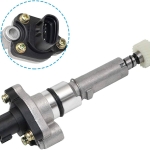





The Speed Sensor Market is a critical part of the broader motion sensing, vehicle electronics, industrial automation, and machine condition monitoring ecosystem. It is built around devices that detect rotational or linear speed and convert that movement into electrical signals for control, safety, monitoring, and diagnostics. Speed sensors are no longer limited to basic rotational measurement in engines or drivetrains. They now support wheel speed sensing for ABS and stability systems, rotor and shaft monitoring, motor control, conveyor and pump systems, and condition monitoring across industrial assets. From 2026 to 2034, the market is expected to be shaped by the rising electronics content of vehicles, the shift toward electric mobility, stronger industrial automation, and the broader use of speed-linked sensing in predictive maintenance and intelligent control environments.
Market Overview
The Speed Sensor Market was valued at $ 8.68 billion in 2025 and is projected to reach $13.40 billion by 2034, growing at a CAGR of 5.58%
The speed sensor market serves automotive OEMs, industrial equipment manufacturers, transportation system suppliers, automation vendors, and aftermarket service channels that need reliable measurement of rotational speed, wheel speed, shaft speed, direction, or motion-related events. In practical terms, the market includes Hall-effect sensors, magnetoresistive sensors, passive variable reluctance sensors, and other magnetic speed-sensing technologies used in vehicles, motors, transmissions, drivetrains, pumps, heavy machinery, and factory equipment. The market spans both automotive and industrial use cases, with solutions designed for wheel speed sensing, engine timing, transmission speed, and broader transportation or industrial requirements.
From 2026 to 2034, the market is expected to benefit from the wider shift toward electronically controlled motion systems. In automotive systems, speed sensing is directly tied to braking, traction, stability, and increasingly electrified powertrain performance. In industrial settings, speed data supports motor monitoring, control accuracy, machine protection, and predictive maintenance. The market is therefore moving beyond simple detection toward more integrated sensing roles where accuracy, durability, directional information, and signal quality are becoming increasingly important.
Industry Size and Market Structure
The speed sensor market is best understood as a component-and-systems market with value distributed across sensor hardware, packaging, signal conditioning, software interfaces, control integration, and lifecycle replacement demand. Revenue comes not only from direct OEM supply, but also from aftermarket replacements, industrial retrofits, heavy vehicle maintenance, and embedded sensor integration into larger braking, powertrain, and automation assemblies. Because speed sensing is used in both high-volume vehicle production and diversified industrial systems, the market combines scale-driven automotive demand with longer-life, application-specific industrial demand.
The market structure includes automotive sensor suppliers, magnetic sensor specialists, industrial sensing vendors, and broader automation companies that embed speed detection into machine and motor-control platforms. Hall-effect and magnetic wheel speed sensors are highly visible in passenger and commercial vehicle applications, while variable reluctance and rugged magnetic sensors continue to serve transportation, off-road, and industrial applications. This creates a market where high-volume standardization coexists with specialized demand for harsh environments, directional sensing, and stronger interface compatibility.
Key growth trends shaping 2026–2034
One major trend is the continued migration toward active magnetic sensing in vehicles. Hall-based wheel speed sensor architectures are becoming increasingly prominent, including variants that add direction reporting. This shows a clear market preference for compact, integrated, and increasingly intelligent sensor designs that support modern braking, stability, and motion-control systems. Active sensing is gaining relevance because it offers stronger performance in low-speed detection, more robust signal conditioning, and better compatibility with electronically controlled vehicle systems.
A second trend is the growing role of speed sensing in electrified and electronically controlled mobility. As vehicle architectures become more software-driven and electrified, the quality of motion sensing becomes more important for wheel dynamics, traction management, and motor-linked control functions. At the same time, industrial users are linking speed sensing more closely with motor condition monitoring and predictive maintenance, where speed data helps track equipment health and detect abnormalities before failure. This expands the market from pure measurement toward intelligent operational feedback.
Third, ruggedization and application-specific packaging remain important. Industrial and transportation environments demand wide package variety, electrical compatibility, and resistance to temperature extremes, contamination, vibration, and mechanical stress. This indicates that mechanical design, environmental resistance, and mounting flexibility remain key product differentiators rather than purely secondary features.
Core drivers of demand
The primary driver is the growing electronics and safety content of vehicles. Wheel speed sensing is fundamental to anti-lock braking, electronic stability control, and broader vehicle dynamics management. As more vehicles incorporate advanced braking, traction, and driver-assistance functions, demand for reliable and accurate speed sensing remains structurally strong. This is particularly important in passenger cars, commercial fleets, and increasingly in electric vehicles where motion control accuracy supports both safety and performance.
A second driver is the expansion of industrial automation and motor-driven equipment. Speed sensors support conveyors, pumps, servo systems, rotating shafts, and machine monitoring environments where motion feedback is essential for productivity and protection. Industrial condition monitoring frameworks also increasingly treat speed as one of the core parameters used to detect degradation, reduce downtime, and improve maintenance planning. This gives the market a diversified industrial demand base beyond transportation.
A third driver is the need for better control in harsh and remote operating environments. Heavy-duty vehicles, construction equipment, off-road systems, and industrial machinery require sensors that can operate reliably under vibration, contamination, temperature variation, and long-duty cycles. This supports continued demand for rugged magnetic and variable reluctance designs in applications where reliability is critical and service interruption is costly.
Browse more information
https://www.oganalysis.com/industry-reports/speed-sensor-market
Challenges and constraints
One major challenge is application fragmentation. The requirements for a passenger vehicle wheel speed sensor, a motorsport direction sensor, a heavy-duty transmission sensor, and an industrial machine-monitoring device are significantly different. This means vendors must support different sensing principles, housings, protocols, and performance thresholds, which can increase engineering complexity and lengthen product qualification cycles.
Another constraint is balancing cost with performance. Automotive markets often demand high-volume, cost-sensitive production, while industrial customers may prioritize ruggedness, interface compatibility, and operating life. Vendors therefore need to optimize sensor performance, packaging, and electronics without overshooting the economics of each segment. This creates pricing pressure in mainstream applications while preserving engineering intensity in specialized ones.
A further challenge is long-term integration into evolving electronic architectures. As systems become more connected and software-defined, speed sensors must fit broader control and monitoring frameworks. That raises expectations around signal integrity, direction sensing, and communication compatibility, especially where speed data is used for safety or predictive analytics rather than basic rotation counting alone.
Segmentation outlook
By technology, Hall-effect and magnetic active sensors are likely to remain highly influential, especially in automotive wheel speed and electronically controlled applications, while passive variable reluctance sensors continue to hold importance in rugged transportation and industrial use cases. Magnetoresistive technologies also remain relevant where signal precision and interface needs are stronger. By application, automotive remains the most visible segment, but industrial automation, motor control, heavy equipment, and condition monitoring are becoming increasingly important value contributors.
Key Market Players
Advanced Specialty Lighting Inc., Brandon Medical Company, Cree Inc., Getinge AB, Herbert Waldmann GmbH & Co. KG, Integra Life Sciences Pvt. Ltd, Osram Licht AG, Signify Holding BV, Ushio America Inc., Xylem Inc., Halma plc, Atlantic Ultraviolet Corporation, LG Electronics Inc., AU Optronics, InVisage Technologies, Nanoco Group plc, Sony Group Corporation, Quantum Materials Corp., Samsung Electronics Co. Ltd., StoreDot Ltd, Philips Lighting, Eterna Lighting Ltd., Acuity Brands Inc., Savant System Inc., Eaton Corporation, Feit Electric Company Inc., Hubbell Incorporated, LSI Industries Inc., Dialight plc., TCP International Holdings Ltd., Cooper Lighting Solutions, Fagerhult Group, Glamox AS, Havells India Ltd., Kenall Manufacturing
Competitive landscape and strategy themes
Competition in the speed sensor market is shaped by sensing accuracy, ruggedness, packaging flexibility, interface compatibility, direction-detection capability, and fitness for specific end uses. Automotive leaders compete through integrated wheel speed and motion-sensing platforms, while industrial suppliers differentiate through broad portfolio coverage and environmental robustness. Strategy themes through 2026–2034 are likely to include stronger support for electrified mobility, wider use of active magnetic sensing, increased direction and signal intelligence, and deeper alignment with condition monitoring and machine-health ecosystems.
Regional Analysis
Asia-Pacific is likely to remain a leading region because of its scale in automotive manufacturing, industrial equipment production, and factory automation. Europe remains important through automotive engineering, safety-system integration, and industrial machinery depth, while North America continues to be a major market for automotive electronics, heavy equipment, and industrial monitoring. Latin America, the Middle East, and Africa present selective opportunities tied to transportation, industrial modernization, mining, and off-road equipment demand. This regional pattern reflects the strong automotive and industrial orientation of current supplier portfolios and adoption drivers.
Forecast perspective (2026–2034)
From 2026 to 2034, the speed sensor market is expected to record steady and strategically important growth as motion sensing becomes more central to vehicle control, industrial reliability, and intelligent machine operation. The strongest value creation is likely to come from sensors that combine compact integration, reliable low-speed performance, rugged packaging, and compatibility with modern electronic control systems. While application fragmentation and cost-performance tradeoffs will remain important constraints, the long-term direction of the market favors suppliers that can deliver precise, durable, and application-ready speed sensing across automotive and industrial environments.
Browse Related Reports
https://www.oganalysis.com/industry-reports/agricultural-crop-input-controller-market
https://www.oganalysis.com/industry-reports/agriculture-sensing-and-monitoring-devices-market
https://www.oganalysis.com/industry-reports/test-measurement-equipment-market
https://www.oganalysis.com/industry-reports/speed-sensor-market
https://www.oganalysis.com/industry-reports/fault-detection-classification-market