
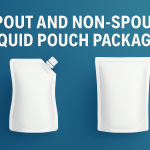



Glass bottles are heavy. Rigid plastic jugs use more material than they need to. Neither travels well in an e-commerce supply chain without significant protective packaging adding cost and waste. The packaging industry recognized this problem decades ago, and liquid pouches are its most commercially developed answer. What has changed recently is the convergence of three forces that have individually existed for years but are now building momentum simultaneously in a way that is creating a structurally higher growth trajectory. The Liquid Pouch Packaging Market Growth registers a confirmed CAGR of 7.3% from 2025 to 2031 in The Insight Partners upcoming study, reflecting demand that is both broad across industries and deep within each application context it enters.
The study draws on historic data from 2021 to 2023 with 2024 as the base year. All three growth drivers were building through the historic period as post-pandemic consumer behavior shifts, e-commerce acceleration, and sustainability regulation all reinforced each other's demand contributions.
Get exclusive insights into the Liquid Pouch Packaging Market – https://www.theinsightpartners.com/sample/TIPRE00012867
Growth Driver 1: Consumer Demand for Convenient and Portable Liquid Formats
Consumers living increasingly mobile lives want liquids in formats they can use on the move, pour without spilling, and store without taking up excessive refrigerator or cabinet space. Spout pouches deliver all three characteristics in a single packaging format that rigid alternatives address separately if at all. The beverage, sauce, and cleaning product categories have each seen meaningful share shifting toward flexible pouch formats as consumers demonstrate through purchasing behavior that the convenience premium is worth paying.
Growth Driver 2: E-Commerce Expansion Creating Demand for Secure Liquid Packaging
When a liquid product ships through an e-commerce fulfillment center, the packaging must survive conveyor belts, stacking, and multiple handling events without leaking. A rigid bottle can crack under compression. A flexible pouch that fails its seal leaks across every other item in the same carton. The structural requirements of e-commerce liquid packaging are what drive brands to specify multi-layer laminate pouches with proven seal integrity over single-layer alternatives whose cost savings do not justify the return and replacement economics of in-transit failures.
Growth Driver 3: Sustainability Pressure Accelerating the Flexible Packaging Transition
Flexible liquid pouches use dramatically less material per unit of liquid contained than rigid alternatives. A one-liter liquid pouch uses a fraction of the plastic that a one-liter rigid bottle uses. That material reduction translates directly into lower carbon footprint per unit of product delivered, a metric that brand owners across food, home care, and personal care are under increasing pressure to improve from both regulatory and consumer expectation directions.
Competitive Landscape
- Alliedflex Technologies Inc.
- Amcor PLc
- Big Valley Packaging
- Foxpak Flexibles Ltd.
- Glenroy Inc.
- IMPAK Corporation
- Pouch Makers Canada Inc.
- Smart Pouches
- Swiss Pac Private Limited
- Sysco Industries Limited
Frequently Asked Questions
Q1. What confirmed CAGR and forecast period ground the liquid pouch packaging market growth projection?
A confirmed CAGR of 7.3% from 2025 to 2031 as per The Insight Partners upcoming study, based on historic data from 2021 to 2023 with 2024 as the base year, with exact market size figures disclosed in the complete published report.
Q2. How does e-commerce demand for secure liquid packaging differ from traditional retail packaging requirements?
E-commerce packaging must survive multi-handling fulfillment center processing, stacking compression, and transportation vibration without seal failure, requiring multi-layer laminate specifications with documented seal integrity performance that traditional retail shelf-display packaging whose failure risk is limited to shelf drop events does not need to meet at equivalent specification stringency.
Q3. Why does the material reduction in flexible liquid pouches create a structurally compelling sustainability argument?
Using a fraction of the polymer material per liter of liquid contained compared to rigid alternatives translates into lower production energy, lower transport weight reducing fuel consumption per unit delivered, and lower end-of-life material volume requiring disposal or recycling, with all three environmental benefit dimensions compounding to create a lifecycle impact case that regulatory frameworks and brand sustainability reporting increasingly require to be documented.
About The Insight Partners
The Insight Partners is a one-stop industry research provider of actionable solutions. We help our clients in getting solutions to their research requirements through our syndicated and consulting research services. We specialize in industries such as Semiconductor and Electronics, Aerospace and Defense, Automotive and Transportation, Biotechnology, Healthcare IT, Manufacturing and Construction, Medical Devices, Technology, Media and Telecommunications, Chemicals and Materials.
Contact Us
The Insight Partners
Phone: +1-646-491-9876
E-mail: sales@theinsightpartners.com
Also Available In: Korean | German | Japanese | French | Chinese | Italian | Spanish