

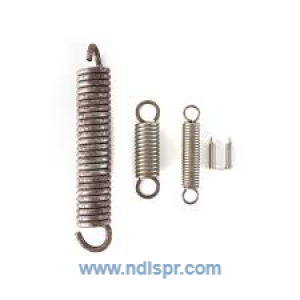
In modern industrial systems, precision components often determine the reliability and efficiency of the entire mechanism. Among these components, springs play a critical yet frequently overlooked role. Within this context, a Spring Factory serves as the backbone of many manufacturing sectors, delivering engineered elasticity solutions that support motion control, energy storage, and mechanical balance across diverse industries.
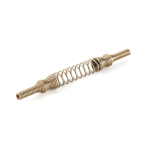
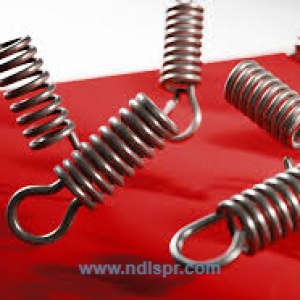
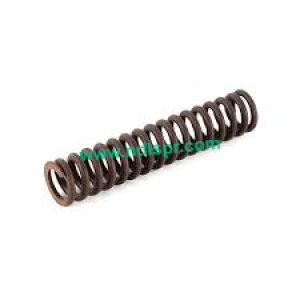
From a functional perspective, springs are designed to absorb, store, and release energy in a controlled manner. Their performance depends on precise load-bearing capacity, fatigue resistance, and dimensional stability. Compression springs, extension springs, and torsion springs each serve distinct purposes, whether maintaining tension in automotive assemblies or ensuring consistent pressure in industrial valves. High-performance springs must endure repeated cycles without deformation, which requires not only accurate design calculations but also strict production control. Advanced spring systems are now engineered to operate in extreme conditions, including high temperatures, corrosive environments, and continuous mechanical stress.
Material selection is fundamental to achieving these performance goals. High-carbon steel, stainless steel, and alloy materials are commonly used depending on the application requirements. For instance, stainless steel offers excellent corrosion resistance, making it suitable for marine or food-processing environments, while alloy steels provide superior strength for heavy-duty industrial use. The choice of material directly influences the spring’s elasticity, durability, and lifespan. Beyond the base material, surface treatments such as shot peening, electroplating, and heat treatment further enhance fatigue strength and resistance to environmental damage.
Manufacturing processes in a modern spring production facility are highly specialized. Precision coiling machines ensure consistent geometry, while heat treatment processes stabilize the internal structure of the metal. Advanced quality control systems, including fatigue testing and dimensional inspection, are essential to guarantee that each spring meets strict industry standards. Companies like Zhejiang Ningdeli Spring Co., Ltd. integrate automated production lines with rigorous inspection protocols, ensuring both efficiency and reliability in large-scale manufacturing. Their approach reflects a broader trend toward intelligent manufacturing, where data-driven processes improve consistency and reduce production errors.
User experience is another critical aspect that shapes the value of spring products. Although springs are often hidden within larger systems, their performance directly impacts usability. In consumer electronics, for example, springs contribute to tactile feedback in buttons and connectors, enhancing the overall interaction experience. In automotive applications, they influence ride comfort and safety by stabilizing suspension systems. Industrial users, on the other hand, prioritize durability and maintenance efficiency. A well-designed spring reduces downtime and minimizes the need for frequent replacements, ultimately lowering operational costs.
Application scenarios for springs are remarkably diverse. In the automotive sector, they are essential in suspension systems, braking mechanisms, and engine components. In the medical field, precision springs are used in devices that require consistent force and reliability, such as surgical instruments and diagnostic equipment. Household appliances also rely on springs for smooth operation, from washing machines to kitchen devices. Meanwhile, in heavy industry, springs are integral to machinery that operates under high loads and demanding conditions. Each application requires tailored design considerations, including load capacity, environmental resistance, and lifecycle expectations.
The evolution of spring technology continues to align with advancements in manufacturing and material science. As industries demand higher efficiency and sustainability, spring manufacturers are exploring eco-friendly materials and energy-efficient production methods. Digital simulation tools now allow engineers to predict performance outcomes before physical production, reducing waste and accelerating development cycles. This integration of technology not only improves product quality but also supports the growing need for customized solutions in specialized industries.
Zhejiang Ningdeli Spring Co., Ltd. represents a new generation of manufacturers that combine traditional craftsmanship with modern engineering practices. By focusing on precision, material innovation, and customer-oriented design, the company addresses the evolving demands of global markets. Their product range reflects a commitment to versatility and performance, catering to both standard and customized requirements across multiple sectors. For more detailed information about their offerings and capabilities, visit https://www.ndlspr.com/product .