
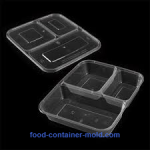

When a factory plans a high-volume production line for disposable food containers, the mold selection directly decides cost per part. A Food Container Mold with a hot runner system seems like an automatic win: no cold runner waste, faster cycles, and lower material loss. However, thin-wall container molding presents unique challenges that change this equation. HuaShun Mould, operating from Zhejiang with over fifteen years of thin-wall experience, examines this question carefully. Does every high-volume job truly require a hot runner arrangement?
The hot runner system keeps plastic molten inside the manifold plate, shooting material directly into each cavity. This approach eliminates the solid runner scrap that cold runner molds produce. For a part like a 500ml round food container, cold runner waste can represent fifteen to twenty percent of each shot weight. At one million pieces, that waste becomes a mountain of regrind. Yet thin-wall containers demand extreme injection speeds. A hot runner's internal channels, no matter how polished, create flow resistance. Cold runner molds push molten plastic through a short, wide sprue and immediate runner drop. That direct path delivers material faster for thin walls.
Maintenance presents the second hidden dimension. A cold runner tool uses simple steel passages. Any blockage clears quickly with basic tools. A hot runner system includes heaters, thermocouples, needle valves, and complex flow channels. When a tiny speck of carbonized plastic sticks a valve needle, the entire press stops for hours. For a mold running three hundred thousand parts monthly, that downtime erases any material savings. HuaShun technicians note that many Asian container plants run cold runner molds at over ninety-eight percent uptime. Hot runner systems rarely achieve that reliability in thin-wall service.
Material choice further shapes this decision. Polypropylene (PP) for cold drink cups runs free in a cold runner. The sprue and runners snap off cleanly in a separate operation. That reclaimed material feeds back into the hopper without property loss. For high-clarity PET containers, however, any regrind causes haze and stress whitening. A hot runner system eliminates regrind, keeping each shot pure. The best system depends on resin type, part geometry, and scrap reuse capability inside the factory.
The food-container-mold website showcases HuaShun's thirty-plus production machines and annual sales of thirty million. Those numbers reflect real experience with both hot and cold runner systems for thin-wall packaging. For a simple round tub or a square three-grid box, cold runner designs often cycle faster because the injection unit shoots directly into a generous sprue. No manifold passage restricts flow. The mold opens, parts drop, and runners separate in one second.
On the other hand, a multi-cavity mold for sixty-millimeter sauce cups benefits from a hot runner. Those tiny parts have thin walls and short flow paths. A cold runner would occupy more space between cavities, reducing cavity count. Hot runner valves fit tightly, allowing forty-eight cavities in the same press platens. The higher cavity count doubles output per hour. That advantage overcomes the extra maintenance cost. HuaShun engineers calculate break-even points for each project before recommending any system.
Operators also influence this choice. Cold runner molds tolerate variation in barrel temperature and injection speed. A hot runner system demands precise control of each nozzle zone. A night shift worker unfamiliar with the control interface can freeze a nozzle, causing a full mold tear-down. HuaShun provides training videos and remote support for every hot runner mold shipped, but the skill gap remains real in some regions.
The decision finally rests on total cost of ownership. A cold runner mold costs thirty percent less upfront. No heaters, no controllers, and simpler construction. A hot runner mold requires an investment in auxiliary equipment and spare parts. For a three-year contract producing twenty million lids, the hot runner pays back through material savings. For a one-year contract of five million bowls, the cold runner wins. HuaShun publishes consumption calculators for each Food Container Mold project on its platform.
For detailed cycle time comparisons and thin-wall-specific mold designs, visit https://www.food-container-mold.com/. The right answer changes with each container shape, resin choice, and production schedule. A hot runner system excels in specific niches, yet it never serves every situation blindly.