
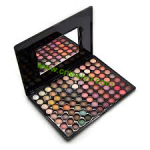

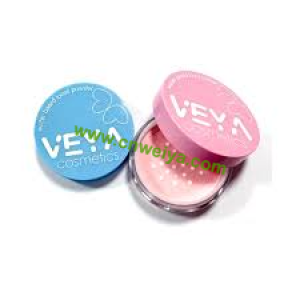

A customer applies a rich burgundy shadow to her eyelid. Three hours later, the color settles into her crease. The outer corner wears away completely. She blames the eyeshadow. In reality, her oily eyelids broke down the formula. A Highly Pigmented Eyeshadow from Cnweiya, produced by VEYA Cosmetics, undergoes wear testing on simulated skin types. Yet many brands skip this step. This situation raises a direct question for any product developer: how do manufacturers test the wear time of a highly pigmented eyeshadow on oily versus dry eyelids?
Sebum mimic solutions simulate oily eyelids. Cnweiya's laboratory prepares an artificial sebum mixture. This blend contains fatty acids, triglycerides, and wax esters matching human skin oil. Technicians apply a precise amount of this mixture to a synthetic skin substrate. The eyeshadow sits on this oily surface. A wear tester applies controlled pressure and friction cycles. The machine measures how much pigment transfers or fades. An oily lid formula fails if twenty percent of the color lifts within four simulated hours.
Moisture loss testing addresses dry eyelid conditions. Dry skin lacks natural oils that hold pigment. The shadow may seem to disappear by flaking off. Cnweiya pretreats synthetic skin with a hydrationremoving agent. The substrate reaches moisture levels found on dry, aging, or dehydrated lids. The technician applies the eyeshadow and runs the same friction cycles. A dryskin formula flakes off as powder dust. The factory adjusts binding agents to keep the shadow flexible on dry surfaces.
Human panel testing validates laboratory simulations. Cnweiya recruits participants with diagnosed oily eyelids and separate groups with dry eyelids. Each panelist wears the same eyeshadow shade for eight hours. A technician photographs the eyelid at zero, two, four, and six hours. A colorimeter measures the exact pigment remaining. The factory accepts a formula only if oilylid wearers retain seventy percent of the original color after six hours. Drylid panelists must show no flaking or patchy fading.
Transfer resistance differs between skin types. An oily lid pushes pigment into the crease through sebum migration. Cnweiya's test rig applies a silicone pad that mimics eyelid movement. The pad presses onto the pigmented surface then releases. A scanner counts the pigment particles transferred. A successful oilylid formula transfers less than five percent of its pigment. A drylid formula may transfer more because loose particles fall onto the pad. The factory uses different benchmarks for each skin condition.
Temperature cycling reveals failure points. A car interior heats an eye makeup bag during summer. Cold winter air chills the same bag. Cnweiya places eyeshadow samples into a thermal chamber. The chamber cycles from five degrees Celsius to forty degrees Celsius over eight hours. An oilylid-compatible formula survives these swings without oil separation. A drylid formula does not crack or crumble. The technician examines the pan surface for microcracks. A cracked pan signals formula failure regardless of skin type.
Friction force calibration matches real user behavior. Some customers apply eyeshadow with heavy pressure. Others tap lightly. Cnweiya uses a wear tester with adjustable downforce. A heavyhand setting applies three times the pressure of a light tap. The factory runs each eyeshadow sample through both cycles. An oilylid formula that smudges under heavy pressure fails qualification. A drylid formula that lifts under light tapping gets rejected. The winning formula performs across all friction levels.
Humidity amplification increases test severity. A dry eyelid in a humid environment behaves differently than in arid air. Cnweiya's environmental chamber holds samples at seventy percent relative humidity. The technician wears the eyeshadow inside this chamber for four hours. An oily lid in high humidity produces even more sebum. The factory's elite formulas survive this torture test. A color loss measurement below twenty percent passes. Any formula exceeding that limit returns to the binding agent adjustment stage.
For any brand requiring eyeshadows that perform on every skin type, https://www.cnweiya.com/news/industry-news/highly-pigmented-eyeshadow-for-smooth-and-vibrant-looks.html shows Cnweiya's wear testing protocols for Highly Pigmented Eyeshadow, where VEYA's chemists document sebum resistance, moisture compatibility, and transfer prevention for each formula. An oily lid demands oil control. A dry lid demands adhesion. Does your current eyeshadow fail because your skin type was never part of the test?