
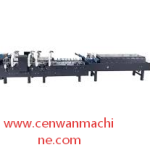

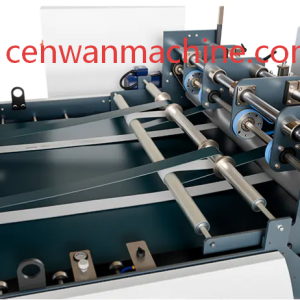
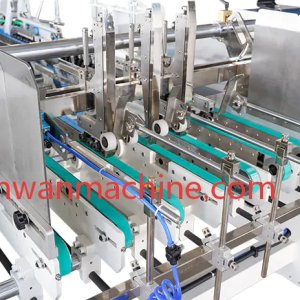
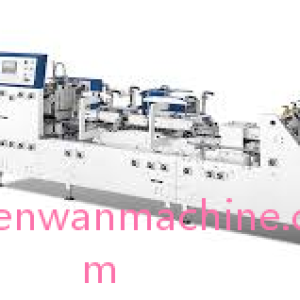
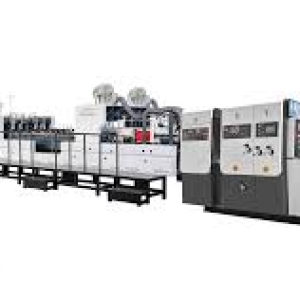
A packaging plant runs short batches of many box styles. Another plant runs the same box for weeks. Each plant needs a different type of folder gluer. Folder Gluer Machine Manufacturers like CenwanMachine, produced by CenWan Machinery, offer both servo-driven and mechanical drive systems. Servo drives excel at quick job changes. Mechanical drives handle constant high speeds. This situation raises a direct question for any packaging production manager: why do some folder gluer machine manufacturers use servo-driven belt systems while others rely on mechanical drive trains?
Servo drives use independent motors on each belt section. A mechanical drive uses a single main motor connected to shafts and gears. CenwanMachine's servo-driven folder gluer has a dedicated servo for the feeder, folding belts, and delivery. Each servo receives commands from a computer controller. A job change from a small box to a large box takes seconds. The operator enters new dimensions. All servos move simultaneously to the new positions.
Mechanical drives adjust through manual handwheels. The operator turns a wheel to change belt positions. CenwanMachine's mechanical folder gluer uses gearboxes and universal joints to distribute power. The adjustment takes minutes per section. A job change that requires multiple adjustments consumes a quarter of an hour. The machine then needs test runs to verify alignment. The servo-driven machine produces saleable boxes within minutes of the new job order.
Servo drives enable precise belt speed matching. Each belt section must run at the exact same speed to prevent twisting. CenwanMachine's servo system synchronizes speeds electronically. The controller compares encoder feedback from each servo. Any speed difference corrects instantly. A mechanical drive uses a single shaft to turn all belts. Belt wear creates slight diameter differences. The worn belt runs slower than a new belt. The box twists. The operator must replace belts at the same time to maintain matching.
Mechanical drives accept overload conditions gracefully. A jam that stops the belts puts stress on the drive train. CenwanMachine's mechanical folder gluer has a friction clutch that slips under overload. The clutch protects the gearbox and motor. A servo drive detects the overload electronically and stops. The servo amplifier may trip. A factory with a mechanical drive clears the jam and restarts immediately. A servo-driven line waits for an electrician to reset the drive.
Servo drives save energy during idle periods. A mechanical drive runs the main motor continuously when the machine is on. CenwanMachine's servo-driven folder gluer stops belt servos when no boxes feed. The control system detects the gap in the box stream. It shuts off the servos. A photoeye sees a box approaching and restarts them instantly. A mechanical drive keeps spinning belts during the same gap. The energy waste accumulates over a shift.
Mechanical drives cost less at purchase. A basic mechanical folder gluer from CenwanMachine has a lower price tag than a servo-driven model. The mechanical design uses simpler electronics. The gearboxes and shafts have decades of proven reliability. A packaging plant with limited capital buys the mechanical machine. A plant with flexible production demands pays extra for servo speed. The payback period for servos comes from reduced changeover time and lower scrap.
Servo drives offer better folding accuracy on thin materials. A lightweight paperboard bends easily. CenwanMachine's servo-driven belts accelerate and decelerate smoothly. The box enters the folding section at a controlled speed. A mechanical drive runs at constant speed. The box transitions from belt to belt at full velocity. The thin board may buckle at the transfer point. The servo drive eases the box through the same transfer.
Mechanical drives outlast servos in dusty environments. A paper plant generates paper dust. CenwanMachine's mechanical folder gluer has enclosed gearboxes that resist dust ingress. The motor and clutch sit outside the dusty zone. Servo motors have cooling fans that pull dust into the windings. A plant that fails to clean servo filters burns through motors. The mechanical drive runs for years with simple periodic lubrication.
For any box plant evaluating folder gluer technology, https://www.cenwanmachine.com/ shows CenwanMachine's Folder Gluer Machine Manufacturers drive options, where CenWan engineers match servo or mechanical systems to production volume and job mix. A servo-driven machine changes jobs in minutes and wastes few cartons. A mechanical machine runs one job for days at a lower investment cost. Which drive train keeps your packaging line profitable through every shift?