Business Continuity & Operational Resilience Management Market: Trends, Insights, and Vendor Analysis
Business Continuity & Operational Resilience Management (BCORM) market is undergoing a transformative evolution, shifting from traditional, compliance-focused frameworks toward dynamic, risk-aware resilience strategies. Modern organizations no longer view continuity planning as a static requirement; instead, they seek platforms that integrate real-time risk intelligence, disaster recovery, and ... moreBusiness Continuity & Operational Resilience Management Market: Trends, Insights, and Vendor Analysis
Business Continuity & Operational Resilience Management (BCORM) market is undergoing a transformative evolution, shifting from traditional, compliance-focused frameworks toward dynamic, risk-aware resilience strategies. Modern organizations no longer view continuity planning as a static requirement; instead, they seek platforms that integrate real-time risk intelligence, disaster recovery, and operational resilience into a unified, actionable ecosystem.
Market research indicates that emerging technologies such as artificial intelligence (AI), machine learning, and advanced analytics are playing a critical role in this evolution. These tools help organizations identify potential disruptions, assess risk exposure, and prioritize mitigation strategies more efficiently. By embedding AI-driven workflows into continuity management, enterprises can accelerate planning cycles, automate scenario testing, and ensure that risk response is both proactive and contextually informed.
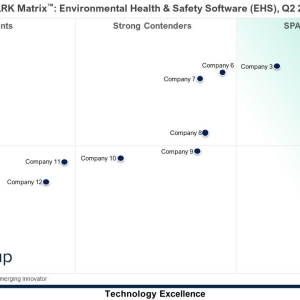
The BCORM market is highly competitive, with vendors striving to differentiate through innovation, functionality, and customer impact. Leading players, including Archer Integrated Risk Management, Everbridge, Fusion Risk Management, LogicGate, MetricStream, Mitratech, ServiceNow, and others, are being evaluated through the proprietary SPARK Matrix framework. This analysis assesses technology excellence, market presence, and customer value, offering organizations strategic insights into vendor capabilities and differentiation. The SPARK Matrix positions each vendor based on factors such as platform configurability, integration capabilities, AI adoption, and overall operational impact, helping buyers make informed decisions in a rapidly evolving landscape.
Organizations increasingly prioritize solutions that unify continuity, disaster recovery, and risk intelligence into a seamless platform. The focus is shifting from static templates to data-rich, configurable environments capable of operationalizing resilience in real time. Vendors that offer guided workflows, embedded AI, and comprehensive reporting are gaining a competitive edge, as they enable organizations to respond swiftly to disruptions while reducing planning complexity and resource overhead.
Looking ahead, the BCORM market is poised for continued growth, driven by rising awareness of operational risks, regulatory pressures, and the increasing complexity of global business operations. Technology vendors that align product innovation with these trends are best positioned to capture market share, while enterprise buyers benefit from platforms that enhance decision-making, ensure compliance, and safeguard business continuity across diverse scenarios.
In conclusion, the Business Continuity & Operational Resilience Management market is no longer just about planning for the worst—it’s about enabling organizations to thrive under uncertainty, leveraging technology to build resilient, responsive, and intelligent operations.
Endpoint Protection Platform Market Overview: Vendor Capabilities and Future Outlook
Endpoint Protection Platform (EPP) market has become a critical focus for organizations worldwide, as cybersecurity threats continue to evolve in complexity and scale. Endpoint devices—including desktops, laptops, mobile devices, and increasingly IoT devices—represent vulnerable entry points for cyberattacks, making robust endpoint security indispensable. Market research on EPP offers a detailed global analysis... moreEndpoint Protection Platform Market Overview: Vendor Capabilities and Future Outlook
Endpoint Protection Platform (EPP) market has become a critical focus for organizations worldwide, as cybersecurity threats continue to evolve in complexity and scale. Endpoint devices—including desktops, laptops, mobile devices, and increasingly IoT devices—represent vulnerable entry points for cyberattacks, making robust endpoint security indispensable. Market research on EPP offers a detailed global analysis of leading vendors, evaluating their product capabilities, features, and competitive advantages to help service providers and enterprises navigate this dynamic landscape.
EPP solutions have evolved far beyond the traditional antivirus and anti-malware offerings. Today’s platforms integrate advanced threat detection, prevention, response, and remediation capabilities, enabling organizations to maintain a proactive security posture. Modern EPP tools often incorporate endpoint detection and response (EDR), behavior-based threat analysis, real-time threat intelligence, and vulnerability management, providing comprehensive endpoint visibility and protection. This evolution reflects the increasing sophistication of cyber threats, including ransomware, phishing attacks, zero-day exploits, and targeted attacks against corporate and cloud environments.
SPARK Matrix: Evaluating EPP Vendors
The competitive landscape of the EPP market is complex, with multiple global players offering differentiated solutions. Proprietary SPARK Matrix analysis provides a detailed evaluation of vendors, ranking and positioning them based on their product capabilities and overall market impact. Leading vendors identified in this research include Bitdefender, BlackBerry, Broadcom, Check Point, Cisco, CrowdStrike, Cybereason, Deep Instinct, ESET, Fortinet, Group-IB, Kaspersky, Microsoft, Palo Alto Networks, SentinelOne, Sophos, ThreatLocker, Trellix, TrendMicro, VIPRE Security, WatchGuard Technologies, and WithSecure.
This analysis helps organizations understand each vendor’s strengths and weaknesses, guiding decisions on solution adoption and strategic partnerships. SPARK Matrix evaluates not only technical functionality but also market responsiveness, innovation, and customer impact, offering a holistic view of the EPP vendor ecosystem.
Key Features and Capabilities of EPP Solutions
Advanced Threat Detection: Modern EPP platforms leverage artificial intelligence (AI) and machine learning (ML) to identify suspicious patterns and prevent attacks in real time. Behavior-based detection ensures that even previously unknown threats can be mitigated effectively.
Endpoint Detection and Response (EDR): EDR capabilities provide deep visibility into endpoint activities, allowing for rapid identification, investigation, and remediation of security incidents. This enables organizations to respond quickly to breaches and minimize potential damage.
Vulnerability Management: EPP solutions often include vulnerability scanning and patch management, helping organizations identify and remediate security gaps before they can be exploited by attackers.
Integration and Centralized Management: Leading EPP platforms offer centralized dashboards and integration with broader security ecosystems, allowing IT teams to manage security policies, monitor threats, and automate responses across all endpoints from a single interface.
Real-Time Threat Intelligence: By leveraging global threat intelligence feeds, EPP solutions can predict and prevent attacks by incorporating insights from ongoing threat research, ensuring endpoints are protected against emerging threats.
The growing adoption of remote work, cloud computing, and IoT technologies has expanded the attack surface, driving the demand for comprehensive endpoint protection. Organizations are increasingly seeking solutions that provide not just reactive defense, but proactive risk management and threat prevention.
The global EPP market research highlights that the competitive landscape is characterized by continuous innovation, with vendors investing heavily in AI, automation, and integration capabilities. Organizations leveraging this research gain insights into market trends, vendor strategies, and product differentiation, empowering them to make informed decisions and align their cybersecurity initiatives with long-term business goals.
Conclusion
Endpoint Protection Platforms are no longer just defensive tools—they are strategic assets enabling organizations to secure a complex and diverse IT environment. Through detailed vendor analysis and competitive benchmarking, market research equips enterprises with the knowledge to select the right EPP solutions, optimize endpoint security, and build a resilient cybersecurity framework capable of addressing current and future threats.
When professionals share their office habits online, a surprising number talk about the humble spiral notebook. Threads and discussions across forums reveal that many people prefer the flexible d...
The Business Process Outsourcing Services Market analysis highlights a promising growth trajectory, with the industry poised to expand from USD 327.87 Billion in 2025 to USD 821.51 Billion by 2035....
Running a successful business in Simpsonville requires more than great products, strong leadership, or effective marketing. One of the most essential—yet often overlooked—components of long-term ...
Posted by Akanksha on November 10 2025 at 04:55 PM
public
The digital commerce revolution continues to redefine how consumers shop, interact, and spend. Over the last decade, online retail has transitioned from a convenience-driven choice to a global nece...
Posted by Akanksha on November 10 2025 at 04:20 PM
public
Technology innovation and digital transformation are reshaping how enterprises operate, and the Business Intelligence Market Trends illustrate this change vividly. BI platforms are transitioning fr...