

Polymer Foam Market to Reach Nearly US$157.37 Billion by 2032, Driven by Lightweight Materials, Energy Efficiency and Sustainable Foam Innovation
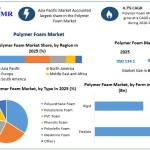
The Polymer Foam Market is entering a period of steady expansion as industries increasingly seek lightweight, durable, energy-efficient, and high-performance materials. The market was valued at US$114.1 billion in 2025 and is projected to grow at a CAGR of 4.7% from 2026 to 2032, reaching nearly US$157.37 billion by 2032, according to Maximize Market Research.
Polymer foams, including polyurethane, polystyrene, polyethylene, polypropylene, polyvinyl chloride and other specialized materials, are widely used for thermal insulation, cushioning, protective packaging, automotive components, furniture, bedding, electronics and construction applications. Demand is being supported by rapid urbanization, infrastructure development, e-commerce expansion, automotive lightweighting and the increasing focus on energy-efficient buildings. The growing adoption of polymer foams in electric vehicles, renewable-energy systems, medical products and advanced insulation is creating additional opportunities for manufacturers.
Market Estimation, Growth Drivers and Opportunities
The market's projected increase from US$114.1 billion in 2025 to nearly US$157.37 billion by 2032 reflects the growing role of polymer foams across major industrial sectors. One of the strongest growth drivers is the shift toward lightweight materials. Automotive manufacturers are using polymer foams in seats, consoles, powertrain components and other applications to reduce vehicle weight while improving comfort and efficiency. Electric vehicles are creating an additional opportunity because lightweight foam materials can contribute to improved energy efficiency and driving range.
Construction is another important growth engine. Polymer foams provide thermal insulation, moisture resistance, sound absorption and energy-saving characteristics, making them valuable for residential, commercial and industrial buildings. Rising investments in energy-efficient construction and renovation are increasing demand for advanced insulation materials. At the same time, e-commerce and global logistics are strengthening demand for protective foam packaging that can reduce transportation damage while keeping packaging lightweight.
Sustainability is emerging as a major opportunity. Manufacturers are developing recyclable, bio-based and low-emission foam technologies, while advanced extrusion, injection molding, digital process optimization and specialty formulations are improving performance and reducing material consumption.
Get Your Free Sample Report Link : https://www.maximizemarketresearch.com/request-sample/33278/
United States Market: 2025 Trends and Investment
The United States remained an important market for polymer foams because of demand from construction, automotive, aerospace, healthcare and packaging industries. In 2025, sustainability and regulatory transition became particularly important market themes. U.S. environmental requirements restricting higher-global-warming-potential hydrofluorocarbons in several foam applications began taking effect from January 1, 2025, encouraging manufacturers to adopt lower-GWP blowing agents and alternative foam technologies. The regulatory shift is supporting innovation in polyurethane, polystyrene, polyolefin and other foam formulations. U.S. industry investment is also being directed toward energy-efficient insulation, sustainable packaging, electric-vehicle applications and improved recycling technologies. In September 2025, Dow announced progress on a new process developed with Gruppo Fiori to recover polyurethane foam from end-of-life vehicles, highlighting the industry's movement toward closed-loop recycling and circular material solutions.
Market Segmentation: Largest Shares
By Product Type, Polyurethane (PU) Foam dominated the Polymer Foam Market in 2025. Its strong position is attributed to superior thermal insulation, cushioning, flexibility, durability and lightweight characteristics. PU foam is extensively used across construction, furniture, bedding, automotive and refrigeration applications.
By Foam Type, Flexible Foam held the largest market share in 2025. Its widespread use in furniture, bedding, automotive seating, packaging and consumer products is supported by its cushioning, vibration-damping, comfort and lightweight properties.
Competitive Analysis
The global Polymer Foam Market is highly competitive, with leading companies investing in sustainable materials, capacity expansion, advanced processing and recycling technologies.
BASF SE is strengthening its position through sustainable insulation solutions. The company has focused on its Neopor® expandable polystyrene portfolio, including products incorporating renewable and recycled feedstocks. BASF has also planned additional Neopor® capacity at Ludwigshafen, reflecting expectations for rising demand for energy-efficient building insulation.
Rogers Corporation continues to compete through high-performance specialty materials and foam technologies serving demanding electronics, transportation and industrial applications. Its emphasis on advanced material performance supports the increasing requirement for lightweight and technically specialized foam products.
The Dow Chemical Company is focusing on polyurethane technologies, sustainable construction solutions and circularity. In 2025, Dow and Gruppo Fiori announced advances in a process designed to recover polyurethane foam from end-of-life vehicles, creating a potential pathway for greater recycling of automotive foam.
Recticel NV/SA is strengthening its position in high-performance insulation and polyurethane foam solutions. Its focus on energy-efficient building materials aligns with increasing demand for insulation products that improve building performance and reduce energy consumption.
Sealed Air Corporation remains a significant player in protective packaging, where lightweight cushioning materials are important for e-commerce, food and consumer goods logistics. In 2025, the company continued its turnaround strategy and sustainability-focused packaging innovation while advancing solutions designed to improve material efficiency and recyclability.
Regional Analysis
United States: Growth is supported by construction, automotive, aerospace, healthcare and packaging demand. Environmental regulations encouraging lower-GWP foam technologies are accelerating product innovation.
Germany: Germany represents an important European market because of its advanced manufacturing base, construction activity and emphasis on energy-efficient buildings. Investment in high-performance insulation is supporting demand.
UK: Demand is supported by building efficiency requirements, renovation activity and the need for improved thermal insulation and sustainable construction materials.
France: Energy-efficiency initiatives, construction modernization and sustainability objectives are creating opportunities for advanced polymer foam insulation.
Japan: Advanced automotive, electronics and industrial manufacturing sectors support demand for lightweight, durable and high-performance foam materials.
China: China remains the largest producer and consumer of polymer foams, supported by extensive manufacturing, infrastructure investment, automotive production, electronics manufacturing and packaging demand.
Key Players
BASF SE, Rogers Corporation, The Dow Chemical Company, Recticel NV/SA, Sealed Air Corporation, Huntsman International LLC, Armacell International S.A., Zotefoams plc, Covestro AG, JSP Corporation, Kaneka Corporation, Hanwha Chemical Corporation, Arkema, Borealis AG, SABIC, Toray Industries, Inc., Synthos, Celanese Corporation and Sekisui Alveo.
Why This Market Matters Now
The Polymer Foam Market matters now because multiple industries are simultaneously seeking materials that deliver lower weight, improved energy efficiency, better insulation, greater product protection and enhanced sustainability. The transition toward electric vehicles, energy-efficient buildings, recyclable packaging and circular manufacturing is changing the requirements for foam materials.
The next phase of market growth will increasingly depend on the ability of manufacturers to combine performance with sustainability. Companies developing recyclable, bio-based, low-emission and high-performance foam technologies are positioned to benefit as regulations and customer expectations evolve. With global revenue projected to approach US$157.37 billion by 2032, polymer foams are becoming an increasingly important material platform across construction, mobility, packaging and advanced industrial applications.
Explore More Related Reports:
For additional insights and reports on related industries and markets, visit our website to stay updated with the latest market research and industry developments.
About Maximize Market Research
Maximize Market Research Pvt. Ltd. (MMR) is a global market research and consulting company that provides reliable, data-focused, and practical business insights. The firm serves a wide range of industries, including healthcare, pharmaceuticals, technology, automotive, electronics, chemicals, personal care, and consumer goods. Through market forecasts, competitive analysis, strategic consulting, and industry impact assessments, MMR helps organizations understand changing market conditions, identify growth opportunities, and make informed business decisions for long-term success.
Contact Us
Maximize Market Research Pvt. Ltd.
2nd Floor, Navale IT Park Phase 3
Pune Bangalore Highway, Narhe
Pune, Maharashtra 411041, India
Phone: +91 9607365656
Email: sales@maximizemarketresearch.com